Gharieni Group Launches Cobotics Innovations for Robotic Wellness Treatments
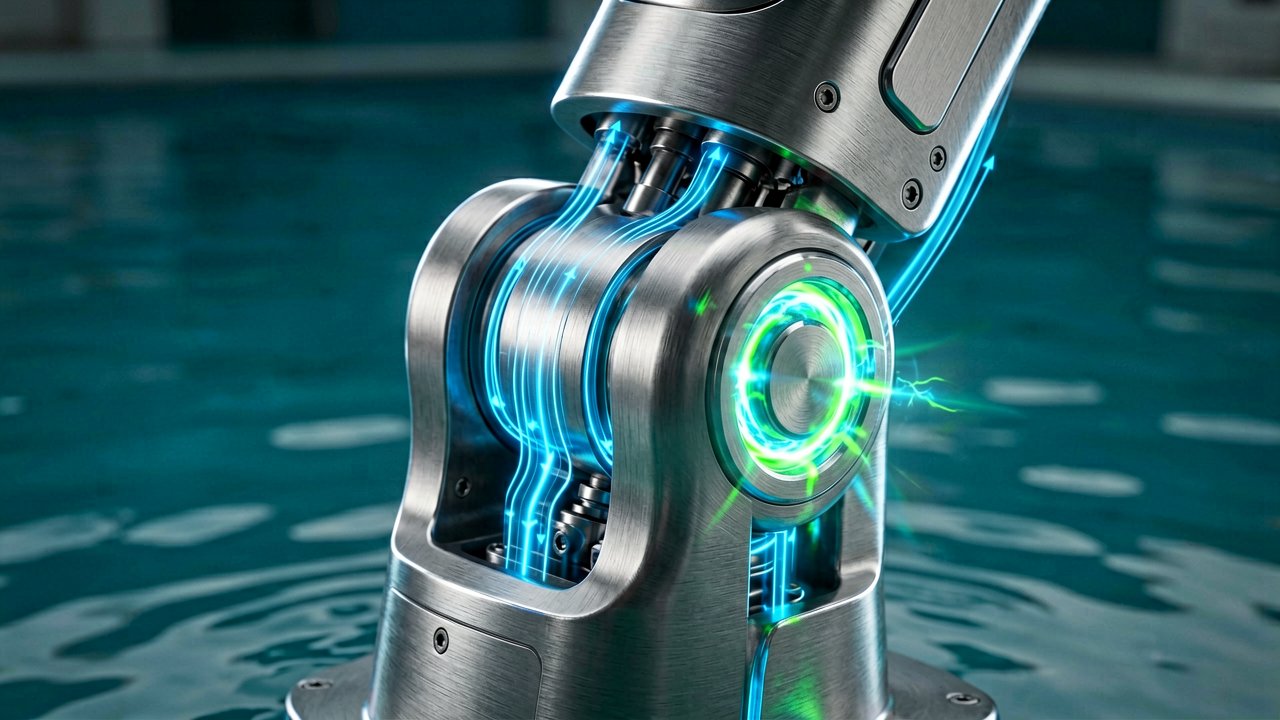
The wellness equipment manufacturer Gharieni Group announced the formation of Cobotics Innovations, a new subsidiary focused on collaborative robotics for the health and wellness sector. The company unveiled its first product at FIBO in Cologne, Germany, on May 08, 2026—a treatment station that combines precision robotics with software to deliver automated full-body percussive massage.
According to the official press release from Gharieni, the system represents what the company calls the "Wellness Cobot Generation"—a category of technology explicitly designed to support therapists rather than displace them. The treatment station includes a dedicated bed and uses robotic arms to apply consistent percussive pressure across the body, targeting muscle recovery, tension reduction, and soreness relief.
Gharieni's official announcement details the operational philosophy behind the launch. Jens Schramm, CEO of Cobotics Innovations, stated the company's goal is to "empower" therapists by providing tools that enhance precision and reduce physical strain. The language is deliberate—this is not positioned as a replacement for human practitioners, but as an augmentation layer within existing treatment workflows.
The physical reality of the system matters here. Unlike consumer-grade massage guns that require manual manipulation, this is a stationary treatment station. A client lies on the bed while the robotic components move around them. The software controls the pressure, speed, and positioning. For spa operators, this means a treatment room can potentially run automated sessions without a therapist present, theoretically increasing room utilization during peak hours or filling gaps between manual appointments.

Sammy Gharieni, founder and CEO of Gharieni Group, framed the launch as entering "a new frontier" where robotic technology and human expertise work hand in hand. The company has been operating in the wellness space for 35 years and is present in more than 120 countries. Since 2019, Gharieni has served as the Official Spa & Wellness Technologies and Equipment Brand for Forbes Travel Guide.
Independent coverage from Spa Opportunities corroborates the core specifications and market positioning. The outlet notes the launch responds to demand for scalable, high-performance wellness solutions across spas, fitness clubs, and other wellness environments. The commercial angle is clear: treatment rooms are expensive real estate, and anything that maximizes their use has inherent business value.
The timing is worth noting. The wellness robotics space has seen notable failures in recent years. US-based robotics wellness company Aescape Inc entered insolvency proceedings following asset sales and escalating financial pressures. Gharieni's approach differs in that it's explicitly collaborative rather than fully autonomous. The system is designed to work alongside therapist-led treatments, not as a standalone replacement.
From a technical standpoint, the "percussive massage" specification suggests the system uses rapid, repetitive impacts similar to percussion therapy tools. The difference is consistency and repeatability. A human therapist's pressure varies based on fatigue, technique, and individual interpretation. A robotic system delivers the same pressure profile every time (which is both a feature and a limitation, depending on your perspective).
The business implications extend beyond individual spas. Fitness clubs and wellness resorts often struggle with therapist availability and training costs. An automated system could handle baseline recovery treatments while human therapists focus on more complex, personalized work. This tiered approach could theoretically improve margins while maintaining service quality.
However, the actual adoption curve remains uncertain. Wellness consumers often value the human element of treatment—the conversation, the intuition, the adjustment based on verbal feedback. A machine cannot read body language or respond to a client's subtle shift in breathing. The system may work well for standardized recovery protocols, but it cannot replicate the adaptive nature of skilled manual therapy.
Whether spa operators actually invest in this technology depends on pricing, maintenance costs, and integration with existing booking systems. The announcement does not disclose pricing or deployment timelines beyond the FIBO showcase. That's typical for early-stage product launches, but it leaves the commercial viability somewhat opaque.
The wellness industry has seen plenty of "transformative" claims before. Whether Cobotics Innovations delivers on its promise or becomes another well-funded experiment in automated therapy remains to be seen. The real test will be whether clients actually book these treatments, and whether therapists feel genuinely empowered rather than displaced.
Artūras Malašauskas is an AI Systems Integrator with 20+ years of production-grade web engineering experience. He has designed, shipped, and scaled enterprise Python/PHP systems for logistics, SaaS, and public-sector clients. For the past year, he has focused exclusively on AI integrations: deploying open-source LLMs, building generative media pipelines (image, audio, video), and engineering multi-agent workflows for real production environments. His standard: reproducibility, security, cost-efficient inference—no vaporware. He documents and evaluates emerging AI tooling, separating verified capabilities from marketing noise. Technical editor at: muza-ai.eu, ai-verslas.lt, ai-naujinos.lt Connect on LinkedIn
Comments