Nebius and NVIDIA Join Forces to Launch a Physical AI Living Lab for European Robotics
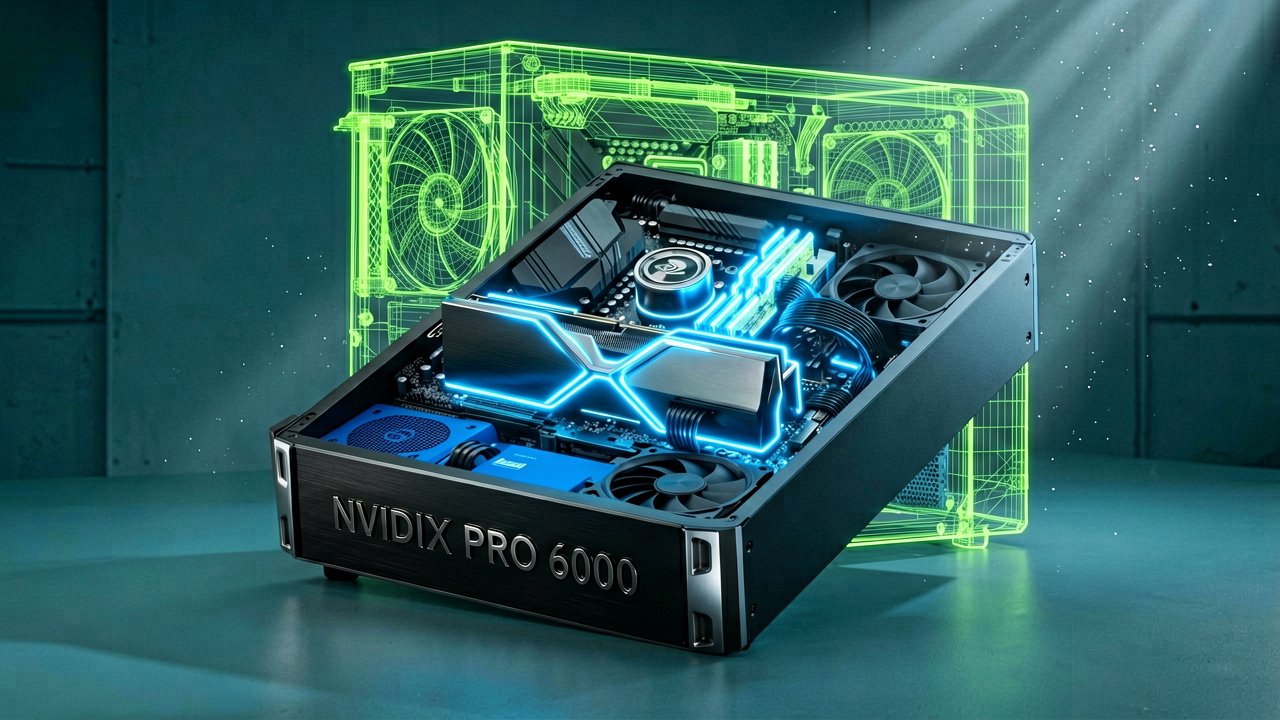
Building an advanced robot is hard enough, but getting the raw computational horsepower and massive simulation environments to train it is an entirely different beast for early-stage companies. To eliminate this critical infrastructure bottleneck, AI cloud provider Nebius announced on June 9, 2026, that it is launching the Physical AI Living Lab, a specialized six-month program created in partnership with NVIDIA to support robotics startups across the UK and Europe. The initiative aims to democratize access to enterprise-grade physical AI developer kits and high-performance computing clusters that are traditionally out of reach for smaller teams.
According to an official press release published via Business Wire , the inaugural cohort is scheduled to kick off in September 2026. The program targets a persistent industry gap by providing selected founders with hands-on technical guidance from both Nebius and NVIDIA engineers, as well as affordable entry into cloud-scale training pipelines. Instead of spending months building out their own back-end infrastructure, startups can immediately begin refining their hardware models within complex virtual testing grounds.
Blackwell Power on the European Frontline
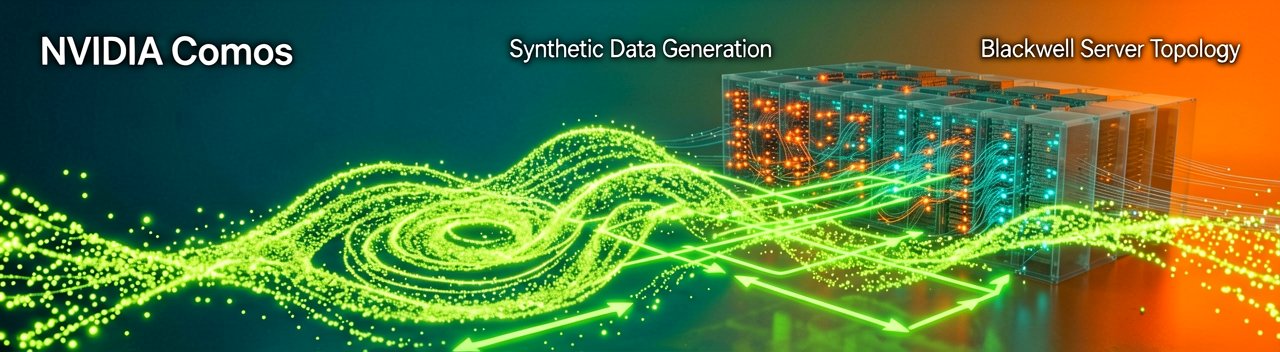
The technical architecture underpinning the new Living Lab represents a serious investment in cutting-edge hardware. The first phase of the project will operate entirely out of Nebius’s UK infrastructure, leveraging heavy-duty NVIDIA RTX PRO 6000 Blackwell Server Edition GPUs to run heavy simulation workloads. Startups will utilize an extensive hardware-software stack that includes NVIDIA Cosmos world foundation models, Isaac Sim, and Isaac Lab for algorithmic robot training, alongside NVIDIA OSMO to orchestrate background workloads. Applications for the accelerator program are handled via the NVIDIA Inception pipeline, cementing the chipmaker's deeper operational expansion into European AI hubs.
What Most Reports Miss: The Compute-Choke on Physical AI
While the broader tech narrative remains heavily focused on large language models and digital agents, the physical AI sector has been quietly fighting a much tougher war against hardware scarcity. Training an AI to understand text requires massive datasets, but training a robotic system to navigate a dynamic physical warehouse requires real-time physics simulation, synthetic data generation, and continuous reinforcement learning loops. European startups have historically faced a compounding disadvantage here; they lack the massive venture capital war chests of their Silicon Valley peers, meaning they cannot easily buy their way to the front of the NVIDIA chip queue or afford the exorbitant costs of renting enterprise-grade GPU clusters just to test an early-scale prototype.
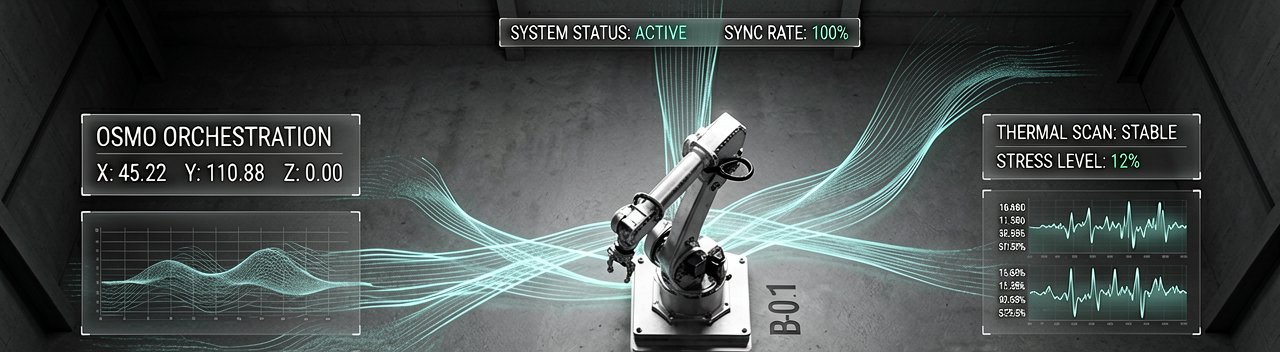
This partnership represents a calculated strategic shift for both companies involved. For Nebius, providing frictionless entry to the NVIDIA stack is a play to position itself as the foundational cloud layer for the next wave of industrial automation across the continent. By offering a specialized physical lab environment combined with cloud-scale infrastructure, they are betting that the next breakthrough in autonomous logistics or precision manufacturing will be coded on their architecture. For NVIDIA, embedding their Cosmos world foundation models and Isaac platform directly into Europe’s startup ecosystem guarantees that the next generation of robotics companies will grow up entirely dependent on the NVIDIA software ecosystem.
The choice of the UK as the program's initial testing ground is equally telling. Despite the ongoing post-Brexit regulatory fragmentation between the UK and mainland Europe, London and Cambridge have retained their status as dense clusters for deep-tech talent and robotics research. By routing the application pipeline through the established NVIDIA Inception program, the initiative effectively bypasses regional bureaucratic hurdles, creating a direct fast-track for technical founders to plug into high-performance Blackwell servers without navigating complex cross-border infrastructure procurement policies.
Industry insiders suggest that the six-month cohort model is explicitly designed to push companies past the notorious "proof-of-concept" graveyard. Many robotics startups collapse because their physical prototypes work flawlessly in a sterile lab setting but fail catastrophers when introduced to chaotic, real-world variables. Access to OSMO and advanced simulation engines allows these founders to run millions of edge-case scenarios virtually before bending a single piece of metal. If the September rollout successfully accelerates these timelines, it could rewrite the playbook for how hardware-software hybrid startups are funded and scaled outside the United States.
Reading Between the Lines: The Simulation-Reality Paradox
The glossy rhetoric surrounding the Living Lab presupposes that throwing more compute at physical AI will naturally solve the scaling bottleneck. Yet, this assumption ignores the stubborn friction inherent to hardware development. Silicon Valley has long operated under the belief that software can rapidly iterate away any physical limitation, but robots do not exist in a vacuum of clean code. They are bound by the unforgiving laws of physics, material degradation, and supply chain delays for actuators and sensors. A startup might successfully simulate a million hours of flawless warehouse navigation on Nebius’s Blackwell servers, but that digital perfection matters little when the physical caster wheels seize up on a dusty concrete floor.
Furthermore, the heavy reliance on NVIDIA's proprietary ecosystem introduces a significant vendor lock-in dilemma that European founders would be wise to scrutinize. By funneling early-stage teams through the NVIDIA Inception pipeline and deeply embedding their workflows into Isaac Sim and Cosmos world models, the program essentially ensures these startups remain tethered to one silicon provider for their entire lifecycle. In an era where open-source alternatives and competing accelerators are desperately trying to gain traction, European tech sovereignty risks becoming a secondary concern to the immediate, intoxicating convenience of subsidized cloud-scale infrastructure.
There is also a glaring contradiction in the timeline of the initiative itself. While the program promises to democratize innovation for cash-strapped startups, a six-month cohort window is blindingly fast for hardware-centric R&D. In software development, half a year is an eternity; in advanced robotics, it is barely enough time to iterate on a single joint mechanism or finalize an end-effector design. The pressure to showcase tangible, venture-backable breakthroughs by the end of the program may inadvertently incentivize founders to prioritize flashy, superficial demonstrations over the rigorous, slow-cooked foundational engineering required to build truly reliable industrial automation systems.
"It turns out that teaching a robot to safely navigate the messy realities of a European factory floor is infinitely harder than training it to dominate a pristine, multi-million-dollar digital twin—mostly because real concrete doesn't come with a software patch when things inevitably go sideways."
Artūras Malašauskas is an AI Systems Integrator with 20+ years of production-grade web engineering experience. He has designed, shipped, and scaled enterprise Python/PHP systems for logistics, SaaS, and public-sector clients. For the past year, he has focused exclusively on AI integrations: deploying open-source LLMs, building generative media pipelines (image, audio, video), and engineering multi-agent workflows for real production environments. His standard: reproducibility, security, cost-efficient inference—no vaporware. He documents and evaluates emerging AI tooling, separating verified capabilities from marketing noise. Technical editor at: muza-ai.eu, ai-verslas.lt, ai-naujinos.lt Connect on LinkedIn
Comments