The Conversational Warehouse: Amazon’s Next-Gen Proteus Swaps Code for Copilot Talk
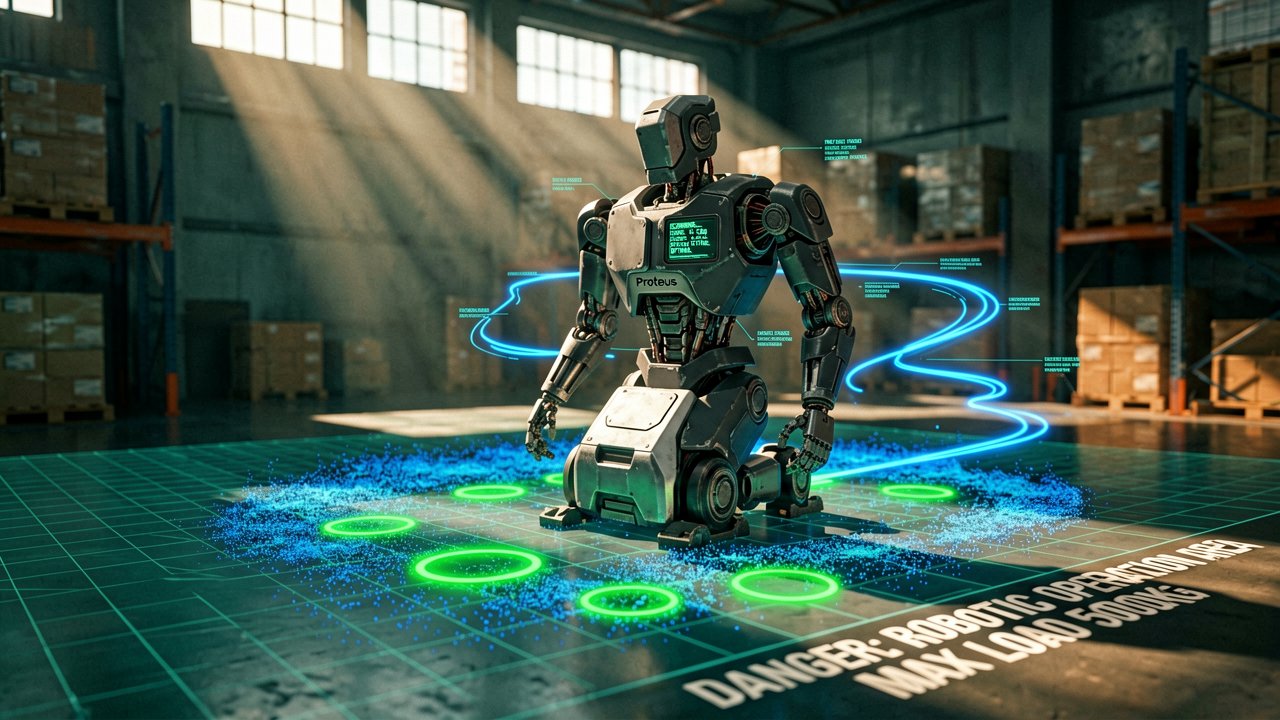
Amazon has shattered the traditional barrier between human warehouse workers and cold, rigid automation. In a striking move announced at its "Delivering the Future" showcase in Dartford, England, the e-commerce giant unveiled a next-generation version of its Proteus autonomous mobile robot. Equipped with advanced natural language processing, this updated machine completely ditches complex coding interfaces and pre-programmed software commands. Instead, fulfillment center employees can now issue open-ended, text-based instructions to the robot just like they would chat with a human coworker on the floor.
This rollout changes the fundamental dynamic of logistics technology. Instead of humans adapting to the highly technical constraints of a machine, the machine adapts to standard human conversation. The system is designed to seamlessly process everyday phrases, map out its own logistical routes, and prioritize multi-step tasks across the entire facility floor completely on its own.
Autonomy Over Mere Automation
The technical evolution here lies in the shift from rigid path-following to real-world context awareness. While the original 2022 iteration of Proteus was confined strictly to enclosed loading docks moving heavy carts, this conversational model boasts full-floor mobility. Scott Dresser, vice president of Amazon Robotics, noted that workers simply communicate what needs to get done, leaving the hardware to independently coordinate the optimal priority, routing, and timing.
According to official insights shared on the About Amazon Blog, this natural language interface is part of a massive €10 billion expansion and modernization effort targeted directly at Amazon's European fulfillment network. Currently undergoing rigorous lab pilots, the conversational fleets are scheduled for full facility deployment in Europe by the first half of 2027.
The Orchestrated Floor
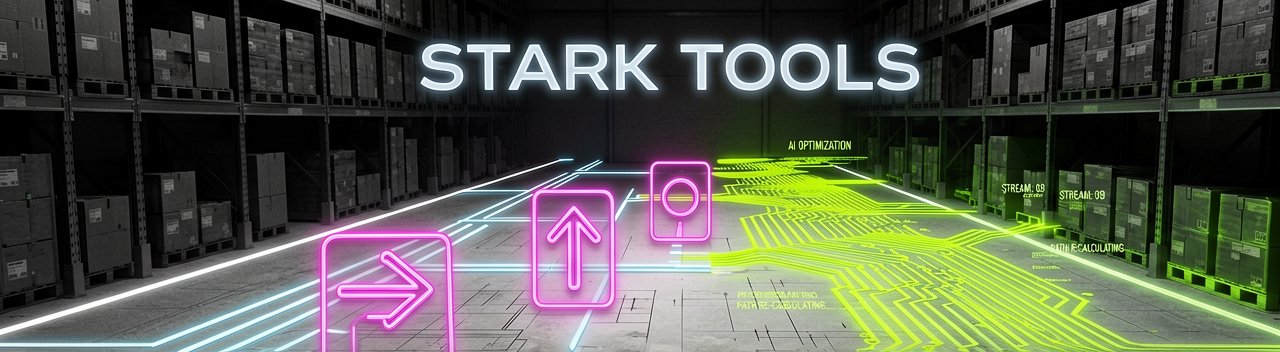
This conversational overhaul is not happening in a vacuum. It represents a broader push toward physical artificial intelligence that works alongside humans rather than behind safety cages. At the same London-area event, Amazon highlighted its expansion of STARK, a collaborative tote-handling system, and Vulcan, an innovative picking robot equipped with a synthetic sense of touch.
As detailed by Reuters , this rapid hardware injection forms the foundation of Amazon's strategy to meet escalating demands for sub-same-day delivery speeds. While industry watchdogs closely track how these AI efficiencies offset corporate headcounts, Amazon argues that these changes elevate warehouse roles from grueling physical labor to strategic robot fleet supervision. By offloading heavy 400-kilogram cart hauling and repetitive sorting to conversational machines, humans are expected to spend less time straining their backs and more time managing inventory flow.
What Most Reports Miss: The evolution of Amazon's robotics strategy is less about replacing workers and more about fixing a massive, systemic bottleneck in software deployment. In the past, deploying a new automated routine or rerouting a fleet of mobile drives meant bringing in a team of specialized robotics engineers to rewrite code, run virtual simulations, and meticulously test edge cases. By introducing a natural language interface, Amazon is effectively decentralizing this technical control. A floor supervisor with zero programming background can now alter an entire department's workflow on the fly simply by messaging the system, shifting the responsibility of software optimization from a distant engineering lab directly to the warehouse floor.
The Architecture of Physical AI
Building a machine that understands "move those heavy totes over to bay four when you have a second" requires an entirely different technical stack than traditional automation. Traditional industrial robots operate on strict, deterministic logic where every millimeter of movement is pre-calculated. The new conversational Proteus, however, relies on large multimodal models (LMMs) that bridge the gap between abstract language and physical physics. The AI must parse the vagueness of human speech, translate "when you have a second" into a dynamic queuing algorithm, and cross-reference that command with real-time telemetry from its onboard LiDAR and camera arrays to ensure it doesn't collide with a human coworker.

This shift changes how safety is handled in a collaborative environment. Historically, heavy warehouse robots were physically cordoned off behind metal fencing because they lacked the cognitive capacity to adapt to unpredictable human movement. The conversational iteration of Proteus is designed to operate in open, shared spaces. When a worker speaks to or interacts with the machine, it uses its semantic understanding of the environment to predict human behavior, slowing down or pivoting its route without shutting down the entire assembly line, thereby maintaining continuous productivity.
The Geopolitical and Labor Calculus
The decision to pilot and deploy this technology extensively within Europe before a massive domestic rollout in the United States highlights a calculated geopolitical strategy. European labor markets are governed by significantly stricter union regulations and works councils, particularly in logistics hubs like Germany and France. By framing conversational AI as an ergonomic tool that removes the physical strain of hauling 400-kilogram carts, Amazon is attempting to preemptively ease regulatory friction. The narrative focuses heavily on collaboration and injury reduction, presenting the technology as a supportive partner rather than an algorithmic taskmaster.
However, labor advocates remain skeptical about the psychological pressure of working alongside conversational machines. While reducing physical strain is a net positive, a robot that can dynamically optimize its own schedule and communicate directly with staff can inadvertently accelerate the overall pace of the warehouse. If the machine eliminates all natural downtime between tasks by constantly coordinating the next drop-off, the cognitive load on human workers could spike even as the physical demands decrease. The success of this rollout will ultimately depend on whether the AI respects human limits or merely uses its conversational charm to enforce a more grueling operational tempo.
Reading Between the Lines: Amazon’s enthusiastic positioning of conversational AI as an ergonomic victory for the frontline worker glosses over a glaring operational paradox. The company presents a utopian vision where the machine seamlessly adapts to human speech, yet the ultimate goal of corporate automation has always been to make human processes as predictable, standardized, and machine-like as possible. By inviting workers to speak naturally to their robotic counterparts, Amazon is not making the warehouse more human; it is gathering a massive, real-world dataset of human behavioral variance. Every informal command and localized slang term issued on the floor feeds back into the neural network, training the system to better predict, quantify, and ultimately minimize the inefficiencies of the human element itself.
The Disconnection of Decentralized Control
There is also a profound contradiction in the promise of decentralized floor control. While giving a warehouse supervisor the power to verbally redirect a fleet of Proteus robots sounds liberating, it introduces a chaotic variable into an ecosystem built entirely on micro-optimized mathematics. Amazon's global logistics empire thrives because centralized algorithms dictate package routes down to the millisecond. Allowing localized, human-driven verbal overrides to disrupt these calculated paths creates a high probability of localized feedback loops and systemic friction. It is highly likely that the conversational interface will eventually act as a psychological placebo—giving staff the illusion of authority while the overarching cloud architecture quietly overrides any human instruction that threatens global efficiency targets.
Furthermore, the financial justification for this multi-billion-euro European rollout requires a level of long-term reliability that current-generation multimodal models have yet to demonstrate. Large language models are notoriously prone to hallucinations and contextual drifting, flaws that are manageable when drafting an email but potentially catastrophic when piloting a 400-kilogram steel drive unit through a crowded facility. A single misinterpreted idiom or a vaguely worded instruction could lead to expensive inventory logjams or unprecedented safety incidents. Amazon is essentially betting that its proprietary safety systems can contain the inherent unpredictability of generative AI in a physical environment where mistakes cannot simply be fixed with a refresh button.
The Autonomous Horizon
Looking ahead, the long-term implication of conversational robotics is the inevitable obsolescence of the very middle-management tier currently tasked with shouting instructions. As these machines become more adept at parsing environmental context and communicating amongst themselves, the need for human supervisors to orchestrate floor movement plummets toward zero. The ultimate destination of this technological leap is not a harmonious, chatty partnership between man and machine, but an insular, self-optimizing robotic collective. Humans will not be treating robots like coworkers; rather, the remaining human staff will find themselves taking orders from a system that speaks their language perfectly but possesses none of their empathy.
"We were promised a future where we could talk to our machines to make our lives easier, but we may have just built a boss that never sleeps, understands all our excuses, and politely schedules its own upgrades while we are out on a coffee break."
Artūras Malašauskas is an AI Systems Integrator with 20+ years of production-grade web engineering experience. He has designed, shipped, and scaled enterprise Python/PHP systems for logistics, SaaS, and public-sector clients. For the past year, he has focused exclusively on AI integrations: deploying open-source LLMs, building generative media pipelines (image, audio, video), and engineering multi-agent workflows for real production environments. His standard: reproducibility, security, cost-efficient inference—no vaporware. He documents and evaluates emerging AI tooling, separating verified capabilities from marketing noise. Technical editor at: muza-ai.eu, ai-verslas.lt, ai-naujinos.lt Connect on LinkedIn
Comments