Amazon Unleashes Conversational Warehouse Bots in Massive €10 Billion European Logistics Expansion
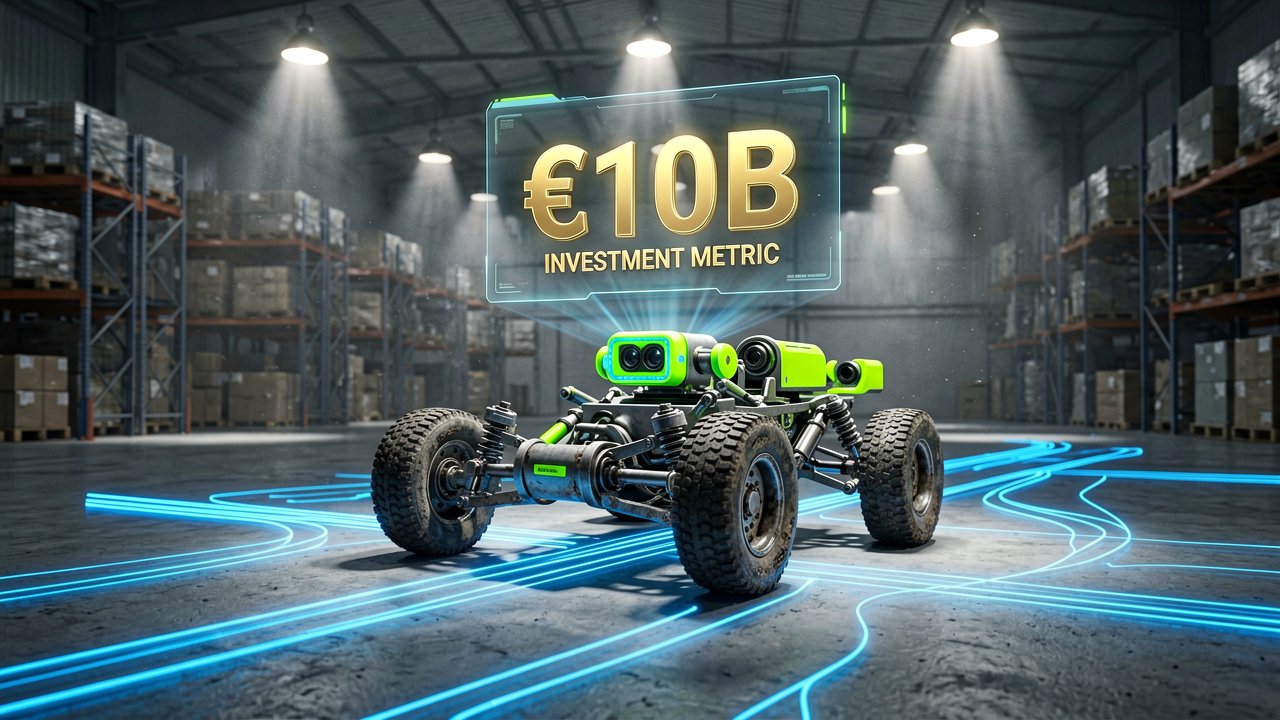
Amazon took the wraps off an upgraded, AI-powered mobile warehouse robot capable of responding to conversational prompts, marking a major milestone in logistics automation. The tech giant showcased the next-generation Proteus machine on Thursday at its "Delivering the Future" event in Dartford, England. This high-tech unveiling serves as the crown jewel of a broader €10 billion expansion across its European fulfillment network, underscoring a strategic push to dominate regional e-commerce infrastructure.
While the previous iteration of Proteus was confined strictly to loading dock zones moving heavy carts, this smarter version can navigate freely across entire warehouse floors. Workers can now issue verbal or textual commands in plain, conversational language rather than dealing with restrictive technical interfaces. According to details shared by Amazon News platform.
This aggressive infrastructure upgrade aligns directly with a parallel push for ultra-fast retail delivery across the continent. To keep consumer expectations met, the e-commerce titan plans to launch more than 25 sub-same-day delivery hubs across Europe this year alone. It is a massive financial bet backed by a forecast from earlier this year, indicating the company's global capital expenditure would jump over 50% to a staggering $200 billion to aggressively scale out its AI infrastructure.
Beyond the Flashy Automation: While a conversational warehouse robot makes for excellent headlines, the deeper narrative centers on Amazon’s intense race against rising labor costs and a shrinking workforce across Western Europe. This €10 billion injection is as much a defensive play against stricter European labor laws as it is an offensive push for market dominance. By substituting repetitive manual tasks with highly adaptable, LLM-driven robotics, the company is attempting to insulate its supply chain from future labor disputes and localized staffing shortages that have historically plagued its European fulfillment centers.
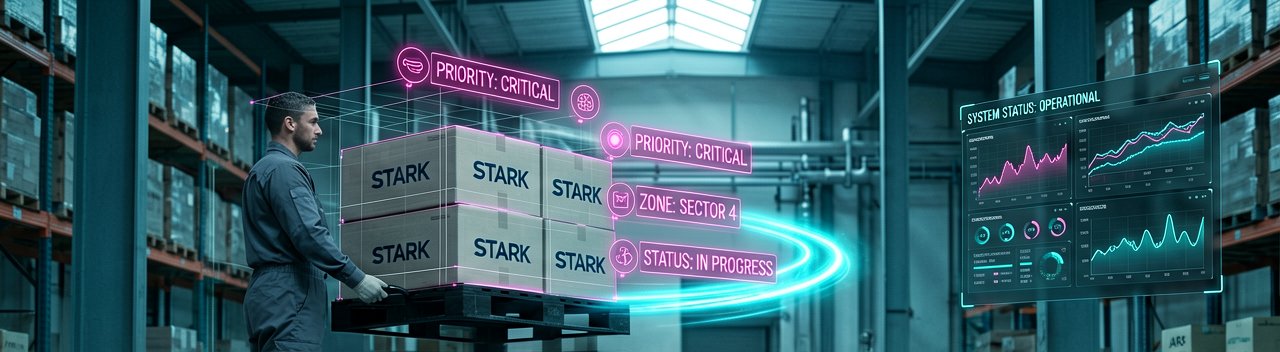
Industry insiders note that shifting from rigid, pre-programmed automation to generative AI-driven robotics represents a fundamental paradigm shift for the logistics sector. Traditional warehouse robots require precise floor markings, magnetic strips, or heavily restricted zones to operate safely around humans. By contrast, the newly upgraded Proteus uses advanced computer vision and real-time spatial awareness to recalculate its path on the fly. This enables the machine to seamlessly weave through human workers without disrupting the natural flow of the facility, solving a long-standing bottleneck in warehouse efficiency.
The Delicate Balancing Act of Human and Machine
Despite the high-tech marvels, the corporate rhetoric regarding "human-robot collaboration" faces skepticism from labor advocates. Unions across Germany and France have long voiced concerns over the rapid pace of automation, arguing that increased robotic deployment intensifies the surveillance and pacing of the remaining human staff. Amazon counters these criticisms by emphasizing ergonomic safety, pointing out that bots like STARK and Vulcan are specifically designed to absorb the grueling, physically punishing tasks—such as bending, lifting heavy totes, and constant reaching—that frequently lead to workplace injuries.
Financially, this massive logistical overhaul reflects a broader restructuring of Amazon's European footprint. The decision to establish dozens of sub-same-day delivery hubs alongside the robotic rollout shows a transition away from a centralized model toward a hyper-localized distribution network. By embedding intelligent automation closer to major metropolitan areas, the company drastically cuts down the time and fuel required for the final mile of delivery. This localized approach is crucial as European regulators tighten environmental compliance and carbon emissions standards for commercial fleets.
Ultimately, this regional escalation sets a formidable benchmark that local European retailers will struggle to match. Integrating multimodal AI with heavy machinery requires capital investments and specialized engineering talent that very few global competitors possess. As these conversational fleets roll out from Dartford to Barcelona, the tech giant is effectively building a proprietary, highly intelligent infrastructure moat, ensuring that its operational speed remains lightyears ahead of the traditional retail landscape.
Reading Between the Lines: The corporate narrative framing this €10 billion expansion as a benevolent upgrade for worker safety conveniently glosses over a harsh economic reality. Amazon’s sudden rush to deploy flexible, conversational AI on the warehouse floor looks less like a voluntary technological evolution and more like a high-stakes race to outrun the European Union's increasingly hostile regulatory environment. With the newly enacted AI Act and tightening cross-border labor protections targeting gig-economy frameworks and algorithmic management, the tech giant is moving aggressively to lock in infrastructure that minimizes its exposure to human regulatory liabilities before the legal window slams shut.
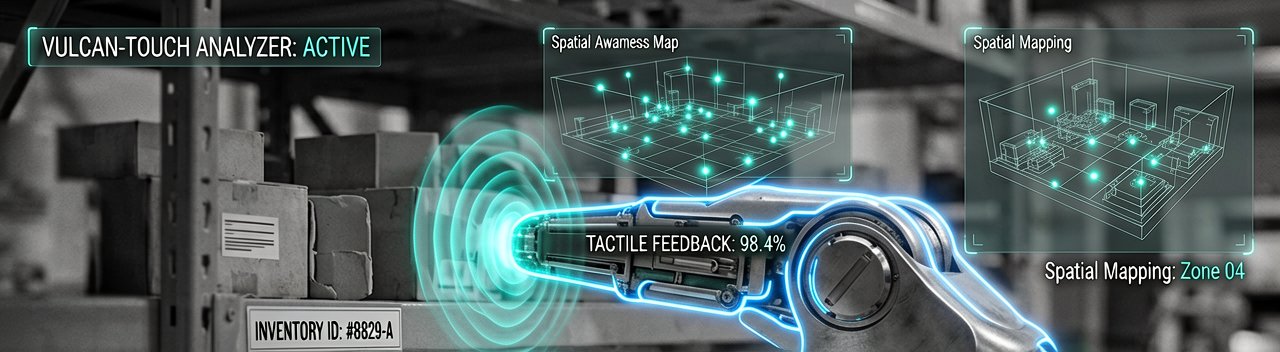
There is also a glaring contradiction between the company’s public commitment to environmental sustainability and the sheer energy demands of its new robotic fleet. While hyper-localized distribution hubs do shorten the physical distance traveled by delivery vans, powering thousands of sophisticated, LLM-driven autonomous robots across dozens of massive facilities requires an immense amount of localized electrical grid capacity. The specialized processors needed to calculate spatial mapping, computer vision, and real-time verbal command processing on the fly are notoriously power-hungry, casting doubt on how this automation push aligns with stricter European carbon-neutrality mandates.
The Real Price of Algorithmic Efficiency
Furthermore, the claim that bots like STARK and Vulcan will simply alleviate physical strain ignores the psychological toll of working alongside unwearied machines. When robots eliminate the natural pauses inherent in manual sorting and picking, they inadvertently set a relentless, algorithmic baseline pace that human workers are subtly forced to maintain. This creates an environment where the human element risks becoming the primary bottleneck in an otherwise optimized system, potentially driving up stress-related turnover rather than reducing workplace friction as promised.
Ultimately, this massive capital expenditure represents a bold gamble on the long-term reliability of generative AI in high-risk physical environments. While a conversational interface sounds impressive in a controlled demonstration, the chaotic, unpredictable nature of a bustling holiday-season fulfillment center is a different beast entirely. A single misinterpreted verbal command or a localized software glitch in an interconnected robotic network could trigger widespread operational paralysis, proving that absolute reliance on cutting-edge automation comes with its own unique, systemic vulnerabilities.
It turns out that the ultimate blueprint for dominating European commerce isn't about out-pricing the competition; it’s about replacing the human workforce with robots that can gracefully dodge a forklift, take verbal instructions without complaining to HR, and never, ever ask for a union card.
Artūras Malašauskas is an AI Systems Integrator with 20+ years of production-grade web engineering experience. He has designed, shipped, and scaled enterprise Python/PHP systems for logistics, SaaS, and public-sector clients. For the past year, he has focused exclusively on AI integrations: deploying open-source LLMs, building generative media pipelines (image, audio, video), and engineering multi-agent workflows for real production environments. His standard: reproducibility, security, cost-efficient inference—no vaporware. He documents and evaluates emerging AI tooling, separating verified capabilities from marketing noise. Technical editor at: muza-ai.eu, ai-verslas.lt, ai-naujinos.lt Connect on LinkedIn
Comments