Faraday Future’s Robotics Push and School Partnerships Signal Shift to EdTech and AI Innovation
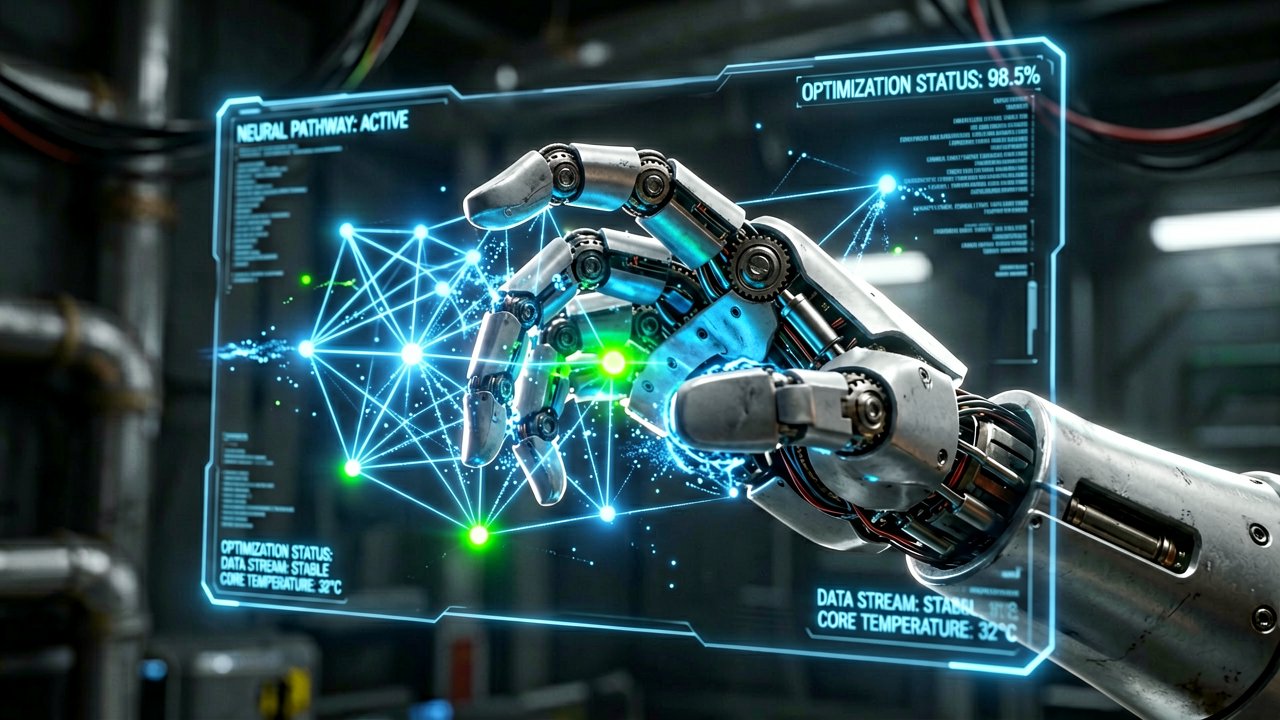
In a profound structural evolution, Faraday Future is systematically pivoting beyond its traditional ultra-luxury electric vehicle foundations to capture the burgeoning Embodied AI (EAI) and educational technology sectors. Led by Global CEO YT Jia, the California-based ecosystem builder has established a dedicated Education Ecosystem Product Line to architect the first scaled EAI education network across North America. This dual-track framework utilizes a rapid "Device-Data-Brain" flywheel, positioning physical humanoid and bionic hardware as real-world learning conduits that accumulate invaluable behavioral training data while generating high-margin commercial revenue.
The strategic shift is anchored by a flurry of critical commercial developments, including a landmark cooperation agreement with its first U.S. K-12 public school alongside an explicit sales contract for 23 EAI robots signed with Sequoia Education Center, as documented by Las Vegas Sun. Rather than treating robotics as an isolated hardware play, the corporation is establishing a dual entry point that services both B2B institutional procurement and B2C home-based family learning. This integration of standardized curricula, teacher-training services, and youth-oriented open-source developer platforms allows the company to establish a scalable user-acquisition network during a highly critical period of educational transition.
This organizational momentum will culminate in a series of highly anticipated public rollouts scheduled throughout June 2026. According to official corporate filings published via Business Wire, the firm will host its comprehensive EAI Robotics Education Ecosystem Strategy, Product Line, and New EAI Device Launch at its Los Angeles headquarters on June 16, followed by a Multi-Form Lineup Debut at the Automate show in Chicago on June 22. By shifting its core capital allocation and operational focus toward immediate, positive-gross-margin robotics shipments, the venture aims to stabilize its historically volatile balance sheet through rapid commercial diversification.
The Device-Data-Brain Flywheel
Unlike standard AI ventures that train algorithms using static web text scrapings, the enterprise is capitalizing on a self-reinforcing hardware-to-software paradigm. Every deployed bionic and humanoid unit, such as the newly deployed FF Master, functions as an active data collector within classrooms, clinics, and laboratories. The real-world behavioral datasets gathered during these physical tasks directly optimize the proprietary EAI Brain, systematically improving machine execution and accelerating downstream B2B and B2C commercial sales.

Establishing Dual B2B and B2C Entry Points
The operational logic behind targeting the K-12 academic framework lies in creating early brand sticky ecosystems and repeatable viral user loops. By embedding hardware within full-time academic institutions on the B2B front, the company organically creates an upstream demand pipeline for home-based bionic companions on the consumer B2C side. To fortify this network, the enterprise has integrated third-party institutions like the Boston International Business School to construct the BIBS-FF AI Robotics Institute, establishing concrete industry standards for Physical AI training and youth developer outreach.
Financial Diversification and Risk Mitigation
This intense diversification strategy directly answers years of prolonged capital constraints and delayed automotive timelines surrounding the brand's flagship EV programs. The EAI robotics division achieved positive gross product margins in its very first quarter of active deliveries, offering a reliable, short-term path to cash generation. Bolstered by fresh capital injections and an organizational pivot toward high-volume edtech hardware, the firm is striving toward a cumulative target of over 1,000 units shipped by the end of 2026 to ensure its long-term financial viability.
An Analytical Deep Dive into the Faraday Future AI Evolution
What Most Reports Miss: The recent corporate realignment toward the Embodied Artificial Intelligence (EAI) education space represents far more than an opportunistic cash-generation exercise; it is an intentional structural reconfiguration designed to solve the company's existential hardware bottlenecks. For years, the enterprise faced severe headwinds scaling capital-intensive automotive production in California, hampered by a highly fragile supply chain and multi-million-dollar heavy manufacturing overhead. By pivoting assembly lines toward highly standardized, low-tonnage educational robotics, the manufacturer has bypassed traditional automotive capital constraints, finding a high-margin arena where it can utilize its existing precision engineering frameworks without the regulatory and capital burdens of passenger vehicle assembly.
From an architectural standpoint, the introduction of the FF Master and its broader educational ecosystem serves as a sophisticated beta-testing environment for the enterprise's long-term autonomous technology. Senior engineers within the organization note that the core neural networks piloting classroom bionic devices share fundamental spatial intelligence libraries with the vehicle-level computer systems designed for the FF 91. By training these localized algorithms inside the highly dynamic, variable, and unscripted environments of active public school classrooms, the software division is generating high-fidelity physical interaction data that can eventually be scaled back up to industrial logistics and autonomous driving frameworks.

Market observers and institutional stakeholders look at this expansion with a mixture of pragmatic skepticism and genuine commercial interest. Institutional procurement cycles in the United States K-12 education sector are historically rigid, heavily regulated, and dependent on multi-year local budget approvals. However, by structuring the Sequoia Education Center agreement to bundle hardware directly with proprietary open-source developer platforms and structured educator certification tracks, the business model shifts from a volatile, one-off hardware sale to a predictable, sticky Software-as-a-Service (SaaS) revenue stream, significantly improving the firm's long-term enterprise valuation metrics.
The global macroeconomic landscape further validates this aggressive strategic transition as international technology hubs race to define the standards for Physical AI. Rather than competing head-to-head with pure-play software conglomerates on large language models, Global CEO YT Jia is leaning heavily into the physical manifestations of machine intelligence. Establishing specialized infrastructure, such as the BIBS-FF AI Robotics Institute, allows the company to cultivate a highly captive future workforce of young developers who are native to its proprietary robotic operating system, effectively establishing an ecosystem moat long before competitors deploy their own consumer-facing bionic companions.
The ultimate test for this operational pivot will materialize across the decisive launch dates scheduled throughout June 2026. If the upcoming Los Angeles product line unveiling and the subsequent Automate show demonstrations in Chicago translate into rapid, multi-thousand-unit institutional order backlogs, the business will have successfully engineered one of the most unexpected turnarounds in contemporary tech history. By utilizing a high-velocity product rollout strategy to stabilize its immediate balance sheet, the organization is steadily transforming from a single-product automotive outlier into an interconnected, multi-industry artificial intelligence powerhouse.
Reading Between the Lines: A Skeptical Appraisal of the Robotics Pivot
Reading Between the Lines: The sudden transformation of a high-end electric vehicle manufacturer into an educational robotics pioneer warrants a significant degree of institutional skepticism. While corporate reports point to a 62% year-over-year revenue increase to $512,000 for the first quarter of 2026, as documented by Investing.com , this financial metric must be weighed against the company's historical operating context. Upgrading a corporate identity to a "Physical AI company" is a highly effective mechanism for generating market enthusiasm, yet a half-million dollars in quarterly revenue represents a minimal buffer for an enterprise that has historically navigated intensive capital expenditure challenges and multi-million dollar net operating losses.
A closer inspection of the operational roadmap reveals a stark contrast between high-volume manufacturing ambitions and current real-world scale. The business has publically raised its 2026 shipment targets to 1,500 units, relying heavily on the K-12 academic sector as its primary commercial launchpad, according to financial disclosures on Business Wire. However, tracking actual monthly progress highlights the immense distance left to cover; official updates from CEO YT Jia noted a record-breaking month in May 2026 with 69 total robot shipments. While a 69-unit monthly output marks internal structural progress, sustaining that trajectory requires an immediate and unprecedented ramp-up in manufacturing velocity to avoid missing the stated end-of-year milestones.
Furthermore, the strategic decision to prioritize public school classrooms as live machine-learning environments introduces unique operational friction. Standard public education procurement contracts are notoriously slow, highly risk-averse, and subject to intense scrutiny regarding student data privacy. The premise that a fleet of bionic units can seamlessly collect granular behavioral data in classrooms to optimize a centralized artificial intelligence system sits uncomfortably alongside strict Western student-privacy frameworks. Navigating the compliance mandates of local school boards may ultimately prove more complex than solving the mechanical constraints of the hardware itself.
Ultimately, this educational pivot can be interpreted as a pragmatic capital-preservation exercise while the organization attempts to realign its primary automotive division. The upcoming June launch events in Los Angeles and the subsequent multi-form bionic reveals at the Automate trade show in Chicago, tracked by Yahoo Finance, are critical milestones to prove the hardware is market-ready. If these showcases fail to secure scalable, legally binding institutional order books, the initiative risks being viewed as another short-term directional shift rather than a sustainable corporate transformation.
"There is an undeniable, dry irony in watching an ultra-luxury electric vehicle pioneer resolve its automotive production bottlenecks by deploying bionic companions into elementary school classrooms—proving that if you cannot successfully manufacture a hundred-thousand-dollar car for adults, the next logical step is to have a robot teach their children how to code one instead."
Artūras Malašauskas is an AI Systems Integrator with 20+ years of production-grade web engineering experience. He has designed, shipped, and scaled enterprise Python/PHP systems for logistics, SaaS, and public-sector clients. For the past year, he has focused exclusively on AI integrations: deploying open-source LLMs, building generative media pipelines (image, audio, video), and engineering multi-agent workflows for real production environments. His standard: reproducibility, security, cost-efficient inference—no vaporware. He documents and evaluates emerging AI tooling, separating verified capabilities from marketing noise. Technical editor at: muza-ai.eu, ai-verslas.lt, ai-naujinos.lt Connect on LinkedIn
Comments