ENvue Medical's AI Platform Signals Shift Toward Autonomous Robotic Feeding Tube Navigation
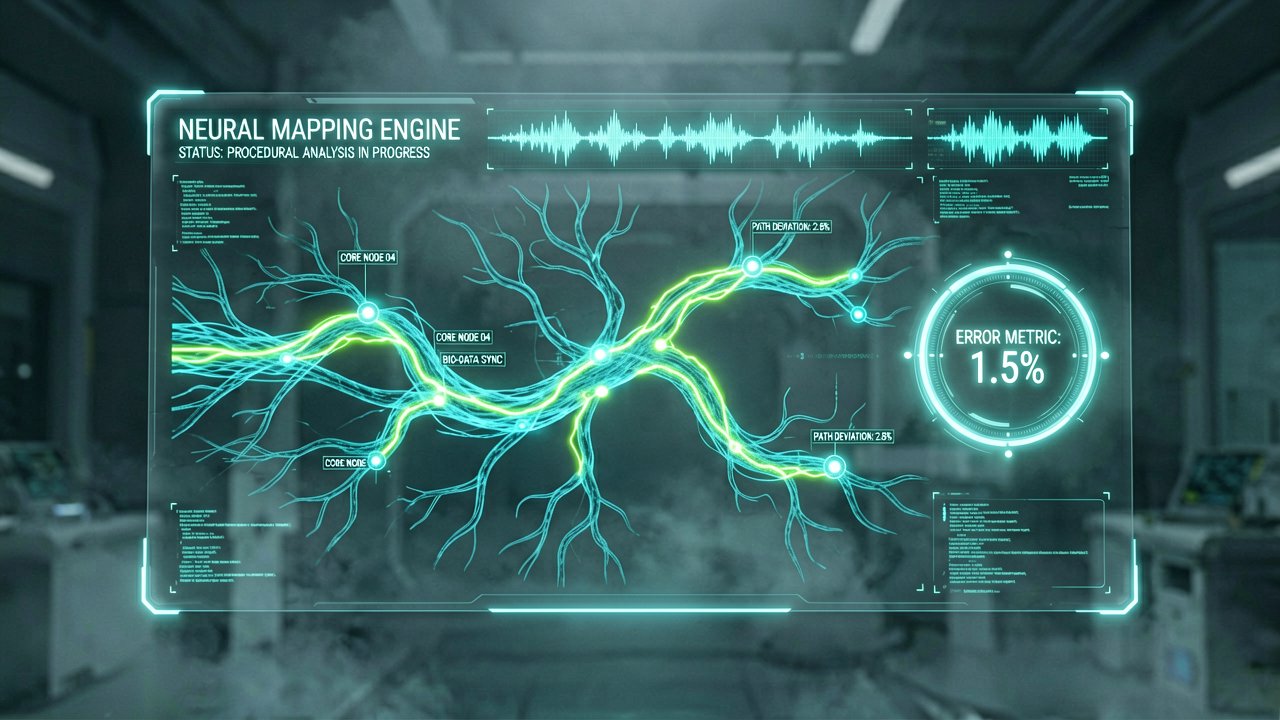
The medical robotics sector reached an architectural turning point as ENvue Medical officially introduced Ask Oscar™, an artificial intelligence training platform designed to eliminate traditional implementation bottlenecks in enteral care. By providing interactive, real-time procedural practice and objective performance feedback, the platform allows nurses and dietitians to train independently without requiring a physical clinical educator on-site. The introduction of this technology marks a conscious strategic pivot from a traditional medical device hardware model into an integrated AI platform ecosystem.
This deployment targets a critical, high-frequency clinical pain point: the complications associated with blind enteral feeding tube placement, which historical data indicates leads to accidental airway entry in 1.2% to 3.2% of standard procedures. Compounding this challenge, hospitals regularly face significant labor constraints and scheduling frictions when trying to coordinate specialized equipment training across varying shifts and multi-site departments. By automating skill reinforcement and detecting real-time procedural deviations, the software provides an immediate mechanism for healthcare systems to standardize clinical competency, mitigate operational friction, and accelerate the adoption of advanced navigation tools.
Beyond its immediate utility as a decentralized training system, the platform establishes the necessary data acquisition and algorithmic foundation for upcoming autonomous healthcare applications. Every simulation and practice session maps complex procedural telemetry into structured data, building the underlying intelligence layer required for automated navigation. This foundational architecture directly intersects with the company's broader, previously announced development roadmap for ENvue Drive, an upcoming robotic-assisted bedside feeding tube and vascular line navigation initiative designed to meet growing demands for automated, high-volume healthcare workflows.
Market Context and Overcoming Implementation Barriers
The strategic release of Ask Oscar closely follows the publication of validation data in Business Insider showing that ENvue’s core electromagnetic guidance platform eliminated accidental lung placements across 531 consecutive procedures and reduced ventilator-associated pneumonia cases by 67 percent. Despite these distinct clinical advantages, the broader medtech sector frequently suffers from delayed commercial scaling because hospital systems lack the personnel to train frontline staffs. By converting specialized human instructional knowledge into a continuous, software-driven feedback loop, the company addresses the fundamental workforce shortage impeding modern hospital procurement.
Strategic Shifts: Monetization and the Path to Robotics
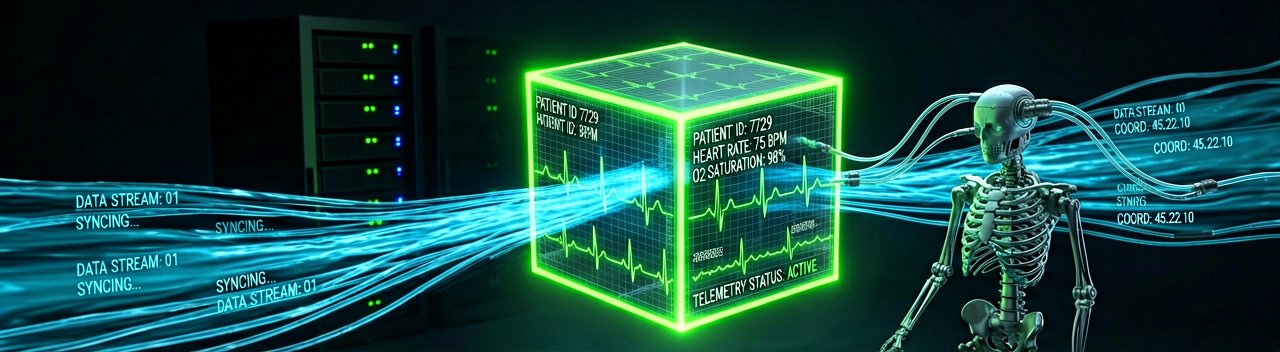
From an investment and market standpoint, this launch establishes a highly scalable recurring revenue stream across an installed base that currently spans dozens of U.S. clinical facilities. Transitioning medical hardware into a software-as-a-service (SaaS) training and intelligence framework structurally changes the unit economics of hospital adoption. More importantly, it highlights a broader industry trend where real-time visualization systems serve as the data-gathering precursor to full robotic automation. By training clinicians via AI today, the platform refines the machine-learning loops necessary to drive fully autonomous robotic catheter and feeding tube navigation tomorrow.
An Industry Turning Point in Enteral Care Safety
Beneath the Regulatory Milestones: The introduction of AI-guided training addresses a deeply entrenched, yet frequently unspoken, liability risk within modern hospital wards. For decades, blind feeding tube placement has relied heavily on tactile feedback, requiring clinicians to sense resistance to avoid accidental lung perforation. When complications occur, they are catastrophic, often resulting in severe pneumothorax or patient death. By transitioning from subjective human touch to a data-driven interface, healthcare facilities are not merely upgrading their instructional tools; they are actively insulating themselves from the compounding legal and financial liabilities that stem from preventable bedside errors.
From the perspective of frontline nursing staff, the traditional model of medtech onboarding has long been a source of operational frustration. Educational workshops are typically constrained by the scheduling availability of external corporate representatives, creating massive knowledge gaps when shifts rotate or new personnel join a department. Hospital administrators face a constant battle with clinical churn, meaning that thousands of dollars spent on specialized hardware training can vanish from a unit within months. A decentralized, software-based training module democratizes this educational pipeline, allowing new hires to achieve certified competency on their own schedule without stalling departmental workflows.
This digital transition also alters the underlying economics of hospital procurement committees. Historically, the acquisition of advanced visualization and robotic guidance systems required substantial capital expenditures and dedicated physical training spaces, which often limited these technologies to tier-one academic medical centers. By shifting the instructional architecture into a cloud-based software framework, the barrier to entry drops significantly for rural and community hospitals. This democratization of access ensures that smaller, underfunded facilities can provide the same tier of procedural safety and automated precision as major metropolitan health networks.

Looking at the broader medical robotics landscape, this launch serves as a masterclass in how hardware companies must evolve to survive. Pure-play medical device manufacturers are increasingly vulnerable to supply chain disruptions and commoditization. By embedding an intelligent software layer directly into the clinical workflow, technology providers create an ecosystem that becomes indispensable to daily operations. The data harvested from these training loops does more than improve immediate user proficiency; it actively feeds the algorithmic models required to navigate the complex anatomical pathways of future autonomous surgical and endovascular interventions.
The Hidden Cost of Automated Competency
Reading Between the Lines: The promise of a fully decentralized, software-driven training ecosystem glosses over a persistent psychological friction within institutional healthcare: the limits of algorithmic trust. While removing human instructors from the onboarding pipeline solves immediate scheduling bottlenecks, it simultaneously shifts the burden of clinical validation onto an unproven digital interface. Hospital administrators may celebrate the cost savings of automated skill reinforcement, but frontline clinicians often harbor deep skepticism toward software that claims to evaluate physical, tactile competency. If an AI certifies a user who subsequently triggers an adverse event during a live procedure, the resulting legal and operational finger-pointing will test the boundaries of corporate and institutional liability.
Furthermore, this strategic shift highlights a glaring contradiction in the broader push toward healthcare automation. The foundational data needed to power tomorrow's fully autonomous robotic-assisted navigation is currently being harvested from the errors and corrections of understaffed nursing teams today. Medtech firms are essentially outsourcing their machine-learning refinement to the very workforce they claim to be liberating from administrative burdens. This dynamic creates a temporary paradox where healthcare systems must invest heavily in training staff on intermediate interfaces, all while knowing the ultimate corporate objective is to render those exact manual skills obsolete through future autonomous platforms.
There is also a significant financial risk hidden beneath the software-as-a-service monetization model. As medical hardware increasingly becomes an empty shell dependent on proprietary, cloud-hosted intelligence layers, hospitals face the grim reality of vendor lock-in. A facility that embeds this specific AI platform into its standardized nursing curriculum cannot easily pivot to a competitor without rewriting its entire operational playbook. Over time, the subscription costs of maintaining these essential training modules could easily outpace the original capital expenditure of the hardware, turning what appeared to be an efficient budget line item into a perpetual financial drain.
"We are rapidly approaching an era where a machine will flawlessly guide a tube into a patient's stomach, backed by terabytes of cloud intelligence and flawless digital certifications—leaving us to wonder if anyone in the room still remembers how to do it if the Wi-Fi drops."
Artūras Malašauskas is an AI Systems Integrator with 20+ years of production-grade web engineering experience. He has designed, shipped, and scaled enterprise Python/PHP systems for logistics, SaaS, and public-sector clients. For the past year, he has focused exclusively on AI integrations: deploying open-source LLMs, building generative media pipelines (image, audio, video), and engineering multi-agent workflows for real production environments. His standard: reproducibility, security, cost-efficient inference—no vaporware. He documents and evaluates emerging AI tooling, separating verified capabilities from marketing noise. Technical editor at: muza-ai.eu, ai-verslas.lt, ai-naujinos.lt Connect on LinkedIn
Comments