ARBOR Launches ARES-2100 Edge AI System with Intel Wildcat Lake
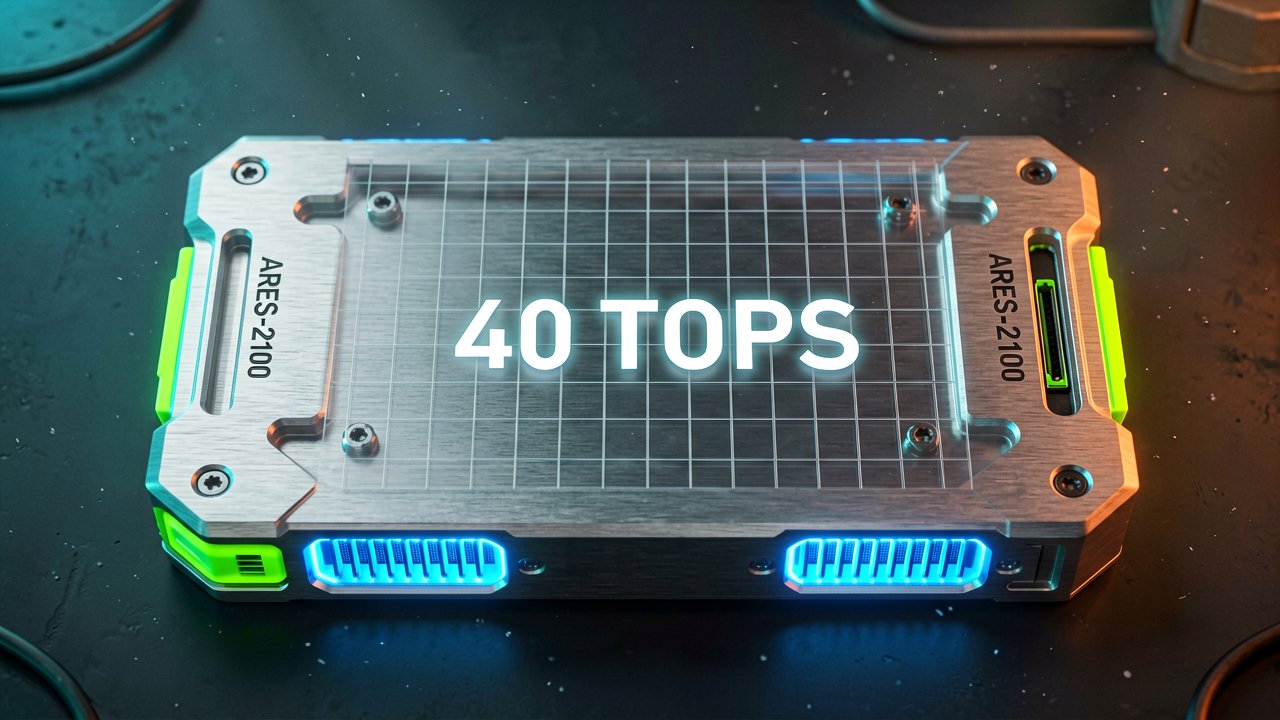
The industrial edge computing market received a new contender this week when ARBOR Technology announced the ARES-2100 Series, an ultra-slim fanless system built around Intel Core Series 3 processors (code name Wildcat Lake). The platform targets space-constrained environments where traditional server racks won't fit—autonomous mobile robots, automated guided vehicles, and narrow industrial cabinets.
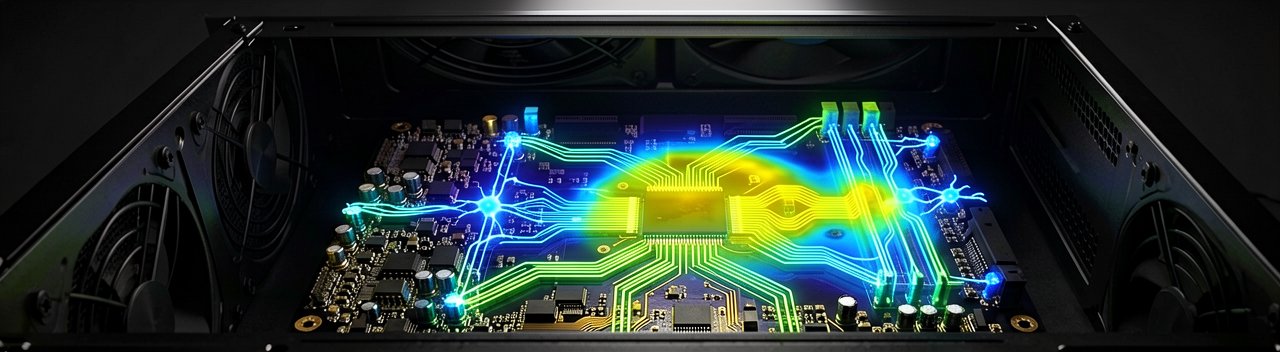
Per the official product documentation, the ARES-2100 combines three silicon engines into a single chassis: CPU cores, Intel Xe3 graphics, and Intel NPU 5.0. This hybrid architecture delivers up to 40 TOPS of aggregate AI performance, with the dedicated NPU handling up to 17 TOPS for neural workloads. That separation matters for real-time applications where inference latency can't interfere with deterministic control loops.
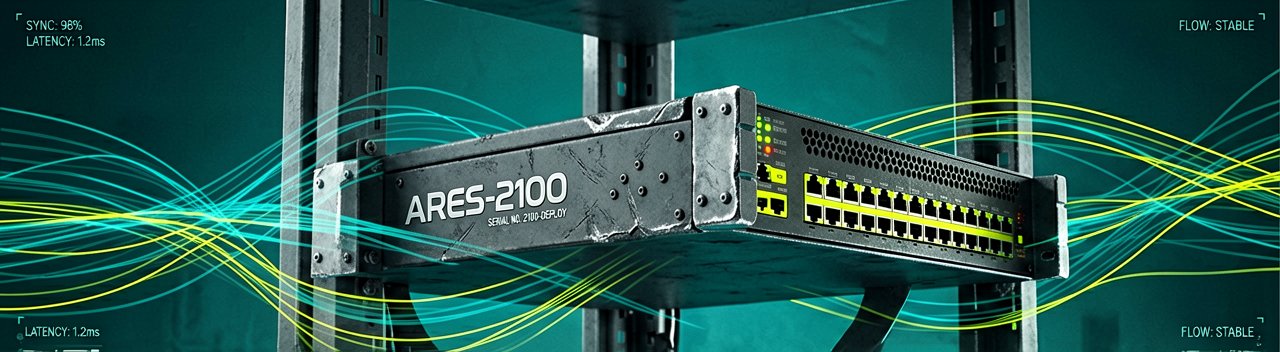
The physical form factor is where the engineering gets interesting. At 188 x 120 x 44 mm and weighing 1.1 kg, the unit fits into a standardized 1U rack height. The fanless thermal design eliminates moving parts that typically fail first in vibration-heavy environments. For anyone who's ever watched a cooling fan seize up on a factory floor, this is a welcome change (few things are more frustrating than debugging hardware that died because of dust). The chassis meets MIL-STD-810H shock and vibration criteria, with operation rated from -20°C to 60°C.
Connectivity options vary by SKU but include up to three 2.5GbE LAN ports, multiple USB 3.2 interfaces, and M.2 expansion slots for wireless or storage modules. The ARES-2100-CAN variant adds isolated CAN FD ports for vehicle integration. Optional onboard UFS 3.1 storage reaches 256GB, which offers faster read/write speeds than traditional SATA drives—a practical advantage when logging high-frequency sensor data.
Power requirements span 9-36V DC input with a maximum draw of 90W. This wide voltage range accommodates industrial power fluctuations without needing external regulation. The system supports Windows 10, Windows 11, and Ubuntu, though real-world performance will depend on driver maturity for Wildcat Lake and NPU 5.0 software stacks.
Industry coverage from Automation Magazine notes that the hybrid approach offloads vision and neural tasks from the CPU, preserving resources for critical control logic. This architectural separation is becoming standard across edge vendors, but the 1U fanless form factor positions the ARES-2100 for deployments where thermal headroom and mechanical reliability are hard constraints.
Technical specifications from ARBOR's product page list a single DDR5 SO-DIMM socket supporting up to 64GB, TPM 2.0 security, and a watchdog timer with 255 reset levels. The metal and aluminum construction includes cable-lock brackets to prevent accidental disconnections—a small detail that matters when systems run unattended for months.
News reporting from Let's Data Science contextualizes the launch within broader market trends toward heterogeneous edge architectures. The combination of CPU, GPU, and NPU engines aims to accelerate inference while conserving power and thermal headroom. For teams deploying machine vision or predictive maintenance at the factory edge, this represents a practical evolution rather than a radical departure.
What remains unclear is pricing and availability timelines. The product page marks the system as "Coming Soon" without specifying release dates or unit costs. System integrators will need to benchmark actual latency and throughput against existing node-level accelerators before committing to deployment. The 90W power envelope also requires evaluation for mobile platforms where battery capacity or generator output may be limited.
Whether users actually pay for the convenience of a pre-integrated solution versus building custom edge nodes remains the real question. The ARES-2100 offers verified specs and ruggedization, but the value proposition hinges on software support and total cost of ownership in real deployments.
Artūras Malašauskas is an AI Systems Integrator with 20+ years of production-grade web engineering experience. He has designed, shipped, and scaled enterprise Python/PHP systems for logistics, SaaS, and public-sector clients. For the past year, he has focused exclusively on AI integrations: deploying open-source LLMs, building generative media pipelines (image, audio, video), and engineering multi-agent workflows for real production environments. His standard: reproducibility, security, cost-efficient inference—no vaporware. He documents and evaluates emerging AI tooling, separating verified capabilities from marketing noise. Technical editor at: muza-ai.eu, ai-verslas.lt, ai-naujinos.lt Connect on LinkedIn
Comments