AMD Launches Instinct MI350P PCIe Cards for Enterprise AI Inference
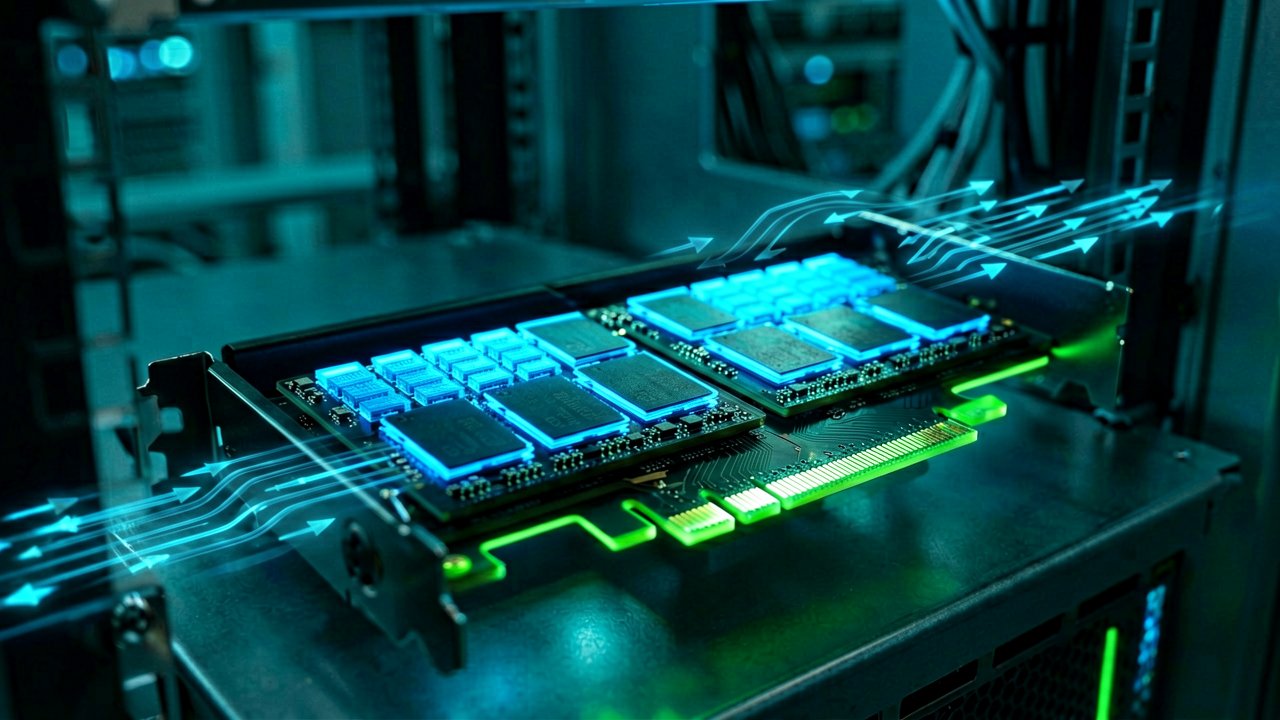
Advanced Micro Devices has officially announced the AMD Instinct MI350P PCIe accelerator cards, positioning them as a drop-in solution for enterprises running AI inference workloads within existing data center infrastructure. The announcement, published on the company's official blog on May 7, 2026, frames the product as a middle ground between cloud-based AI services and expensive dedicated GPU platforms.
The core value proposition is straightforward: enterprises can deploy AI without rebuilding their power, cooling, or rack infrastructure. According to AMD's official documentation, the MI350P cards are dual-slot, air-cooled PCIe cards designed to fit into standard server racks. This physical form factor matters because it means IT teams won't need to negotiate with facilities management for new power circuits or liquid cooling loops (a bureaucratic nightmare that has stalled countless AI deployments).
Performance specifications are aggressive for the PCIe form factor. AMD estimates 2,299 teraflops (TFLOPS) of compute throughput, scaling to 4,600 peak TFLOPS at MXFP4 precision. The cards ship with 144GB of high bandwidth memory 3e (HBM3E) running at up to 4TB/s bandwidth. These numbers represent the highest performance currently available in an enterprise PCIe card, according to the company's own benchmarks.
Independent coverage from TechPowerUp corroborates the technical specifications and deployment targets. The outlet notes that the cards support up to eight accelerator cards in air-cooled systems, making them suitable for small, medium, and large AI models focused on inference and RAG pipelines.
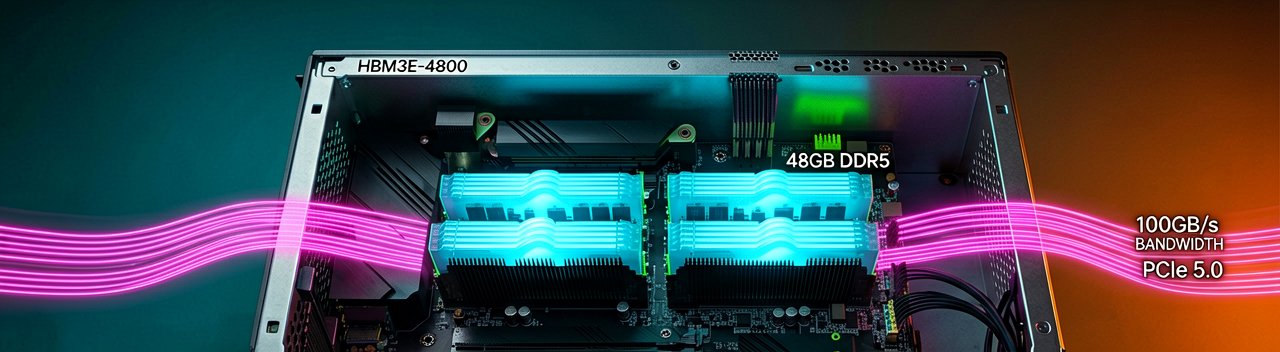
What distinguishes the MI350P from previous generations is its native support for lower-precision formats. The card handles MXFP6 and MXFP4 natively, which deliver high throughput for inference workloads. Higher precision formats like INT8 and BF16 benefit from sparsity support, allowing the GPU to skip calculations on zero-valued weights. This isn't just a theoretical optimization—it translates to reduced memory usage and lower power demands during actual operation.
From a software perspective, AMD is pushing an open ecosystem strategy. The enterprise AI reference stack is provided to partners at no licensing cost, which should reduce operating expenses compared to proprietary alternatives. The stack includes the Kubernetes GPU Operator for lifecycle management, cloud-native AMD Inference Microservices, and native support for frameworks like PyTorch. The goal is workload migration with minimal code changes.
There's a practical reality check here. While the specs look impressive on paper, the "drop-in" promise depends entirely on your existing hardware. A server from 2020 might not have enough PCIe lanes or power delivery to run eight MI350P cards at full capacity. The physical experience of installing these cards—plugging them into slots, routing cables, watching fans spin up to 4000 RPM under load—will vary significantly by chassis design.
The pricing strategy remains unclear. AMD emphasizes ROI and cost-effectiveness but doesn't list specific MSRPs in the announcement. This is typical for enterprise hardware, where final pricing depends on volume, partner relationships, and system integration costs. The "no ongoing per-token charges" benefit is real for on-prem deployments, but the upfront capital expenditure could be substantial for smaller organizations.
Industry context matters. The AI inference market has been dominated by cloud providers and NVIDIA's data center GPUs. AMD's PCIe approach targets a specific segment: enterprises that need more compute than CPUs can provide but aren't ready to invest in dedicated GPU accelerator platforms. It's a pragmatic play for organizations caught between budget constraints and AI adoption pressure.
Whether this actually reduces total cost of ownership depends on deployment scale. A single card in a test server is one thing. Deploying hundreds across a data center introduces new variables: firmware management, driver compatibility, thermal throttling in dense configurations, and the inevitable edge cases that only appear in production. The open ecosystem helps, but it doesn't eliminate integration friction.
AMD's positioning as an alternative to cloud AI services addresses real concerns about data privacy and unpredictable costs. However, the trade-off is clear: enterprises gain control but also inherit the operational burden. The MI350P doesn't solve the AI infrastructure problem—it just offers a different way to pay for it.
The launch timing aligns with broader industry trends toward on-prem AI deployment. Organizations are increasingly wary of sending sensitive data to third-party clouds, and the per-token pricing models of major cloud providers have become less attractive at scale. Whether the MI350P becomes a mainstream choice depends on real-world performance validation beyond AMD's engineering projections.
Artūras Malašauskas is an AI Systems Integrator with 20+ years of production-grade web engineering experience. He has designed, shipped, and scaled enterprise Python/PHP systems for logistics, SaaS, and public-sector clients. For the past year, he has focused exclusively on AI integrations: deploying open-source LLMs, building generative media pipelines (image, audio, video), and engineering multi-agent workflows for real production environments. His standard: reproducibility, security, cost-efficient inference—no vaporware. He documents and evaluates emerging AI tooling, separating verified capabilities from marketing noise. Technical editor at: muza-ai.eu, ai-verslas.lt, ai-naujinos.lt Connect on LinkedIn
Comments