Supercomputing for the Masses: Argonne Deploys the First Large-Scale AI Inference Service for Open Science
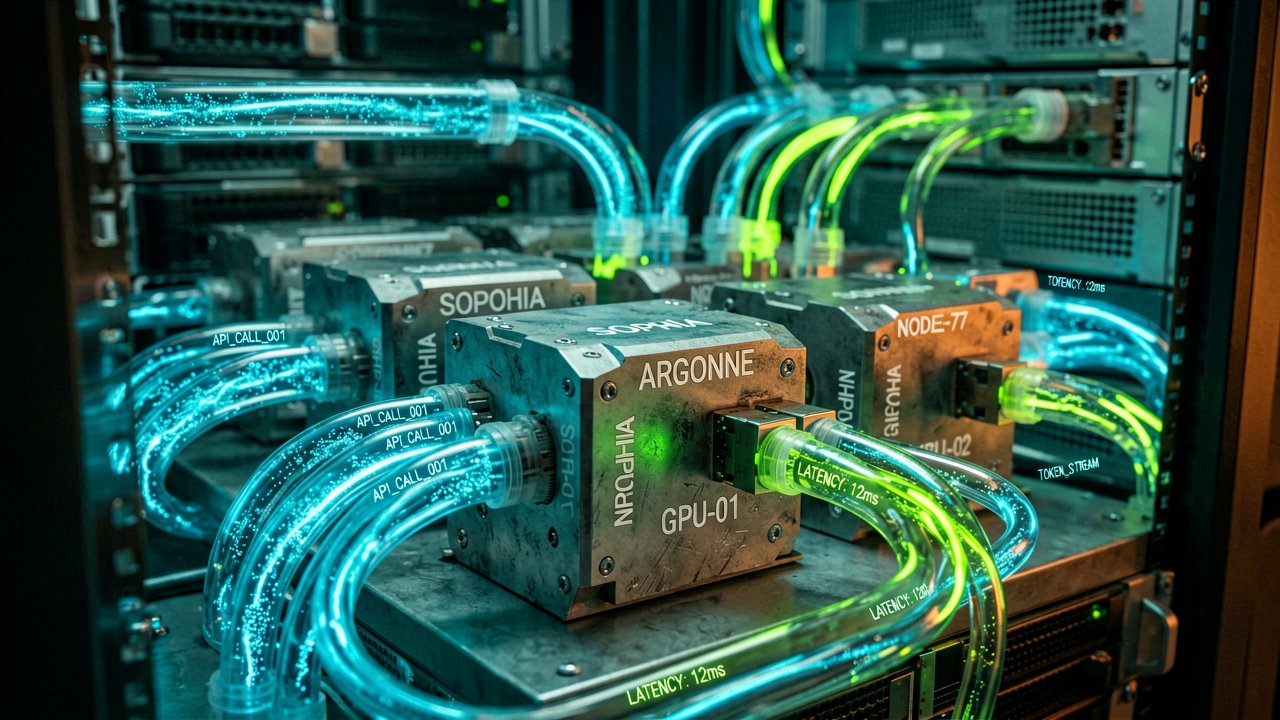
For decades, national labs have been the exclusive playgrounds of high-performance computing, where elite researchers queue up for months to run massive, isolated simulation blocks. But the era of raw, disconnected computation is officially drawing to a close. On May 26, 2026, the U.S. Department of Energy’s Argonne National Laboratory completely flipped the script by launching the first large-scale, persistent AI inference service dedicated strictly to the open science community.
Deployed through the Argonne Leadership Computing Facility (ALCF), this new infrastructure moves beyond traditional "batch job" supercomputing. Instead of treating artificial intelligence as an occasional, resource-heavy calculation, the service provides an always-on, accessible platform where scientists can programmatically ping frontier AI models via a standard, OpenAI-compliant API or a web interface. The initiative radically lowers the barrier to entry, allowing researchers nationwide to weave sophisticated machine learning directly into their daily experimental and data-generation workflows without needing to deploy their own local AI frameworks or manage complex supercomputer accounts.
The Architecture Fueling a Scientific Shift
Behind this roll-out is a highly heterogeneous stable of specialized hardware designed to absorb the crushing token demands of agentic AI applications. Currently, the ALCF Inference Service runs across dedicated high-performance clusters, including the GPU-dense Sophia and Metis systems, alongside a specialized, inference-optimized Sambanova cluster known as Medus. This multi-tiered backend ensures that the relentless "tool calling" required by modern AI agents—which rapidly consumes tokens as models bounce instructions back and forth between simulations—remains economically viable and lightning-fast. Argonne isn't stopping there, either; the lab is already preparing to onboarding upcoming NVIDIA B200-powered clusters, Tara and Minerva, to supercharge the service’s backbone.
By transforming raw computing capacity into a centralized, service-enabled hub, Argonne is fundamentally altering how scientific tools interoperate. Researchers leveraging specialized tools, such as the chemistry-focused ChemGraph application, can now execute highly iterative, multi-step workflows—like screening millions of candidate molecular structures—as a continuous, integrated process. Rather than forcing scientists to constantly stitch together fragmented datasets across disparate machines, the ALCF is delivering a fully connected environment where data generation, traditional physical simulations, and real-time AI inference live under one unified roof.

What Most Reports Miss: The Hidden Crisis of Token Economics in Science
While mainstream coverage focuses on the sheer hardware muscle of these new clusters, the real triumph here lies in solving a quiet economic crisis threatening automated discovery: the massive financial overhead of scientific tool calling. When an AI model functions as an autonomous "agent"—iterating on an experimental design, triggering a physical simulation, analyzing the result, and adjusting its parameters—it doesn't interact like a human typing a conversational prompt. Instead, it generates a relentless stream of dense programmatic inputs and outputs. This continuous loop causes token consumption to skyrocket exponentially compared to traditional chatbot applications, creating a cost barrier that would quickly bankrupt standard academic budgets relying on commercial cloud APIs.
By hosting these large language and foundation models on dedicated, public infrastructure, Argonne effectively absorbs the financial shockwaves of agentic science. Researchers are freed from the looming anxiety of commercial API bills, allowing them to build deeply nested, autonomous loops where AI can freely query tools thousands of times to break down complex scientific problems into bite-sized data chunks. This localized approach drastically cuts down latency, as data no longer needs to hop between private academic servers and commercial cloud data centers, keeping sensitive scientific workflows entirely within a secure, high-speed ecosystem.
Democratizing the Cutting Edge
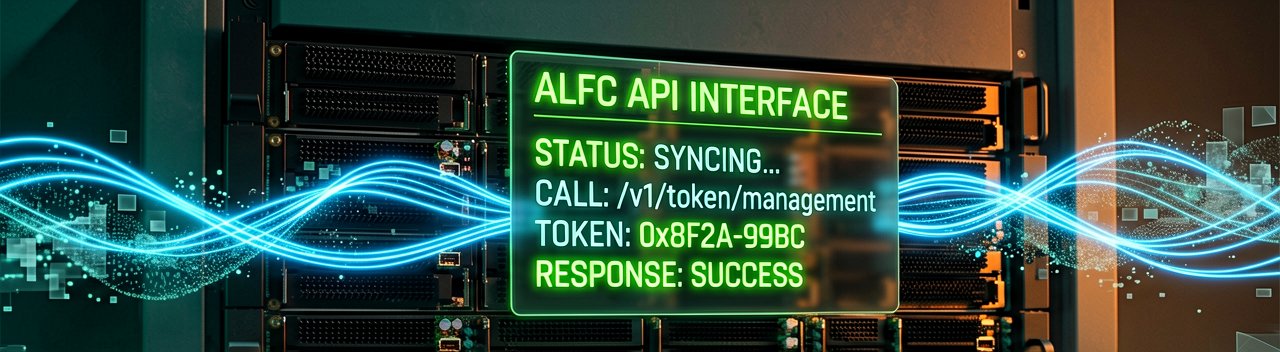
Perhaps the most radical aspect of this deployment is how aggressively it strips away the traditional complexities of high-performance computing. Historically, utilizing a national laboratory’s resource meant navigating dense command-line interfaces, auditing resource allocations, and configuring custom machine learning environments from scratch. The ALCF Inference Service completely bypasses these bottlenecks by introducing a web client that handles token management and stream formatting automatically, alongside an API authenticated through standard Globus access tokens.
This operational shift marks a crucial step forward for broader federal initiatives like the National Artificial Intelligence Research Resource (NAIRR) pilot, which seeks to democratize advanced computing across a more diverse pool of American students and researchers. By hiding the underlying hardware complexities under a clean, universally recognized API wrapper, a biology student at a mid-sized university can tap into the exact same AI capabilities as a senior computational scientist at a national lab. Ultimately, Argonne is proving that the future of global AI leadership isn't just about who builds the biggest supercomputer, but who makes that immense power the easiest to use.
Reading Between the Lines: The Friction Point of Centralized Open Science
The glossy press releases surrounding the ALCF Inference Service paint a utopian picture of friction-free, democratic discovery, yet this shift toward a centralized AI model layer introduces a structural paradox for open science. By encouraging the research community to rely on a centralized hub of curated foundation models, the Department of Energy is effectively establishing a federal monopoly on scientific truth. While standardizing workflows across a handful of vetted architectures ensures consistency, it inherently suppresses the radical architectural experimentation that drives early-stage machine learning innovation. Researchers are subtly incentivized to fit their hypotheses into the parameters of existing, hosted models rather than expending resources to build bespoke, niche architectures from the ground up.
Furthermore, this architectural homogenization exposes a glaring vulnerability in reproducibility, the very bedrock of scientific inquiry. Traditional supercomputing simulations are deterministic; running the exact same physics code on the same hardware will yield identical results years down the line. AI inference engines, conversely, are notoriously slippery beasts. Even when APIs remain constant, backend hardware optimizations, quantization adjustments, or minor microcode updates across heterogeneous clusters like Sophia or Medus can cause subtle shifts in model weights and token outputs. A research team replicating an automated molecular discovery pipeline six months from now may find their autonomous agents taking entirely different logical branches, transforming verifiable science into a moving target.
There is also the looming logistical bottleneck of equitable resource allocation under the National Artificial Intelligence Research Resource (NAIRR) blueprint. Stripping away the gatekeeping barrier of complex supercomputer accounts inevitably floods the system with demand, creating a classic tragedy of the commons scenario. When every undergraduate biology student and national lab director can ping the same B200 clusters through a simplified API, rate-limiting becomes the new battleground. The lab has yet to fully articulate how it will triage a high-priority climate model agent competing for tokens against thousands of automated, lower-tier academic queries. Without rigid, transparent tiering, the promise of democratic access threatens to dissolve into an agonizing queue of throttled API requests, proving that even in the cloud, computing power remains stubbornly zero-sum.
"We have successfully democratized the frontier of artificial intelligence for the scientific masses, which means researchers are now completely free to generate unprecedented volumes of highly sophisticated, automated errors at a fraction of the traditional cost."
Artūras Malašauskas is an AI Systems Integrator with 20+ years of production-grade web engineering experience. He has designed, shipped, and scaled enterprise Python/PHP systems for logistics, SaaS, and public-sector clients. For the past year, he has focused exclusively on AI integrations: deploying open-source LLMs, building generative media pipelines (image, audio, video), and engineering multi-agent workflows for real production environments. His standard: reproducibility, security, cost-efficient inference—no vaporware. He documents and evaluates emerging AI tooling, separating verified capabilities from marketing noise. Technical editor at: muza-ai.eu, ai-verslas.lt, ai-naujinos.lt Connect on LinkedIn
Comments