AWS Drops the Rewrite: Amazon SageMaker AI Embraces OpenAI-Compatible APIs
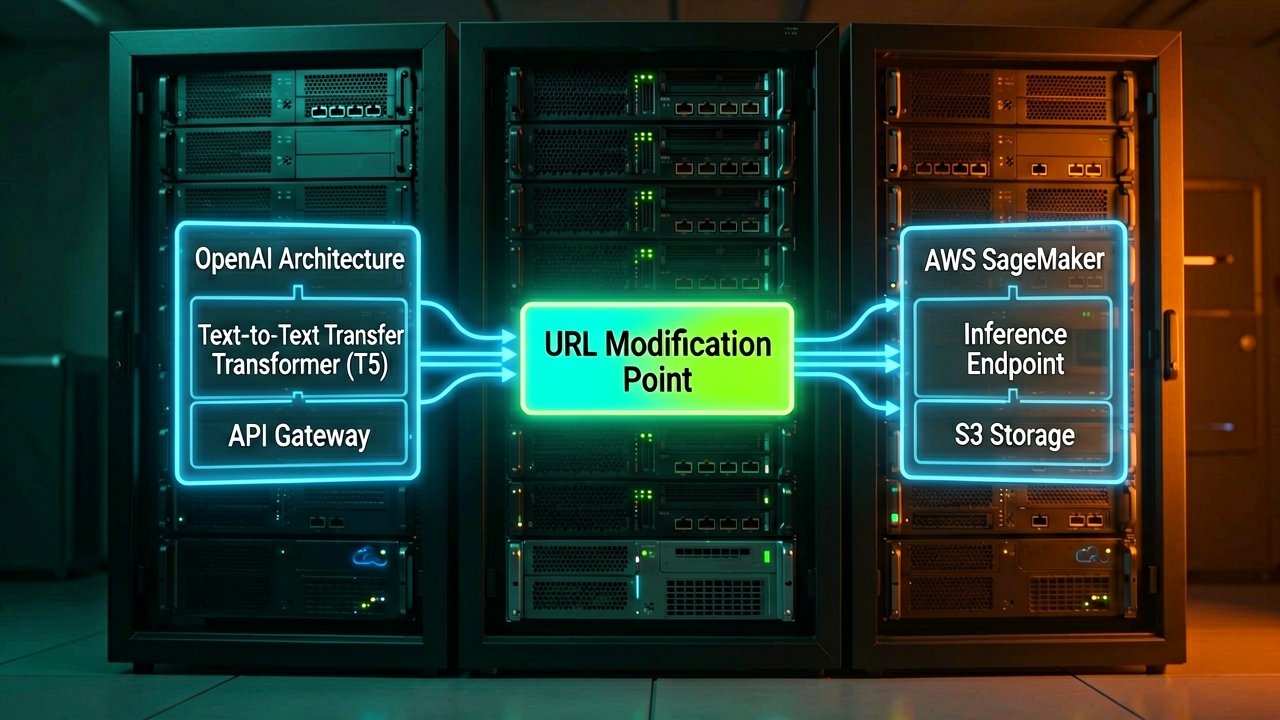
For developers navigating the fragmented landscape of generative AI, the engineering overhead of swapping out underlying infrastructure has long been a quiet tax on innovation. It is an industry reality that a staggering portion of today's AI applications are built natively on OpenAI's SDK or orchestrated via popular frameworks like LangChain. Transitioning those enterprise-grade workloads to cloud-hosted environments traditionally meant rewriting codebases, configuring bespoke API wrappers, and wrestling with signature verification protocols. AWS has shattered that barrier with an elegant, highly practical update to its flagship machine learning platform.
An official product announcement from AWS Machine Learning Blog confirms that Amazon SageMaker AI now natively supports OpenAI-compatible APIs for real-time inference endpoints. The implications are immediate for engineering teams. Developers can now point their existing OpenAI-based client code directly toward a SageMaker endpoint by modifying nothing more than the base URL. No custom client structures, no AWS SigV4 wrapper configurations, and absolutely no fundamental code logic overhauls are required to migrate workloads.
Frictionless Migration to Dedicated Hardware
By standardizing on this universally understood API specification, Amazon SageMaker AI effectively removes the integration friction that previously stalled enterprise migrations. Applications built on frameworks like LangChain or Strands Agents can instantly interface with specialized open-weight models deployed on AWS. Teams retain complete autonomy over their dedicated GPU fleets, autoscaling parameters, and strict data residency controls while preserving the lightweight developer experience of the OpenAI ecosystem. It is a calculated move to capture production-level enterprise workloads that need cloud scalability but want to avoid vendor lock-in or complex API re-engineering.
Streamlined Implementation
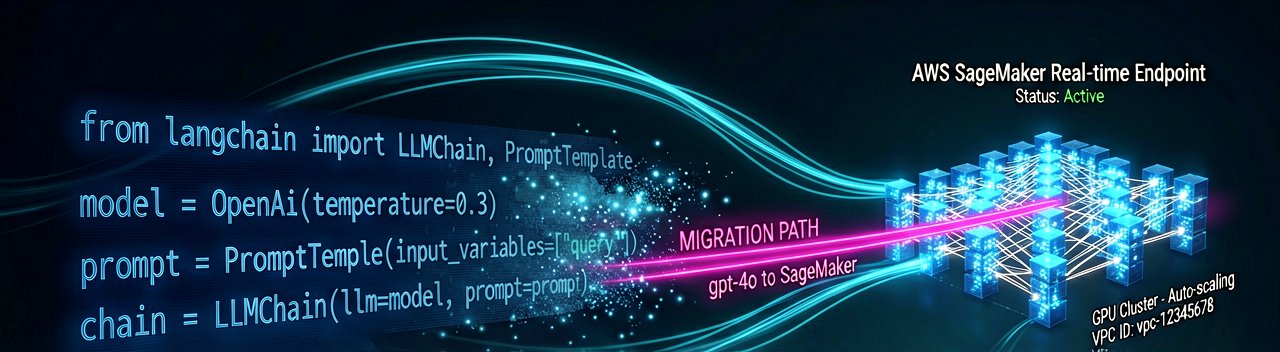
Getting started with the new integration requires minimal setup, mirroring the standard developer workflows of modern MLOps pipelines. Engineers begin by deploying their foundation model of choice onto a SageMaker AI real-time endpoint using an officially supported container. From there, installing the updated SageMaker Python SDK provides the necessary backend routing capabilities. Once the endpoint is active, developers simply update the base URL string within their application's standard OpenAI client initialization, allowing traffic to route securely through AWS infrastructure without altering downstream prompts, streaming functions, or payload structures.
Behind the Scenes: The Pragmatic Shift in the Cloud AI Turf War
For years, the major cloud providers operated under the assumption that proprietary orchestration frameworks would serve as the ultimate customer lock-in. AWS historically championed its own software development kits and authentication protocols, requiring engineering teams to adapt to the Amazon ecosystem rather than the other way around. However, the explosive democratization of open-weight models like Meta’s Llama series and Mistral’s offerings shifted the power dynamic. Developers did not want to learn proprietary cloud APIs; they wanted to deploy the best available models using the tools they already knew. By adopting the OpenAI specification, AWS is acknowledging that a unified developer interface has effectively won the industry standard war.
This structural pivot addresses a massive, unspoken headache for enterprise Chief Technology Officers: technical debt in the orchestration layer. When generative AI burst into the mainstream, thousands of companies rushed prototypes to production using OpenAI’s API because it was the fastest path to market. As those applications matured, demands for data privacy, predictable latency, and cost management forced a migration toward self-hosted models on dedicated infrastructure. Until now, that migration required dev teams to painstakingly audit and rewrite codebase plumbing. This update turns what was once a multi-week engineering sprint into a trivial configuration change, effectively lowering the barrier for enterprise defection to AWS.
The move also positions SageMaker AI defensively against nimbler AI-native infrastructure rivals. Startups and specialized hosting platforms gained significant market share by offering dead-simple, OpenAI-compliant hosting for open-source models with near-zero configuration. AWS, with its historically rigid infrastructure primitives, risked looking overly bureaucratic to the modern AI engineer. By embedding this compatibility layer directly into SageMaker endpoints, Amazon successfully pairs its robust, enterprise-grade security and compliance guardrails with the agile, friction-free developer experience that the market now demands.
Ultimately, this architectural concession signals a more mature phase of the cloud AI landscape. We are moving past the era of proprietary land grabs and entering a period focused on operational efficiency and workload optimization. Enterprise teams can now leverage SageMaker’s advanced autoscaling, multi-model endpoints, and deep integration with AWS data lakes without paying a tax in development velocity. It is a win for engineering teams who value flexibility, and a calculated bet by AWS that meeting developers exactly where they are is the best way to secure long-term infrastructure spend.

Reading Between the Lines: The Irony of Standardization
While the market is celebrating this move as a triumph of open collaboration, a closer inspection reveals a profound irony. AWS, a hyperscaler built on the very premise of proprietary cloud primitives, has essentially outsourced its developer experience strategy to its fiercest competitor’s design language. By turning the OpenAI API specification into the de facto interface for SageMaker AI, Amazon is inadvertently cementing OpenAI’s cultural and technical hegemony over the ecosystem. It is a tactical surrender in the interface war designed to win the broader infrastructure battle, proving that in the current climate, computing horsepower volume matters far more to cloud giants than API syntax ownership.
This development also exposes a fragile contradiction in the open-source AI narrative. The industry frequently champions open-weight models as the ultimate escape hatch from centralized corporate control and vendor lock-in. Yet, the moment developers seek to deploy these open models at scale on enterprise cloud networks, they immediately wrap them in the API vocabulary of the world's most prominent closed-source AI company. This reliance suggests that while the industry desperately wants model independence, it remains completely addicted to the ergonomic patterns established by Sam Altman’s team, raising questions about what true architectural autonomy actually looks like.
Furthermore, enterprise buyers should maintain a healthy dose of skepticism regarding the promise of absolute portability. Changing a base URL to point away from OpenAI and toward an internal SageMaker endpoint is undeniably simple, but it does not magically homogenize model behavior. A prompt optimized for GPT-4o will yield wildly unpredictable results when silently routed to a self-hosted Llama or Mistral variant via the exact same API structure. Engineering teams who treat this compatibility layer as a silver bullet for multi-cloud redundancy risk oversimplifying the grueling, non-linear realities of prompt engineering, model alignment, and output verification.
Ultimately, this update functions as a high-stakes customer acquisition play wrapped in developer empathy. AWS knows that once an enterprise routes its API traffic through SageMaker endpoints, those workloads become tethered to Amazon's data pipelines, identity management systems, and storage buckets. The frictionless entry point is a masterful design to accelerate the ingestion of raw corporate data into the AWS orbit. It proves that while the interface may belong to OpenAI, the gravity of the data layer remains the ultimate, immovable anchor of enterprise cloud computing.
"We spent years lecturing enterprises on the dangers of cloud lock-in, only to realize the developers had already locked themselves into a competitor’s syntax. AWS just did the logical thing: they built a bridge to the rival sandbox, put a toll booth on it, and called it a feature."
Artūras Malašauskas is an AI Systems Integrator with 20+ years of production-grade web engineering experience. He has designed, shipped, and scaled enterprise Python/PHP systems for logistics, SaaS, and public-sector clients. For the past year, he has focused exclusively on AI integrations: deploying open-source LLMs, building generative media pipelines (image, audio, video), and engineering multi-agent workflows for real production environments. His standard: reproducibility, security, cost-efficient inference—no vaporware. He documents and evaluates emerging AI tooling, separating verified capabilities from marketing noise. Technical editor at: muza-ai.eu, ai-verslas.lt, ai-naujinos.lt Connect on LinkedIn
Comments