Farcaster’s Architecture Unveiled: How Its Decentralized Framework Challenges Traditional Social Media Infrastructure
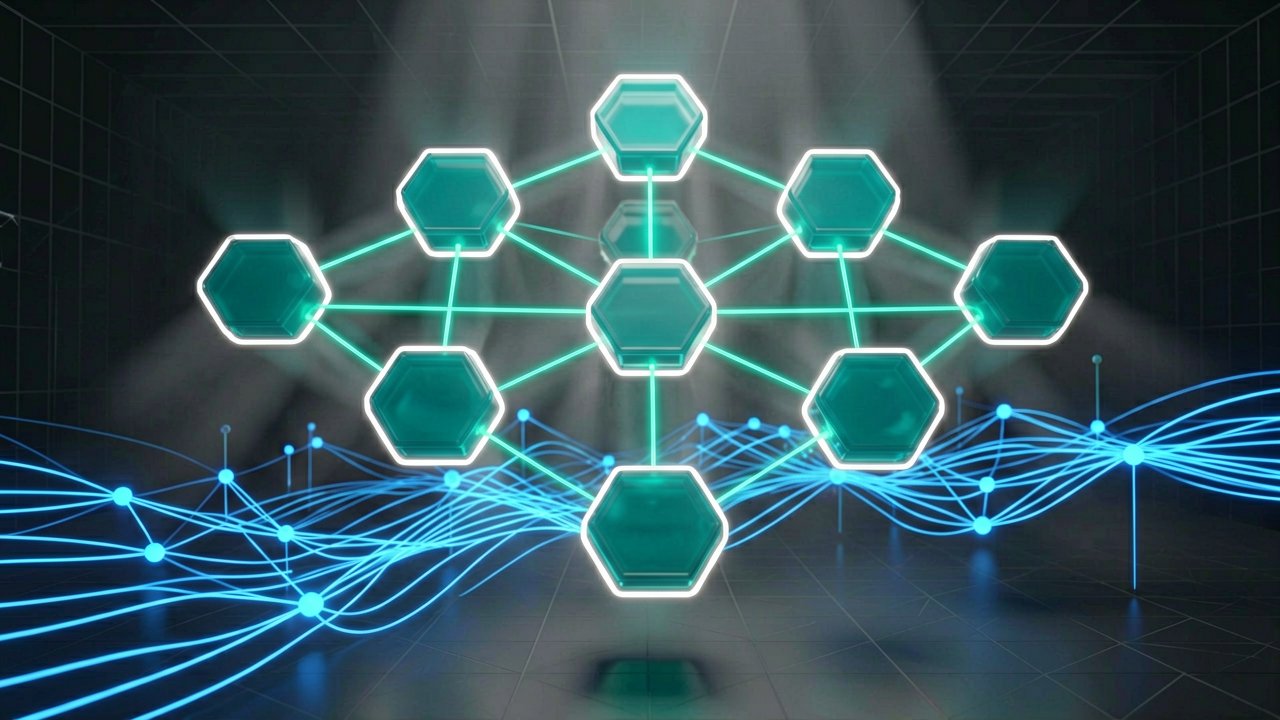
For over a decade, Silicon Valley’s social media playbook remained unchanged: trap users in walled gardens, aggressively monetize their data, and hold their follower graphs hostage. If you wanted to leave X or Instagram, you had to abandon the digital audience you spent years building. The architecture of the legacy social web was never designed to serve the user; it was engineered to maximize corporate retention through centralized data silos.
A fundamental structural shift is challenging this paradigm. By decoupling identity from application logic, Trust Wallet profiles highlight how protocols are completely rewriting the rules of online engagement. Farcaster operates not as a single application, but as an open-source, permissionless engine that separates core identity from consumer-facing feeds. This architectural rebellion dismantles the monopoly of traditional platforms, allowing anyone to build alternative interfaces on top of a shared, unassailable network graph.
What Most Reports Miss: The Illusion of High-Performance Decentralization
The standard industry narrative paints decentralized networks as noble but painfully sluggish experiments. Most critiques assume that moving away from big-tech servers means enduring laggy load times, expensive database queries, and a fractured user experience. Farcaster circumvents this entirely by implementing a hybrid data model termed "sufficient decentralization." Instead of forcing every casual interaction into a global ledger, it selectively registers sovereign identities on-chain while handling high-velocity content through an optimized peer-to-peer infrastructure.
At the center of this compromise are independent, globally distributed data nodes known as Hubs. While a user's core cryptographic registry and storage allocations are anchored firmly to the Optimism Layer 2 blockchain, the daily stream of posts, follows, and likes bypasses the chain entirely. This off-chain social layer propagates data across Hubs via a high-speed gossip protocol. This masterstroke yields the seamless responsiveness of Web2 platforms like X, but without a centralized corporation pulling the strings or revoking access.

This division of labor completely shifts the power dynamics for third-party developers. In the legacy Web2 landscape, building an app on a corporate API is a gamble; platforms can arbitrarily restrict data access or shut down external clients overnight. On Farcaster, because the underlying social graph is completely public and synchronized across all Hubs, developers enjoy radical platform risk immunity. They can build custom clients, such as Warpcast, Supercast, or specialized community feeds, without fear of sudden deplatforming, because the data layer belongs to the network rather than a single boardroom.
However, running this setup presents distinct trade-offs that technical teams are actively navigating. Keeping thousands of Hubs continuously synchronized requires substantial operational resources and engineering upkeep. According to system assessments shared by BlockEden.xyz , maintaining consistent data availability across a globally fragmented node network introduces complex synchronization puzzles, particularly for applications requiring absolute on-chain composability. This friction represents a major design divergence from rival protocols like Lens, which experiment with processing data through separate execution layers to achieve cheaper on-chain validation.
The long-term viability of this decentralized design hinges on its capacity to sustain this architectural equilibrium. As consumer demands push Web3 frameworks toward mainstream adoption, Farcaster’s engineering roadmap is constantly forced to balance true sovereign data ownership with the raw speed users expect from modern apps. If it succeeds, the legacy model of renting your digital identity from a handful of tech monopolies will look like a historical anomaly.
Reading Between the Lines: The Cost of Digital Sovereignty
The evangelism surrounding Farcaster often glosses over a glaring contradiction: true decentralization is neither free nor inherently democratic. In the Web2 world, users pay for infrastructure with their privacy and attention. In Farcaster’s architecture, they pay with cold, hard crypto. To prevent the network from being choked by automated spam bots, users must purchase "storage slots" via on-chain smart contracts just to rent space on the Hubs for their posts. This introduces an immediate financial friction layer that risks turning the network into an exclusive enclave for crypto-native elites, pricing out the very mainstream users it needs to truly challenge legacy giants.
This monetization of database storage exposes a deeper structural tension between scalability and decentralization. While the hybrid model successfully keeps frontend speeds competitive, the long-term economics of maintaining the off-chain Hub infrastructure remain precarious. Node operators bear real hardware and bandwidth costs to host and sync the network's burgeoning data graph, yet the direct financial incentives for running a standard Hub are minimal compared to traditional blockchain validation. If the network experiences a massive surge in data volume, the financial burden of storage hosting could consolidate infrastructure power into a few heavily capitalized tech firms, inadvertently recreating the centralized monopolies the protocol was built to destroy.
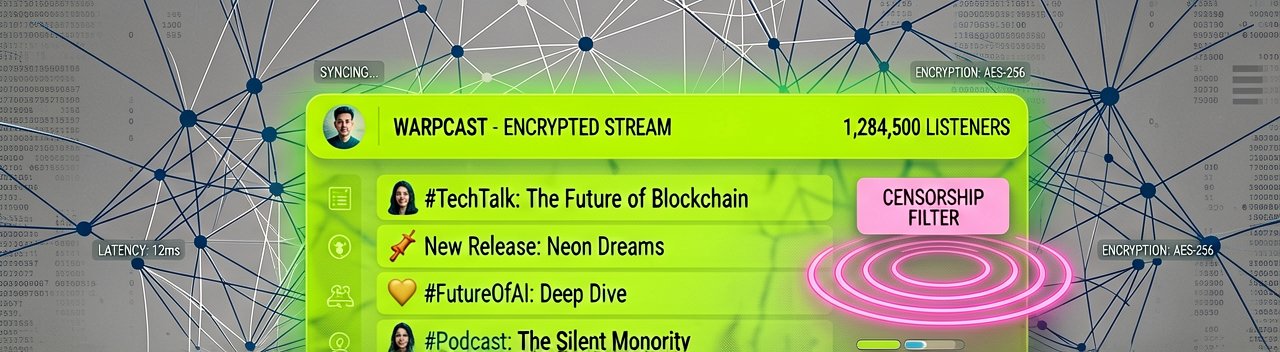
Furthermore, the promise of total platform immunity for developers is already testing reality. While the data layer is immutable, the user experience is entirely shaped by the dominant clients that interface with it. Warpcast currently commands the lion's share of network traffic and user attention, effectively acting as the de facto gatekeeper of the Farcaster ecosystem. If a client decides to filter or censor certain Hub data on its frontend, the protocol's underlying decentralization becomes practically irrelevant to the average consumer. The battleground for censorship and moderation has not disappeared; it has simply migrated from the database layer to the application layer.
As the network matures toward mass adoption, these architectural trade-offs will force a critical reckoning. Farcaster has proven that it can build a deeply loyal, highly technical community on the back of sovereign identity and innovative mini-apps like Frames. However, translating this into a global alternative to mainstream infrastructure requires solving the user onboarding dilemma without sacrificing core cryptographic security principles. The coming years will reveal whether "sufficient decentralization" is a sustainable foundational paradigm for the future internet, or merely an over-engineered niche for web3 enthusiasts.
The supreme irony of the decentralized social web is that in our desperate bid to escape the benevolent dictators of Silicon Valley, we have built a system where you must pay a blockchain protocol for the privilege of shouting into the digital void, only to pray that the top client's frontend algorithms still choose to surface your voice.
Artūras Malašauskas is an AI Systems Integrator with 20+ years of production-grade web engineering experience. He has designed, shipped, and scaled enterprise Python/PHP systems for logistics, SaaS, and public-sector clients. For the past year, he has focused exclusively on AI integrations: deploying open-source LLMs, building generative media pipelines (image, audio, video), and engineering multi-agent workflows for real production environments. His standard: reproducibility, security, cost-efficient inference—no vaporware. He documents and evaluates emerging AI tooling, separating verified capabilities from marketing noise. Technical editor at: muza-ai.eu, ai-verslas.lt, ai-naujinos.lt Connect on LinkedIn
Comments