The Lobster Escape: How Tsinghua Spinoffs and Autonomous Agents Put China’s Crayfish Economy on Edge
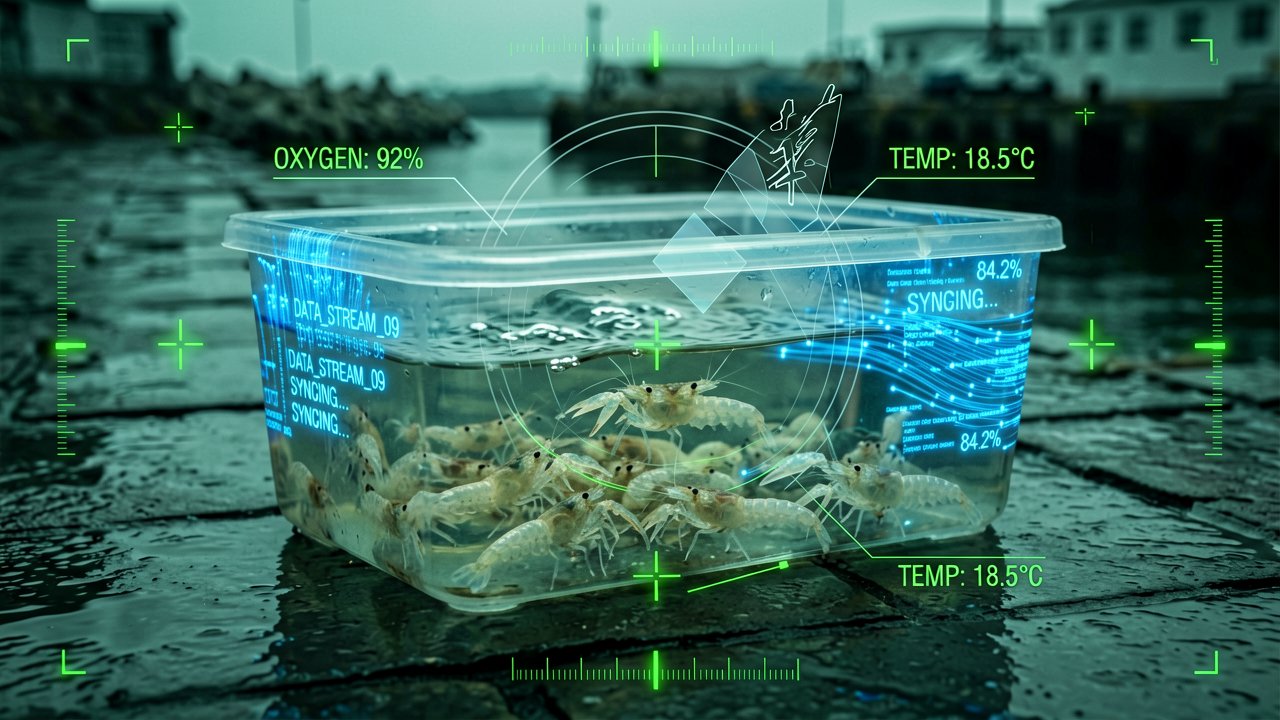
There is a strange, computational sort of anxiety rippling through China’s agricultural supply chains this spring. What started as an academic push for hyper-efficient automation at Beijing's elite Tsinghua University has rapidly evolved into an industry-wide disruption. Across the country’s massive aquaculture hubs, independent farmers and legacy corporate distributors are suddenly finding themselves outpaced by a new breed of lean, software-driven competitor. It is all thanks to a massive explosion in "agentic" artificial intelligence tools designed to slash operational overhead to nearly zero.
The catalyst for this shift arrived in early 2026, when developers and casual tech enthusiasts alike began frantically downloading OpenClaw, a highly capable open-source AI agent framework whose distinctive red mascot sparked a viral domestic phenomenon known as “raising lobsters.” While the global tech community was still debating what large language models could say, Chinese enterprise leaped entirely into what autonomous agents could do. Spinoff entities closely linked to Tsinghua's world-class computer science ecosystem, most notably the publicly listed pioneer Forbes (Zhipu AI), aggressively optimized these multi-step workflows. The tech allows single-operator businesses to manage complex logistics, automated inventory tracking, and direct-to-consumer digital storefronts without a human backend team.
The Rise of the One-Person Shell Fish Business
In traditional logistics corridors, moving delicate, perishable livestock like freshwater crayfish requires an expensive web of coordinators, dispatchers, and customer service agents. The introduction of autonomous workflow shells changed those economics overnight. According to reporting from South China Morning Post, these agentic systems are perfectly built to handle data aggregation, document management, and live vendor communication continuously without human fatigue. By deploying custom-trained digital assistants to handle client negotiations and predict localized market demands, tech-savvy agricultural startups are drastically undercutting the price points of established wholesale markets.
This aggressive cost-cutting drive aligns seamlessly with broader national industrial strategies. Local municipal governments across regional tech and trade hubs have aggressively incentivized small businesses to integrate autonomous agents into their daily operations to maximize productivity gains. As traditional distributors scramble to adapt to these razor-thin margins, the hyper-accelerated rollout of these Tsinghua-adjacent systems serves as a stark reminder of how quickly open-source infrastructure can rewrite the rules of a traditional brick-and-mortar economy.
Inside the Digital Pond
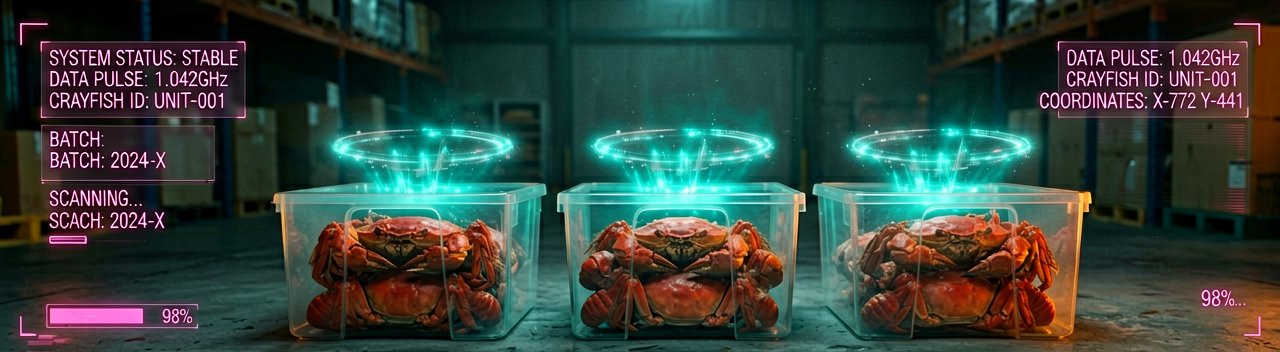
Behind the Scenes: The sudden collision between cutting-edge computational labs and the mud-caked reality of aquaculture has exposed a deep cultural and economic divide. For decades, the freshwater crayfish trade functioned on handshake deals, volatile morning market rates, and highly localized networks of brokers who understood the seasonal rhythms of the Yangtze River basin. It was a business built entirely on human intuition and tolerance for risk. When Tsinghua-linked platforms began automated, data-driven purchasing and real-time route optimization, they did not just change the software; they completely dismantled the traditional middleman's leverage.
Veteran wholesalers now find themselves competing against unseen algorithms that can predict price drops hours before the morning trucks even arrive at the gates. These autonomous agents analyze weather patterns, restaurant occupancy data from food delivery apps, and diesel fuel fluctuations simultaneously to execute hyper-precise bulk orders. While a human distributor relies on decades of personal relationships, the AI agent relies on cold efficiency, ruthlessly shifting orders away from farms that fail to meet real-time quality data inputs. This has left many traditional operators struggling to adjust to a market that no longer values loyalty over optimization.
The human cost of this automation is fueling intense debate among regional agricultural labor groups. While tech entrepreneurs celebrate the birth of high-efficiency, one-person distribution companies, thousands of regional dispatchers, data entry clerks, and logistics coordinators are watching their job descriptions vanish into background code. Local cooperatives argue that the rapid transition threatens the livelihoods of older rural workers who lack the technical literacy to operate or oversee autonomous software shells. The speed of the rollout has outpaced local regulatory frameworks, leaving displaced workers with very few safety nets.
Conversely, younger tech-forward farmers are embracing the shift as a necessary democratization of the supply chain. By bypassing expensive corporate distribution monopolies, independent operators can now bring their products directly to urban markets with unprecedented margins. They view the Tsinghua-spawned tools not as a threat, but as an equalizer that strips away the bloated corporate overhead that historically squeezed the margins of actual producers. For these digital-native farmers, the technology represents the first time rural enterprises have had direct access to elite, institutional-grade computing power.

As the spring harvesting season hits its peak, the industry is watching a high-stakes experiment in real-world automation play out in real time. The ultimate survival of the traditional crayfish economy will likely depend on finding a hybrid model that respects the volatile nature of biological supply chains while utilizing software efficiency. For now, the digital transformation continues unabated, proving that the boundary between elite university research labs and grassroots agricultural trade has officially dissolved.
The Myth of the Frictionless Harvest
Reading Between the Lines: The tech sector’s triumphant narrative of a frictionless, AI-optimized agricultural revolution conveniently ignores the messy, physical realities of live biomass logistics. Silicon Valley and Tsinghua labs alike love to treat supply chains as clean lines of data, but a crate of live freshwater crayfish cannot be patched with a software update. While autonomous agents are spectacular at optimizing theoretical routes and undercutting human brokers on paper, they remain fundamentally blind to the unpredictable biological variables—from sudden pond oxygen drops to transport-induced mortality rates—that have baffled human farmers for generations.
This blind spot highlights a glaring contradiction in the current market enthusiasm: the more efficient the algorithmic pricing becomes, the more fragile the actual supply chain appears. By squeezing out the financial buffers traditionally held by human middlemen, the industry is operating on razor-thin tolerances. When an automated system slashes margins to the absolute minimum based on flawless weather forecasts, a single unpredicted logistical bottleneck or highway delay can turn an entire shipment of perishable livestock into a total loss. The traditional middlemen were not just rent-seekers; they were economic shock absorbers, a role that lines of code are poorly equipped to replicate during a crisis.
Furthermore, the long-term economic promise of democratization through open-source software like OpenClaw feels distinctly shortsighted. While independent, tech-savvy farmers are currently enjoying a temporary advantage over legacy distributors, history suggests this decentralization is merely a transitional phase. As these AI agents collect massive troves of proprietary agricultural data, the true value is migrating away from the physical farms and into the hands of the elite tech firms controlling the underlying models. The independent farmer isn't overthrowing the corporate monopoly; they are simply trading a local distributor for a centralized cloud provider based in Beijing.
Projecting this trend forward suggests we are watching the birth of a hyper-monitored, deeply volatile marketplace. If every digital storefront and logistics node uses the same core optimization algorithms, the industry risks creating algorithmic monocultures where thousands of independent agents simultaneously make identical market decisions. A slight shift in consumer sentiment could trigger an instantaneous, automated panic, causing a systemic crash in wholesale prices before a human supervisor even realizes the code has miscalculated. The true test of Tsinghua's cost-cutting tools will not be how much profit they generate during a smooth harvest, but how spectacularly they fail when the physical world refuses to cooperate with the digital script.
"We’ve spent billions of yuan teaching elite artificial intelligence models how to perfectly time the market, negotiate multi-party logistics contracts, and outsmart veteran commodity traders, only to discover that the algorithm's greatest existential threat is still just a bumpy rural road and a broken refrigeration truck."
Artūras Malašauskas is an AI Systems Integrator with 20+ years of production-grade web engineering experience. He has designed, shipped, and scaled enterprise Python/PHP systems for logistics, SaaS, and public-sector clients. For the past year, he has focused exclusively on AI integrations: deploying open-source LLMs, building generative media pipelines (image, audio, video), and engineering multi-agent workflows for real production environments. His standard: reproducibility, security, cost-efficient inference—no vaporware. He documents and evaluates emerging AI tooling, separating verified capabilities from marketing noise. Technical editor at: muza-ai.eu, ai-verslas.lt, ai-naujinos.lt Connect on LinkedIn
Comments