Hugging Face Launches Agentic Toolkit for Reachy Mini Robots
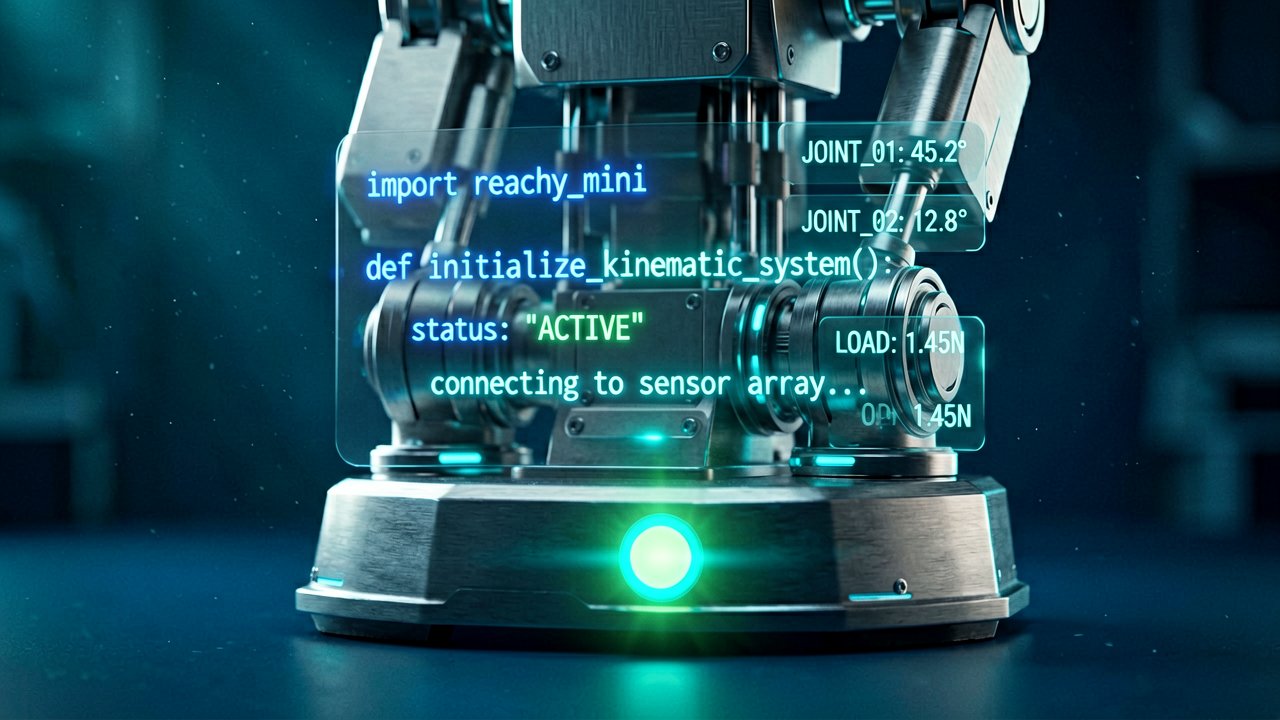
This week, Hugging Face launched an agentic toolkit that lets anyone build a working app for Reachy Mini, its open-source desktop robot. The toolkit works in under an hour, without writing a single line of code. Instead, an AI agent writes all the code.
According to the company's official announcement, users describe the behavior they'd like to see in plain English, and the agent writes, tests, and ships the code to the robot. The blog post from co-founder Clément Delangue details the full scope of the launch.
"For 60 years, robots were built by roboticists. As of today, they can be built by anyone," said Delangue. "When the software is open-source, and an AI agent can write the code, the gating that used to come from technical knowledge just disappears."
The platform aims to collapse three traditional barriers to robotics: expertise, expensive hardware, and weeks of integration work. An AI agent replaces the expertise requirement. The hardware is a low-cost, open-source desktop robot anyone can buy. The integration is a one-click flow on a website millions of developers already use.
Hugging Face is an open platform for AI builders, often called "the GitHub of AI." Millions of developers and tens of thousands of companies use it to share AI models, datasets, and applications. In 2024, Hugging Face acquired Pollen Robotics, the French maker of the Reachy line of open-source robots.
Joel Cohen, a 78-year-old retired marketing executive in the Raleigh-Durham area, represents one of the platform's early adopters. He runs CEO peer groups and has never worked in robotics or written code. Cohen is colorblind and wears hearing aids. Hugging Face said it took him over two weeks to assemble his Reachy Mini Lite (it usually takes around 3 hours).
Then, Cohen built an app. He created a voice-controlled AI co-facilitator for the CEO peer groups he runs on Zoom. Reachy Mini sits on his desk. The robot is 11 inches (27.9 cm) tall and 6.3 inches (16 cm) wide, and it weighs a mere 3.3 pounds (1.5 kg).
When Cohen says, "Hey, Reachy," it wakes up, listens, and responds. It has a personality, which Cohen calls his "VP of future thinking." The system also has four facilitation modes, a bank of over 60 questions, and greets each of his 29 group members by name.
Mid-session, it can hot-seat a member, push back on a surface-level answer, generate a fresh question on the spot, or summarize the key themes before closing. "I built this by describing what I needed in plain English. Claude wrote the code," said Cohen. "No SDK. No robotics background. No developer experience."
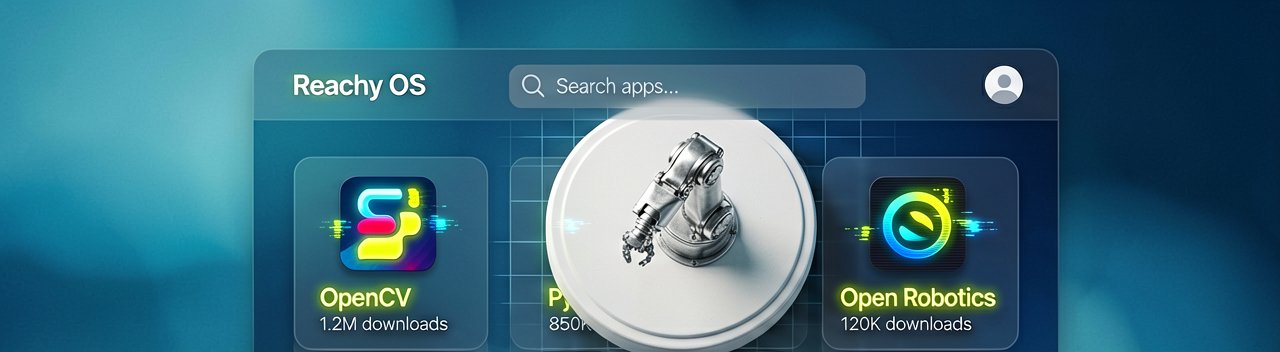
The Reachy Mini App Store is now open and hosts more than 200 apps. Reachy Mini's apps live on the Hugging Face Hub, which is searchable, forkable, and installable with one click. If you see an app you like, you can duplicate it, ask the AI agent to change it, and publish your version. The company said it takes just minutes to create a new app.
In addition, every Hugging Face app also runs in a browser-based simulator, so anyone can play with its catalog without owning the hardware. This is significant because it means the friction of actually touching the physical device is removed during the development phase (a problem that has plagued users for years, frankly).
Some of the apps include:
- Joel's Co-Facilitator — voice-controlled session companion for CEO peer groups
- Language tutor — listens to the user to help modify speaking accents
- Emotional Damage Chess — plays chess and reacts to every move, dropping its head on a blunder ("Oh no! Big mistake!") and cheering on a winning combination
- Reachy Phone Home — anti-procrastination mode detects when users pick up their phones and calls them back to work
- Red Light, Green Light — the Squid Game children's version, with the robot playing the doll
- F1 race commentator — calls Formula 1 races as they happen, live from the desktop
- Cook assistant — walks through a recipe step by step, hands-free
- Coding teacher — teaches kids to program in a simplified scripting language
- An office receptionist that Hugging Face co-founder and CEO, Clément Delangue, built in under two hours
Independent reporting from The Robot Report corroborates the timeline and scope of the changes.
So far, the community has shipped over 200 apps, built by 150+ different creators, most of whom had never written robotics code before. Last week another batch of almost 3,000 robots went out to customers worldwide, taking the install base to nearly 10,000 units in the wild. More than 1,000 additional units will ship in the next 30 days.
Delangue drew a comparison to the iPhone App Store launch in 2008, which turned phones from devices made by phone companies into platforms anyone could build for. The Reachy Mini app store is making a similar bet about robots, but in the open. The hardware is open-source. The software is open-source. The apps are open-source. Even the agent traces are public. The whole stack is forkable.
We could have built this as a closed app store with a 30% cut. We didn't, and we won't. Closed app stores have done real damage to what people are allowed to build for the devices they own. Robots are going to be in homes, schools, hospitals, and offices for the next several decades. The platform underneath them needs to be one that anyone can read, fork, audit, and improve. Open-source is the only way that ends well.
The physical reality of using this system is straightforward. You open a browser, type a prompt describing what you want the robot to do, and wait while the agent generates code. There's no SDK to download. No environment to configure. No terminal commands to memorize. Just a text box and a button. The robot itself is small enough to sit on a desk, light enough to move around, and responsive enough to track voice commands in real time.
Whether users actually pay for it remains the real question. The platform is currently free, but the economics of robotics hardware and software distribution are still being worked out. The 10,000-unit install base is a start, but it's a fraction of the millions of smartphones or even gaming consoles in circulation.
For now, the open-source model means anyone can fork, modify, and redistribute apps. That's both a feature and a potential limitation. Developers who want to monetize their work will need to find alternative models, since the platform itself takes no cut.
Time will tell if this works at scale. The technology is there. The hardware is affordable. The question is whether enough people will actually build meaningful applications beyond novelty apps and simple games. The 78-year-old in North Carolina, the 13-year-old learning Python, the small business owner in Lyon, the teacher in Nairobi. Every one of them now has a path from "I wonder if a robot could..." to a working app, in under an hour, on a stack they actually own.
Artūras Malašauskas is an AI Systems Integrator with 20+ years of production-grade web engineering experience. He has designed, shipped, and scaled enterprise Python/PHP systems for logistics, SaaS, and public-sector clients. For the past year, he has focused exclusively on AI integrations: deploying open-source LLMs, building generative media pipelines (image, audio, video), and engineering multi-agent workflows for real production environments. His standard: reproducibility, security, cost-efficient inference—no vaporware. He documents and evaluates emerging AI tooling, separating verified capabilities from marketing noise. Technical editor at: muza-ai.eu, ai-verslas.lt, ai-naujinos.lt Connect on LinkedIn
Comments