Toshiba Launches PCIe 6.0 and USB4 Compatible Signal Switches
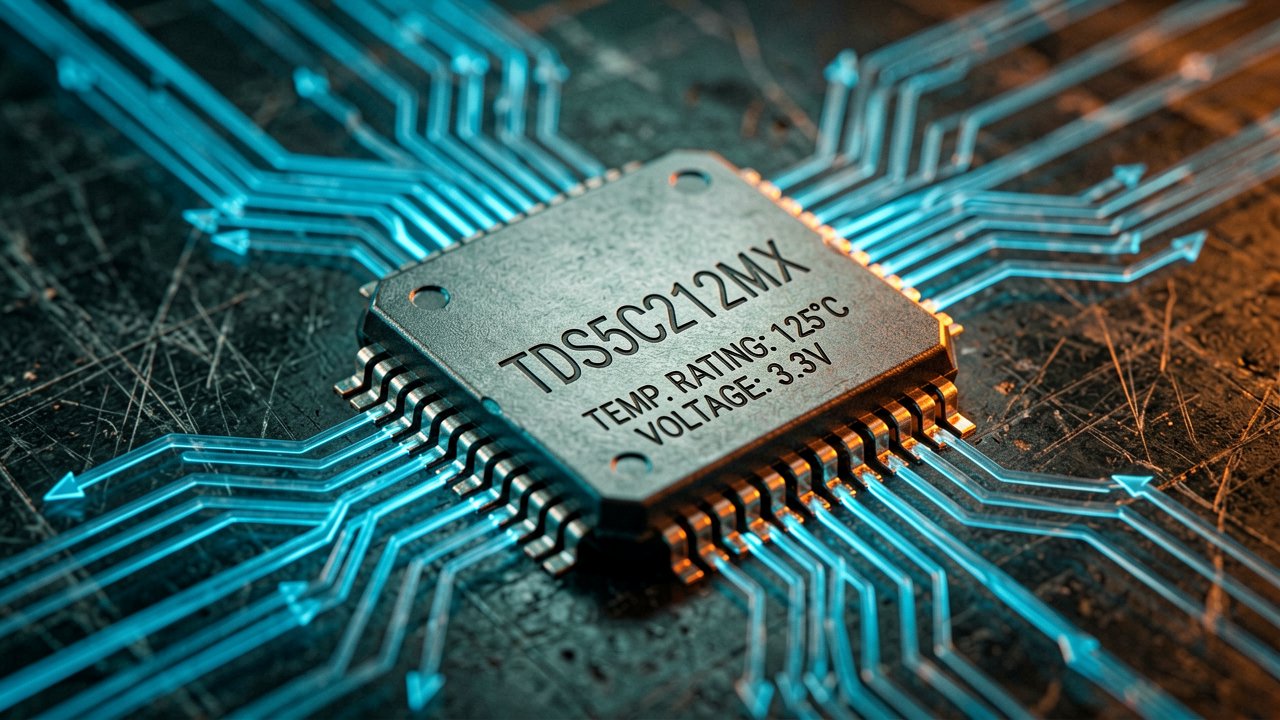
Toshiba Electronic Devices & Storage Corporation has begun volume shipments of two new differential signal switches designed for next-generation high-speed interfaces. The TDS5C212MX and TDS5B212MX chips handle PCIe 6.0 and USB4 Version 2.0 signals, targeting servers, industrial testers, and robotics applications where board space is at a premium.
According to the official press release, the devices function as 2:1 multiplexer or 1:2 demultiplexer switches. This means engineers can route multiple high-speed signals through a single interface path, then split them back out where needed. The physical reality of this matters: in cramped server chassis or industrial control panels, every millimeter counts, and these switches measure just 2.4×1.6mm in an XQFN16 package.
The bandwidth specifications are where things get interesting. The TDS5C212MX achieves a differential -3dB bandwidth of 34GHz typical, while the TDS5B212MX delivers 29GHz typical. These numbers aren't marketing fluff—they directly impact signal integrity at the speeds required by PCIe 6.0's 64 GT/s data transfer rate. Wide bandwidth suppresses waveform distortion, which otherwise manifests as jitter or data errors in real-world deployments (a problem that has plagued users for years, frankly).
Toshiba attributes this performance to its proprietary TarfSOI process technology. Silicon-on-insulator CMOS front-end processes are nothing new in RF applications, but the company claims industry-leading bandwidth for this specific switch configuration. The pin layouts are optimized for high-frequency characteristics, with the TDS5C212MX minimizing signal path length to reduce reflections and losses. In practical terms, this means less signal degradation when routing data across a motherboard.
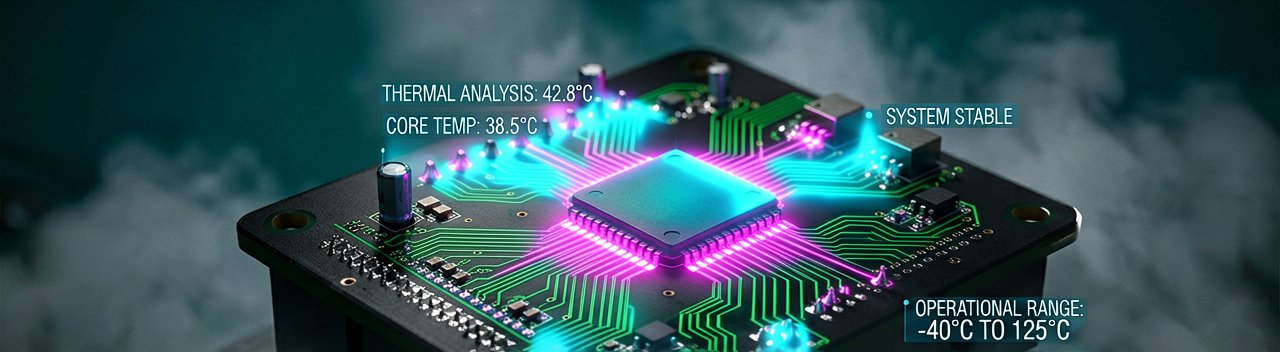
Both chips support an operating temperature range of -40°C to 125°C. That's not consumer-grade territory. Industrial environments—factory floors, outdoor equipment, automotive systems—demand components that won't fail when ambient temperatures swing wildly. The switches also support CXL 3.0, Thunderbolt 5, and DisplayPort 2.0, making them versatile across multiple high-speed interface standards.
Secondary reporting from ElectronicsForU corroborates the technical specifications and application targets. The outlet notes the devices are aimed at systems requiring reliable high-bandwidth signal switching within limited board space—a constraint that's only tightening as computing platforms evolve toward higher bandwidth architectures.
The supported interface list is extensive: PCIe 6.0 through 3.0, CXL 3.0 through 1.0, USB4 Version 2.0 through USB 3.2, Thunderbolt 5 through 2, and DisplayPort 2.0 through 1.2. This backward compatibility matters for system designers who need to support legacy equipment while planning for future upgrades. The switches handle differential voltages from 0 to 1.8V with a common mode voltage range of 0 to 2.0V.
Current consumption sits at 70μA typical when the supply voltage is 0V, which is negligible in most system designs. Differential insertion loss ranges from -0.7dB at 5GHz to -1.2dB at 16GHz, while differential return loss stays between -14dB and -24dB across the same frequency range. These aren't the kind of numbers end users see, but they're critical for signal integrity engineers debugging high-speed data paths.
Volume shipments started on May 6, 2026, according to Toshiba's announcement. The company positions these switches as part of its broader effort to develop high-performance analog switches supporting the evolution of high-speed interfaces. Whether that translates to widespread adoption depends on pricing, availability, and how well they perform in actual system integration.
For developers working on next-generation servers or industrial equipment, these switches offer a tangible solution to signal routing challenges. The real question isn't whether the specs are impressive—they are—but whether system integrators will actually deploy them at scale. Time will tell if the bandwidth advantage justifies the cost in competitive markets.
Artūras Malašauskas is an AI Systems Integrator with 20+ years of production-grade web engineering experience. He has designed, shipped, and scaled enterprise Python/PHP systems for logistics, SaaS, and public-sector clients. For the past year, he has focused exclusively on AI integrations: deploying open-source LLMs, building generative media pipelines (image, audio, video), and engineering multi-agent workflows for real production environments. His standard: reproducibility, security, cost-efficient inference—no vaporware. He documents and evaluates emerging AI tooling, separating verified capabilities from marketing noise. Technical editor at: muza-ai.eu, ai-verslas.lt, ai-naujinos.lt Connect on LinkedIn
Comments