Scissero Launches Suzie Law Open-Source AI Assistant

Scissero has launched Suzie Law, an open-source artificial intelligence assistant designed to help lawyers with drafting, knowledge search, and practice-specific customization. The announcement positions the tool as a free starting point for legal teams, with the company retaining proprietary capabilities for more complex workflows.
CEO Mathias Strasser told Artificial Lawyer that Suzie Law is intended to be cloned, modified, and adapted by the legal community. The platform is built in collaboration with Team Suzie, which provides the reusable agent loop, chat shell, document tooling, persona system, knowledge-base runtime, and UI primitives. Scissero's lawyers contributed the legal perspective and domain expertise.
Strasser's statement was direct: "Baseline legal AI should be free. Clients and legal teams should have access to a capable starting point comparable with what is available in the market." This is not a charity play, though. The company has differentiated, and will continue to differentiate, above that base layer with additional proprietary tools for document drafting, markups, data extraction, and obligations management. In short: you get the legal AI starter pack and then can go to the main business for more complex needs.
The physical reality of using Suzie Law matters. Lawyers interact with chat interfaces, document tooling, and knowledge-base runtimes that need to feel responsive. Open-sourcing the base layer doesn't mean giving away the real source of value—the value comes from what gets built on top of it. For Scissero, this is a way of showing the world how they work in practice. And they believe this approach ultimately benefits clients (though whether clients actually want to build their own tools remains an open question).

Scissero is a UK-based legal tech company and alternative legal service provider (ALSP) that brought aboard a significant portion of Robin AI after it closed in December 2025. The acquisition incorporated Robin AI's leadership and client relationships into Scissero's platform, extending its international footprint. The company operates with offices in London and New York, with service centers in Brazil, Serbia, and Malaysia.
Team Suzie is a separate project Strasser started to make vibe coding accessible to domain experts. Even with tools like Claude Code—which are genuinely empowering—it can still take weeks to build a serious application, and the result often has gaps around structure, security, and scalability. Team Suzie aims to provide a free, open-source base layer that lets experts in any field ship useful applications in as little as an afternoon.
Suzie Law is the legal reference application built on that platform. The goal was to include many of the core features you see in tools like Harvey and Legora (without claiming feature parity), so that lawyers have a practical starting point for building their own software. This reflects the reality that we're entering a world where domain experts can build their own tools. And it is, in fact, how Scissero now works internally. They enable their lawyers to build tools around their own workflows.
The idea is simple: no one understands those workflows better than the lawyers themselves, and no platform is better suited to automating them than an open, extensible base layer that already includes the common building blocks. It's a different approach from what most people do (although Freshfields' recent partnership with Anthropic may point in a similar direction), but it has clear advantages.
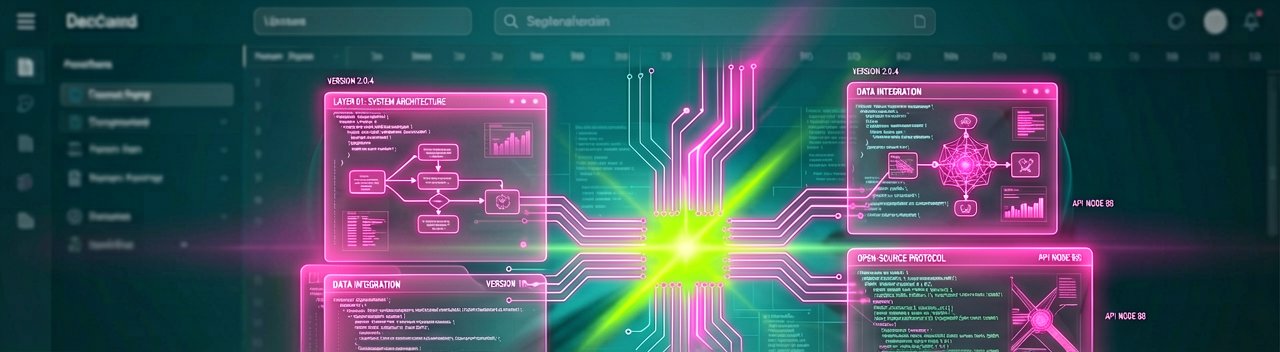
At the same time, the project highlights a limitation of the current legal AI market, which is still focused on thin chat interfaces, with limited ability to develop deeper, workflow-driven systems that meaningfully change how legal work is done. There are a few other open-source initiatives, but relatively few are explicitly designed for extensibility. Suzie Law works as a standalone application, but it's really intended as a foundation—a shell that can be extended quickly using tools like Claude Code to solve specific, domain-level problems.
The move comes shortly after Will Chen launched an open-source legal AI platform called Mike. The competitive landscape is shifting toward open-source models, but the real question is whether law firms will actually invest the time to customize these tools or simply pay for proprietary solutions that work out of the box. Whether users actually pay for it remains the real question.
Artūras Malašauskas is an AI Systems Integrator with 20+ years of production-grade web engineering experience. He has designed, shipped, and scaled enterprise Python/PHP systems for logistics, SaaS, and public-sector clients. For the past year, he has focused exclusively on AI integrations: deploying open-source LLMs, building generative media pipelines (image, audio, video), and engineering multi-agent workflows for real production environments. His standard: reproducibility, security, cost-efficient inference—no vaporware. He documents and evaluates emerging AI tooling, separating verified capabilities from marketing noise. Technical editor at: muza-ai.eu, ai-verslas.lt, ai-naujinos.lt Connect on LinkedIn
Comments