ServiceNow Blames Fragmented Data, Not Models, for Enterprise AI Failures

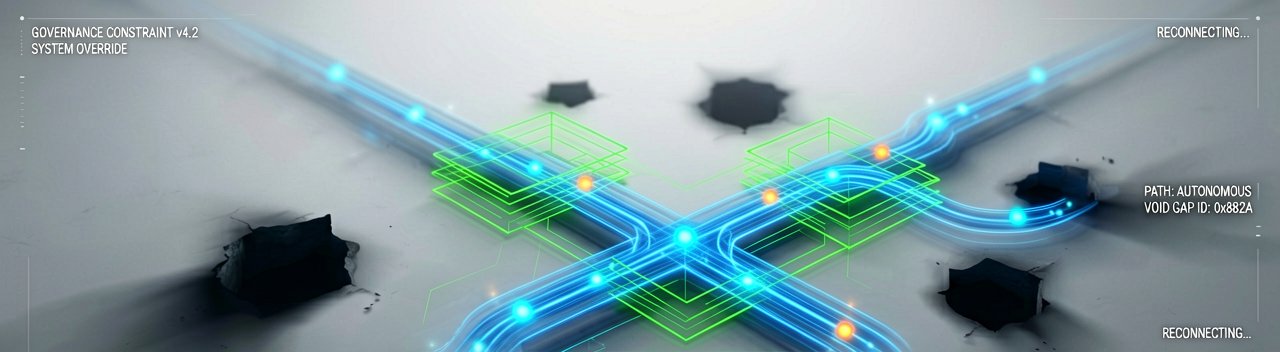
At Knowledge 2026, ServiceNow made a blunt claim that cuts through the usual AI hype: most enterprise artificial intelligence fails not because the models are broken, but because the data feeding them is scattered across disconnected systems and ungoverned at the exact points where AI agents need to act. The company's official press release states that this fragmentation produces "shallow intelligence that recommends rather than executes."
This is a significant pivot from the typical narrative. Most vendors blame model limitations or compute constraints. ServiceNow is pointing at the plumbing instead. The company argues that dozens of disconnected systems, catalogued inconsistently or not at all, contribute to AI that can offer advice but can't provide workflow resolution. (It's like giving a brilliant architect blueprints from five different buildings and asking them to design a new wing.)
According to the official ServiceNow announcement, the company is launching three interconnected capabilities to address this: Context Engine, Autonomous Data Analytics, and Workflow Data Fabric. These tools draw from the full breadth of enterprise signals—including assets, workflows, people, policies, and operational history—and apply a semantic layer that integrates CMDB, workflow data, analytics insights, and third-party systems.
Context Engine maps every person, role, asset, service, and policy across a business in real time. The goal is giving AI the institutional business context that only comes from being embedded in how a business actually operates. As Context Engine learns continuously from system activity, that intelligence compounds with every workflow, making AI more accurate the more it runs. This is a fundamentally different approach than training static models on historical data.

Gaurav Rewari, executive vice president and general manager of Data and Analytics Products at ServiceNow, said the enterprises winning the AI race are bringing trusted, contextual data directly into the workflows that run the business. "That's what ServiceNow is: the platform where insight meets every workflow, every transaction, every decision, and each one compounds the intelligence that drives the next," Rewari stated in the press release.
The physical reality of this matters. Instead of analysts manually building data pipelines or IT teams configuring separate analytics infrastructure, users interact through natural language experiences. Workflow Data Fabric with ServiceNow Otto guides curated, governed data asset creation step by step. The interface feels less like configuring a database and more like having a conversation with someone who knows where everything lives.
Autonomous Data Governance continuously monitors the data estate and automatically flags quality violations. This helps enforce security and privacy policies in real time so the data feeding AI workflows always meets defined standards without manual intervention. ServiceNow Data Catalog gives organizations end-to-end visibility across their entire data estate through automated discovery, lineage tracking, and a shared business glossary.
On the infrastructure side, ServiceNow is expanding RaptorDB Pro, the high-performance database native to the ServiceNow AI Platform. The architectural breakthrough is that the same database handles both operational and analytical workloads simultaneously, delivering real-time insights with no performance trade-offs and no separate infrastructure. Live Connect capabilities give Pyramid Analytics and other analytics providers direct access to live ServiceNow operational data without pipelines, data copies, or latency.
Bill McDermott, chairman and CEO of ServiceNow, framed this as moving beyond the platform of platforms to become the AI agent of agents. "We've built the only platform that can sense across the enterprise, decide the right action, act across any workflow or application, and secure every step," McDermott said. "We are the rules and rails of business."
The financial stakes are clear. During ServiceNow's Financial Analyst Day on May 4, McDermott and President & CFO Gina Mastantuono outlined how the company's AI-native platform is driving its long-term financial trajectory. By 2030, ServiceNow is targeting $30 billion-plus in subscription revenues, with ServiceNow AI expected to represent over 30% of the company's annual contract value.
Secondary reporting from Stock Titan corroborates the core announcement and highlights the same data fragmentation thesis. The coverage notes that Context Engine and Autonomous Data Analytics change the equation by grounding every AI decision in real-time operational context rather than relying on disconnected data silos.
ServiceNow claims the Autonomous Workforce already handles over 90% of employee IT requests internally. The Level 1 Service Desk AI Specialist resolves assigned IT cases 99% faster than when those cases are handled by human agents. Each month, ServiceNow Autonomous CRM resolves over 100 million customer cases. These metrics suggest the company is testing its own medicine before selling it.
The Workflow Data Network extends this execution layer across the entire enterprise data estate, giving organizations flexibility to choose best-of-breed data management partners without vendor lock-in. The new Workflow Data Network Partner Passport makes procurement seamless: customers use existing Data Fabric credits to activate and consume select partner solutions from qualified partners, starting with IBM and Boomi.
Whether enterprises actually have the data hygiene to make this work remains the real question. ServiceNow's solution assumes organizations can map their entire data estate and enforce governance policies consistently. Many companies still struggle with basic CMDB accuracy, let alone real-time semantic layering across dozens of systems. The platform may be ready, but the data might not be.
Artūras Malašauskas is an AI Systems Integrator with 20+ years of production-grade web engineering experience. He has designed, shipped, and scaled enterprise Python/PHP systems for logistics, SaaS, and public-sector clients. For the past year, he has focused exclusively on AI integrations: deploying open-source LLMs, building generative media pipelines (image, audio, video), and engineering multi-agent workflows for real production environments. His standard: reproducibility, security, cost-efficient inference—no vaporware. He documents and evaluates emerging AI tooling, separating verified capabilities from marketing noise. Technical editor at: muza-ai.eu, ai-verslas.lt, ai-naujinos.lt Connect on LinkedIn
Comments