Hugging Face Launches App Store for Reachy Mini Robot

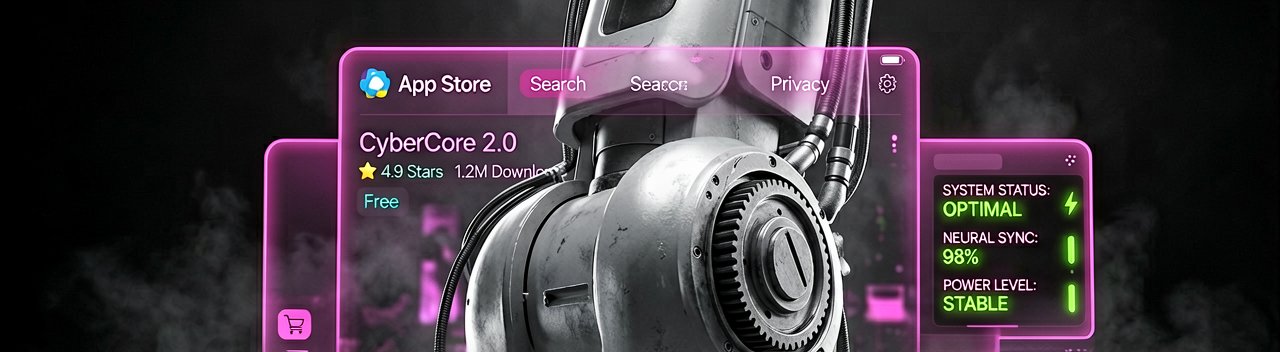
Open-source AI platform Hugging Face is launching an app store for its Reachy Mini robot, according to CEO Clément Delangue in an interview with Axios. The store already contains approximately 200 downloadable applications designed to be easily modified by users.
Delangue built an office receptionist app for the robot in under two hours, demonstrating the platform's accessibility. Other available applications include baby monitor-style functions, cooking assistants, and a distraction tracker that monitors users during work sessions and alerts them when focus drifts.
The app store operates on an open model where anyone can submit their own applications. Hugging Face's newly released "ML intern" agent can help generate and refine apps, lowering the technical barrier for contributors. This aligns with Delangue's stated goal: "Our goal is to make it so that everyone can build for their own use cases."
He added that democratization matters because "the most important thing right now for AI is that it doesn't only get to be built by a few people in Silicon Valley."
The Reachy Mini itself is a compact, desktop-sized robot measuring 11 inches (28cm) in height and weighing 3.3 pounds (1.5kg). According to Hugging Face's official blog post, the robot is sold as a kit and comes in two configurations: a Lite version at $299 that requires connection to a Mac or Linux computer, and a fully autonomous version at $449 with onboard computing, wireless connectivity, and battery power.
Physical interaction with the robot involves assembling the kit yourself—a process that includes connecting motorized head and body rotation mechanisms, animated antennas, a wide-angle camera, microphones, and a 5W speaker. The robot's 6 degrees of freedom in head movement and full body rotation enable expressive human-robot interaction, though the tactile experience of building it remains a hands-on commitment.
Hugging Face reports that approximately 10,000 Reachy Mini devices are now in customer hands or in transit, with 3,000 units shipped in the week prior to the announcement. The robot is programmable in Python, with JavaScript and Scratch support coming later.
The device is currently in an early development phase. Hugging Face explicitly states it's being shared "as-is, without warranties or guarantees" to engage early adopters and gather feedback. Privacy-wise, the robot does not store, transmit, or process personal data by default, with camera and microphone functions remaining under user control.
This launch arrives during what Axios describes as a consumer robot renaissance driven by AI integration. Large language models are increasingly used to train robots or provide conversational interfaces. The former CEO of iRobot recently debuted a plush robot dog designed as a companion for older adults, signaling broader industry movement toward accessible consumer robotics.
The real question isn't whether the technology works—it's whether non-technical users will actually engage with it. An app store means nothing if the primary audience remains tech enthusiasts and developers tinkering in their spare time. The $299-$449 price point is relatively accessible, but the assembly requirement and programming prerequisites create friction that could limit mainstream adoption.
Hugging Face's strategy hinges on whether the combination of low cost and an app ecosystem can push the Reachy Mini beyond hobbyists. The company has 10 million users on its platform, but converting that community into robot app developers remains unproven. Whether users actually pay for or build these applications is the real metric that matters.
Artūras Malašauskas is an AI Systems Integrator with 20+ years of production-grade web engineering experience. He has designed, shipped, and scaled enterprise Python/PHP systems for logistics, SaaS, and public-sector clients. For the past year, he has focused exclusively on AI integrations: deploying open-source LLMs, building generative media pipelines (image, audio, video), and engineering multi-agent workflows for real production environments. His standard: reproducibility, security, cost-efficient inference—no vaporware. He documents and evaluates emerging AI tooling, separating verified capabilities from marketing noise. Technical editor at: muza-ai.eu, ai-verslas.lt, ai-naujinos.lt Connect on LinkedIn
Comments