Genesis AI Unveils GENE-26.5 Model and Dexterous Robotic Hand
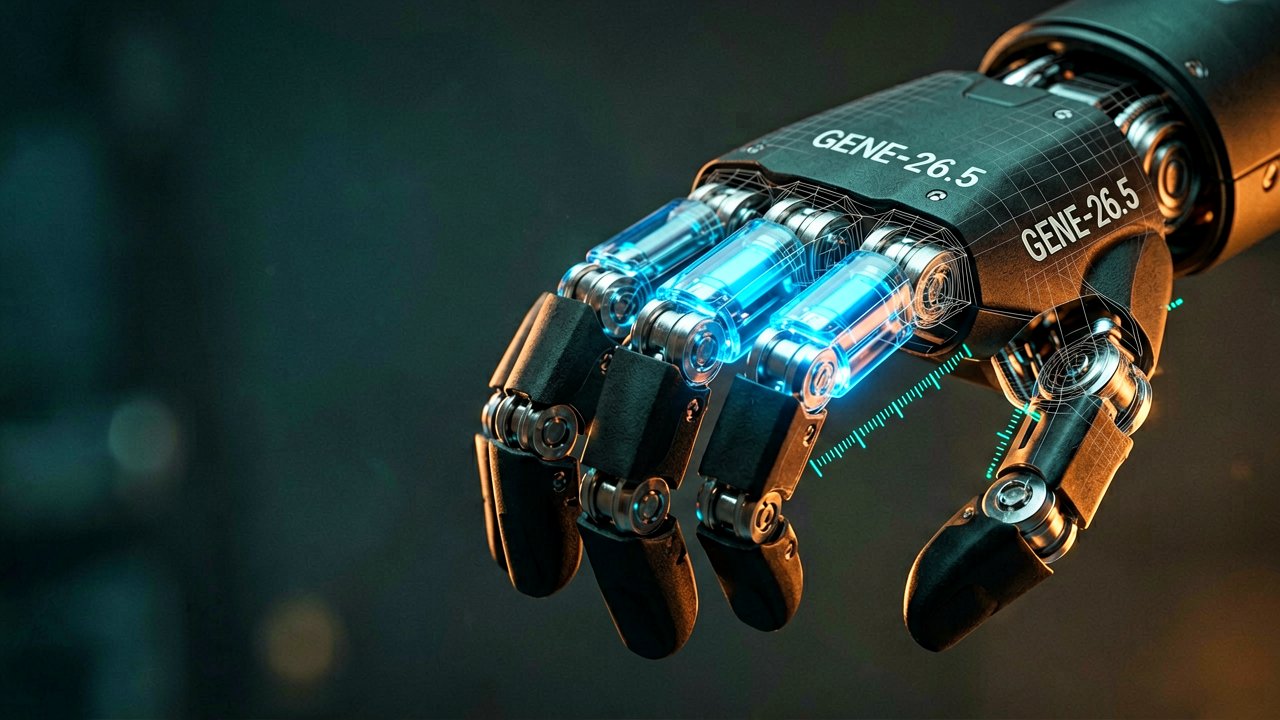
Genesis AI has officially unveiled GENE-26.5, a new robotics foundation model designed to give machines human-level physical manipulation capabilities. The announcement, made on May 6, 2026, also introduced a proprietary dexterous robotic hand that mirrors human anatomy in both form and function.
The company, co-founded by Zhou Xian and Theophile Gervet, emerged from stealth with $105 million in initial funding last year. Backers include Eric Schmidt, former CEO of Google, telecoms tycoon Xavier Niel, and French state investment bank Bpifrance. This seed round matches the record set by Mistral AI, Europe's leading AI company.
According to the official press release, GENE-26.5 is purpose-built to absorb massive amounts of data and environments. The model enables robots to perform complex, long-horizon tasks with unmatched dexterity. It's designed for rapid deployment and adaptation to unfamiliar tasks.
The demonstration video showcases tasks that would have been impossible for robots just a few years ago. The system chops tomatoes, cracks eggs one-handed, and coordinates two hands seamlessly. It prepares smoothies with mid-air serving, conducts high-precision lab experiments with pipetting, and solves a Rubik's Cube using continuous in-air manipulation. The robot even plays the piano at a human level, performing an ultra-fast, highly complex composition.
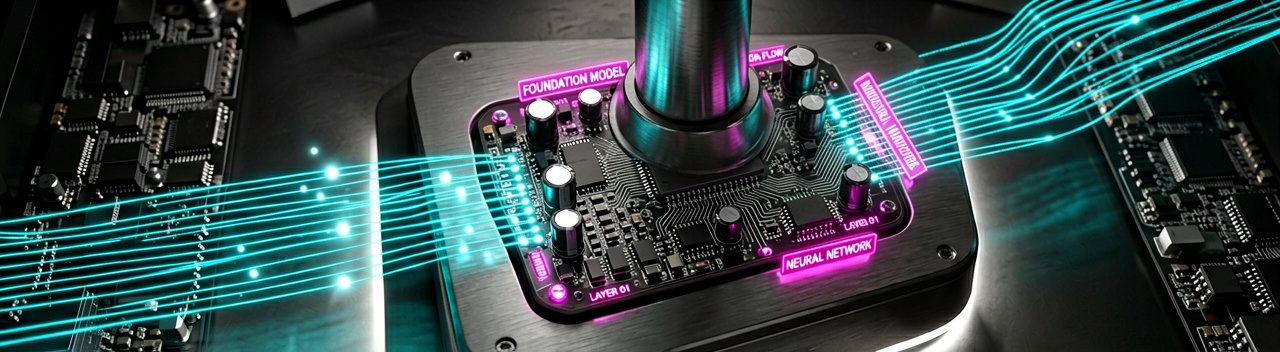
Wire harnessing—arranging and securing wires into organized bundles—represents one of the most difficult tasks in electronics and electrical engineering. Genesis AI's system handles this with fluid, human-like dexterity. Single-handed multi-object grasping allows the robot to simultaneously handle four objects of varying sizes and sort them into designated bins.
The hardware innovation is equally significant. Genesis AI's dexterous robotic hand pairs with a data-collection glove equipped with tactile-sensing electronic skin. When worn by a human, the glove enables a 1:1:1 mapping between the glove itself, the human's hand, and the robotic hand. This allows humans to seamlessly provide GENE-26.5 with high-quality data at scale that translates into robotic skills.
The glove is 100 times cheaper than typical hardware options in terms of cost. Internal testing has demonstrated up to five times greater data collection efficiency compared to traditional teleoperation methods. This approach makes continuous, large-scale robotics training viable for the first time (a problem that has plagued the industry for years, frankly).
Genesis AI is engaging with partners to deploy the glove in real-world work environments. By simply wearing the glove while working as usual, everyday tasks become abundant sources of new training data. The company aims to build what it calls the world's largest human skill library.
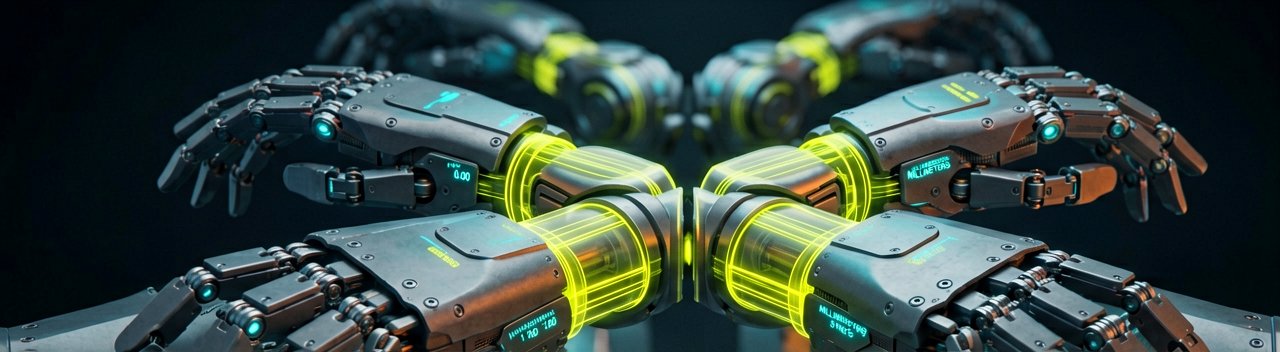
The data engine also taps into egocentric video data from humans wearing cameras to capture how they interact with the world. It leverages massive amounts of human-based internet videos. Having closed the embodiment gap, Genesis AI can use these data sources more effectively than any other company.
Reuters reported that the company is in advanced talks with potential customers in France, Germany, and Italy. Gervet told the news agency the company was prioritizing Europe for two reasons: the talent base and the industrial base as a market. Genesis is targeting automotive, electronics, pharmaceuticals, and logistics sectors where conventional robots struggle with delicate or variable tasks.
Engagements will typically run three to five years, depending on client needs, said Vivian Sun, vice president of commercial and strategy. The company said it is signing customers but declined to name them.
The launch puts Genesis AI in competition with China's Linkerbot, which Reuters reported is targeting a $6 billion valuation as demand grows for highly dexterous robotic hands. Both companies are developing hardware to enable more human-like manipulation in industrial settings.
Genesis AI expects to raise more capital, but a public listing remains premature. The company positions itself as a global full-stack robotics company building general-purpose robots with human-level intelligence and capabilities.
The physical reality of this technology matters. When a worker wears the tactile-sensing glove, they feel the resistance of materials, the texture of surfaces, the weight of objects. That sensory feedback gets captured and translated into robotic movements. It's not just about the end result—it's about the friction, the grip pressure, the subtle wrist rotations that happen without conscious thought.
Whether factories actually adopt this technology at scale remains the real question. The hardware costs, integration complexity, and regulatory hurdles in industrial settings are substantial. The demonstration videos are impressive, but real-world deployment is where the rubber meets the road.
Time will tell if GENE-26.5 delivers on its promises. The robotics industry has seen many bold claims before. What matters is whether Genesis AI can move from controlled demonstrations to reliable, cost-effective deployment in actual manufacturing environments.
Artūras Malašauskas is an AI Systems Integrator with 20+ years of production-grade web engineering experience. He has designed, shipped, and scaled enterprise Python/PHP systems for logistics, SaaS, and public-sector clients. For the past year, he has focused exclusively on AI integrations: deploying open-source LLMs, building generative media pipelines (image, audio, video), and engineering multi-agent workflows for real production environments. His standard: reproducibility, security, cost-efficient inference—no vaporware. He documents and evaluates emerging AI tooling, separating verified capabilities from marketing noise. Technical editor at: muza-ai.eu, ai-verslas.lt, ai-naujinos.lt Connect on LinkedIn
Comments