AGIBOT Launches Genie Studio Agent for Zero-Code Robot Deployment
The embodied AI sector is hitting a familiar wall: robots can do impressive things in controlled settings, but getting them to work reliably in factories remains a nightmare of custom engineering. AGIBOT is attempting to break through that bottleneck with Genie Studio Agent, a zero-code application platform announced on the company's official site.
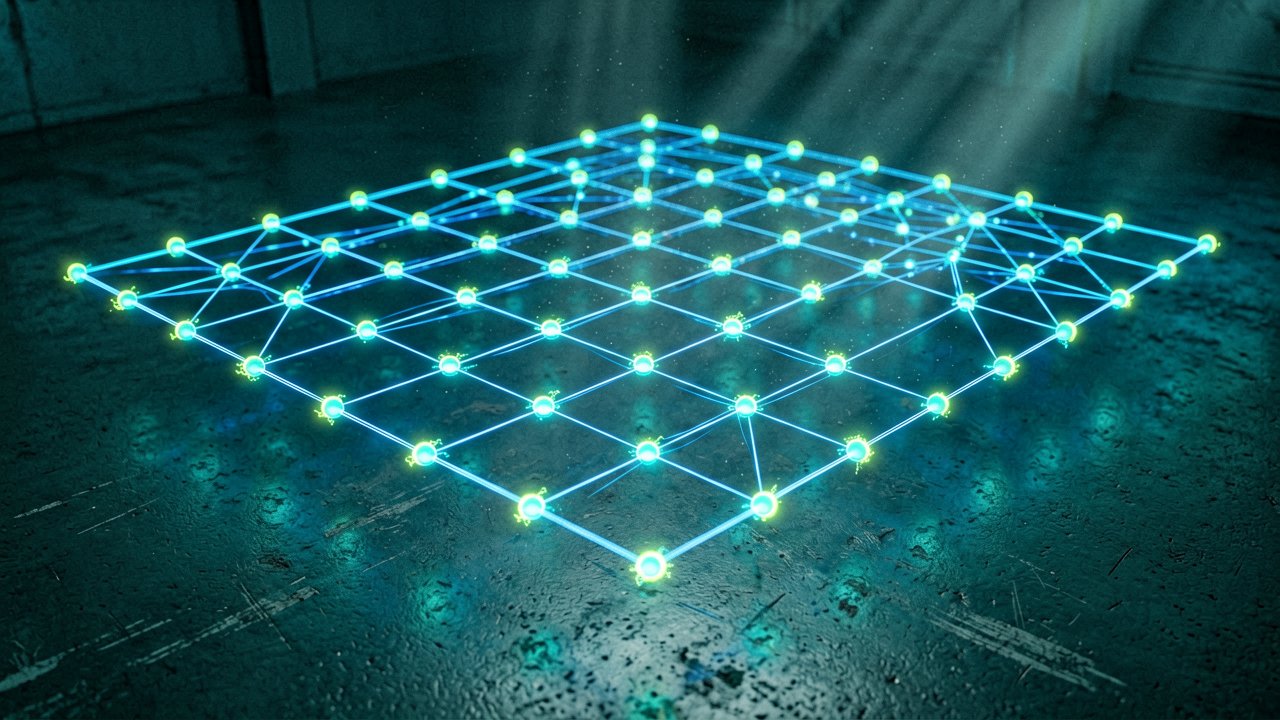
According to AGIBOT's official announcement, the platform transforms robot development from a code-intensive process into a modular, composable system. Users can design workflows by dragging and connecting nodes instead of writing custom integration scripts. The physical reality of this means less time staring at terminal windows and more time watching robots actually move.
Independent coverage from The Robot Report confirms the core capabilities and deployment timeline. The publication notes that AGIBOT is positioning this as infrastructure rather than just another tool—shifting from delivering capabilities to building the deployment layer itself.
Genie Studio Agent builds on Genie Studio, which AGIBOT introduced in 2025 as a one-stop embodied AI development platform. That earlier version handled data collection, model training, evaluation, and deployment for Vision-Language-Action (VLA) models. The new Agent version specifically targets the deployment phase, which has become the industry's new choke point as robots move from labs into workshops and production floors.

Four core capabilities define the platform's approach. First, no-code workflow orchestration encapsulates perception, motion control, navigation, VLA models, and reinforcement learning toolchains into reusable components. Second, simulation-first deployment lets users validate task execution and path planning in virtual environments before touching physical hardware (which saves everyone from the frustration of debugging on-site while a production line waits).
Third, real-world reinforcement learning allows robots to continuously refine strategies through real-time feedback, combining force control and visual perception to improve precision over repeated tasks. Fourth, end-to-end monitoring integrates data, system states, and anomalies into a unified visualization system for proactive management rather than reactive maintenance.
The platform has already seen real-world validation. AGIBOT deployed Genie Studio Agent in collaboration with Huatian Technology for wafer handling in semiconductor packaging and testing. The workflow integrates high-precision pose adjustment, navigation in complex environments, force-controlled grasping, and RL-driven placement into a unified execution pipeline.
This semiconductor deployment matters because it demonstrates the platform handling tasks that require both precision and adaptability. Wafer handling isn't just about moving objects from point A to point B—it involves delicate force control, exact positioning, and the ability to adjust when conditions shift slightly.

At the AGIBOT Partner Conference (APC) 2026, the company declared 2026 as "Deployment Year One" for large-scale commercial deployment of physical AI systems. Founder and CEO Edward Deng stated the industry is moving from proving what robots can do to proving what value they can consistently deliver at scale.
AGIBOT also announced it had rolled out its 10,000th robot as of March 2026, reflecting both manufacturing scale and accelerating real-world adoption. The company introduced seven standardized productivity solutions targeting high-value scenarios: loading and unloading, industrial handling, logistics sorting, guidance and retail assistance, retail service stations, security patrol, and industrial and commercial cleaning.
The strategic shift here is from project-based deployment to ecosystem-driven scaling. By standardizing deployment and enabling modular integration, AGIBOT aims to make robot applications replicable across industries. This means system integrators and industry innovators can build on top of the platform's capabilities without starting from scratch.
Whether this actually reduces deployment friction depends on how well the no-code interface handles edge cases. Drag-and-drop works great until a robot encounters an unexpected obstacle or a sensor drifts. The platform's simulation-first approach should catch some issues, but real-world physics rarely cooperates with virtual models.
Genie Studio Agent represents a pragmatic acknowledgment that embodied AI's next bottleneck isn't model capability—it's getting robots to work reliably in messy, unpredictable environments. The question isn't whether the technology works in a demo. It's whether factories will actually adopt it at scale.
Artūras Malašauskas is an AI Systems Integrator with 20+ years of production-grade web engineering experience. He has designed, shipped, and scaled enterprise Python/PHP systems for logistics, SaaS, and public-sector clients. For the past year, he has focused exclusively on AI integrations: deploying open-source LLMs, building generative media pipelines (image, audio, video), and engineering multi-agent workflows for real production environments. His standard: reproducibility, security, cost-efficient inference—no vaporware. He documents and evaluates emerging AI tooling, separating verified capabilities from marketing noise. Technical editor at: muza-ai.eu, ai-verslas.lt, ai-naujinos.lt Connect on LinkedIn
Comments