Tanium Unveils Atlas Autonomous Operating System for IT Security

Tanium has introduced Tanium Atlas, an autonomous operating system designed to consolidate IT and security operations into a single interface. The platform aims to enable individual operators to handle workloads that previously required entire teams, according to the company's official announcement.
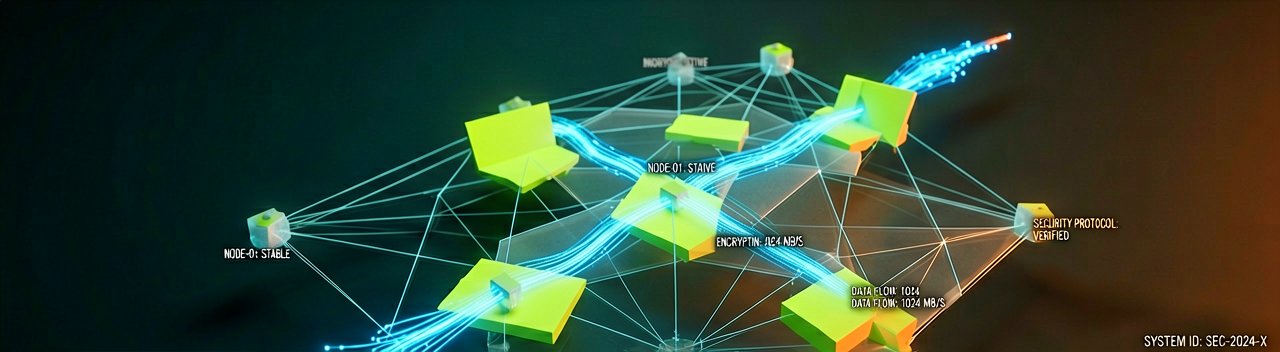
The launch represents a significant shift in how endpoint management tools are structured. Rather than relying on fixed modules and linear workflows, Atlas dynamically generates pages tailored to the specific user at the screen. Ambient agents operating at the system level continuously observe the environment and surface relevant issues before a query is even made (which is actually how these tools should have worked from day one).
According to the official press release, Atlas is built on an endpoint data foundation covering more than 36 million devices worldwide. The system captures telemetry directly from sources and returns answers in seconds. This real-time data layer is what Tanium positions as its primary differentiator from competitors.
The system runs on a curated ensemble of AI models from providers including OpenAI, Anthropic, and Google. Tanium's approach emphasizes that the underlying data foundation matters more than the language model alone. The platform exposes endpoint signals through open APIs and Model Context Protocol tools, allowing customers to connect external agents and workflows.
Matt Quinn, chief operating officer at Tanium, framed the launch around what the company describes as a structural break in cybersecurity. He stated that newer AI models have collapsed the time from vulnerability discovery to weaponized exploit from weeks to minutes. This acceleration, Quinn argued, makes reactive, module-based tools a liability rather than an asset.
Quinn's comments reference specific AI models including Anthropic's Claude Mythos and OpenAI's Spud. These model names warrant scrutiny, as they do not match publicly documented product names from either vendor as of early 2026. The claims about vulnerability-to-exploit timelines remain unverified by independent sources.
From a user experience perspective, Atlas attempts to reduce the friction between analysis and execution. Traditional security consoles often require operators to navigate between dashboards, run separate queries, and manually correlate findings. Atlas consolidates these steps into a governed experience where intent translates directly to outcome.
Harman Kaur, chief technology officer at Tanium, emphasized the company's two-decade history of building endpoint telemetry infrastructure. She noted that no AI model can replicate real-time, accurate telemetry across complex environments on its own. The depth of that data is what makes Atlas possible, according to her statement.

Independent reporting from HelpNetSecurity corroborates the core technical specifications and executive quotes. The outlet's coverage confirms the platform's positioning as an autonomous operating system rather than a traditional management console.
The physical reality of using Atlas involves interacting with a dynamically generated interface that surfaces visualizations and actions in real time. Operators no longer need to remember specific query syntax or navigate through nested menus to find relevant endpoint data. The system anticipates what matters based on ambient observation of the environment.
Market pressure drives this development. Corporate technology teams face the challenge of managing sprawling endpoint estates with limited staff while attack volumes continue to rise. Endpoint management has become more closely linked with cyber defense as organizations attempt to shorten the gap between detecting a weakness and executing a response across thousands of devices.
Tanium's approach suggests suppliers now view the user interface itself as a competitive battleground. By presenting AI assistance, telemetry, and actions in one environment, vendors hope to reduce friction for overstretched security and IT teams. The question becomes whether operators will actually trust automated recommendations enough to act on them without manual verification.
The platform sits on top of the Tanium Autonomous IT Platform, which the company says has been recognized in analyst assessments covering endpoint management and Windows device management. These analyst recognitions add credibility to the underlying infrastructure, though they don't guarantee Atlas will perform as advertised in every deployment.
Openness matters for buyers. Many large organizations have been wary of systems that lock automated decision-making inside a single supplier's tools. Security operations require audit trails, controls, and compatibility with existing software estates. Atlas's support for external models and workflows addresses some of these concerns.
Whether organizations actually pay for this capability remains the real question. The technology promises to consolidate workflows and accelerate response times, but the economic value depends on whether it reduces incident resolution costs enough to justify the investment. Time will tell if Atlas delivers on its autonomous operating system claims.
Artūras Malašauskas is an AI Systems Integrator with 20+ years of production-grade web engineering experience. He has designed, shipped, and scaled enterprise Python/PHP systems for logistics, SaaS, and public-sector clients. For the past year, he has focused exclusively on AI integrations: deploying open-source LLMs, building generative media pipelines (image, audio, video), and engineering multi-agent workflows for real production environments. His standard: reproducibility, security, cost-efficient inference—no vaporware. He documents and evaluates emerging AI tooling, separating verified capabilities from marketing noise. Technical editor at: muza-ai.eu, ai-verslas.lt, ai-naujinos.lt Connect on LinkedIn
Comments