Micropolis Robotics Unveils M1.5 Hybrid Robot for Mission-Critical Deployments
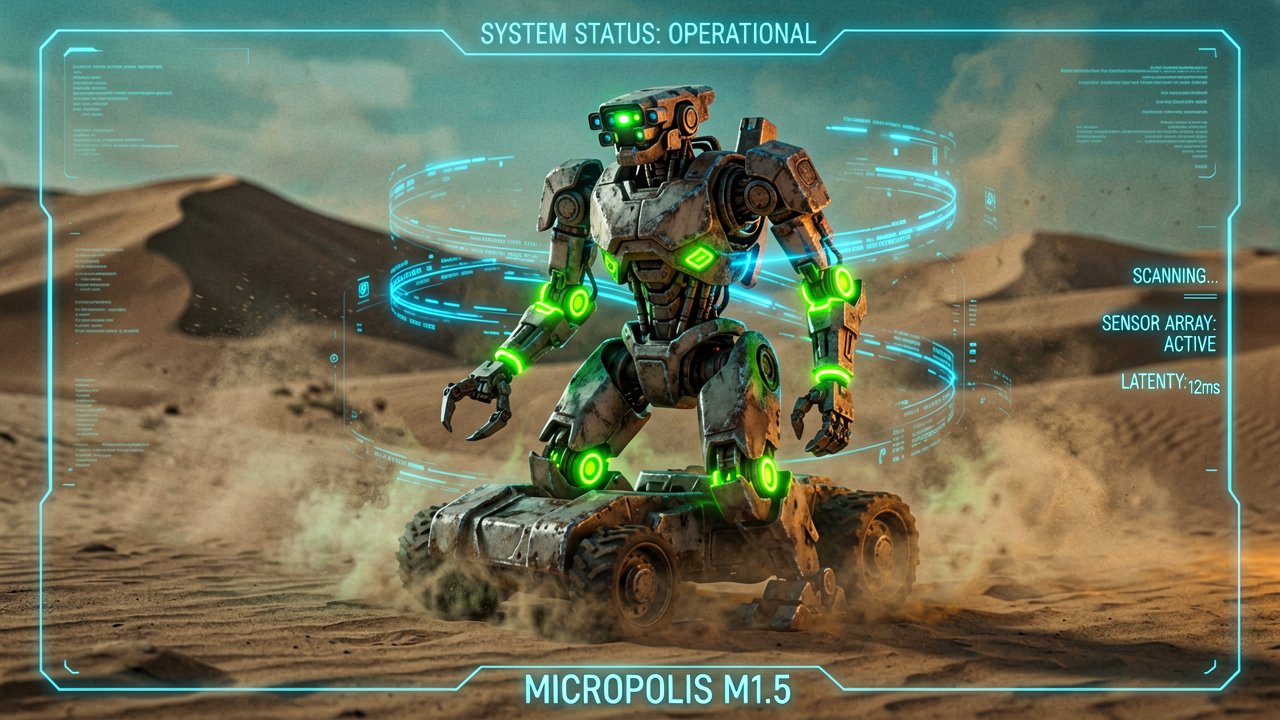
The robotics sector in the Gulf region received a tangible upgrade this week when Micropolis Robotics unveiled its M1.5 hybrid robot at Make it in the Emirates 2026 in Abu Dhabi. The event ran from May 4 to 6, 2026, and the company used the platform to showcase what it describes as an enhanced-capacity evolution of its existing autonomous mobile systems.
This isn't a consumer gadget you'll find in a retail display case. The M1.5 is engineered for demanding operational environments where reliability matters more than flashy features. Think border surveillance, oil facility monitoring, or remote infrastructure inspection—scenarios where a robot needs to keep running when conditions deteriorate.
According to the official announcement from intlbm, the platform represents a step forward in performance and capability. The robot is designed to operate across longer distances, extended durations, and more complex terrains than its predecessors. Improved off-road mobility and increased endurance are the headline specifications, though specific metrics remain undisclosed in public materials.
CEO Fareed Aljawhari framed the launch as a direct response to operational requirements from high-security and mission-critical environments. "We take pride in building advanced robotics and AI systems in the UAE that are designed to operate in real-world, high-demand environments," Aljawhari stated during the event. The M1.5 reflects the company's focus on endurance, adaptability, and reliability—three attributes that matter when you're deploying autonomous systems in desert conditions or industrial zones.
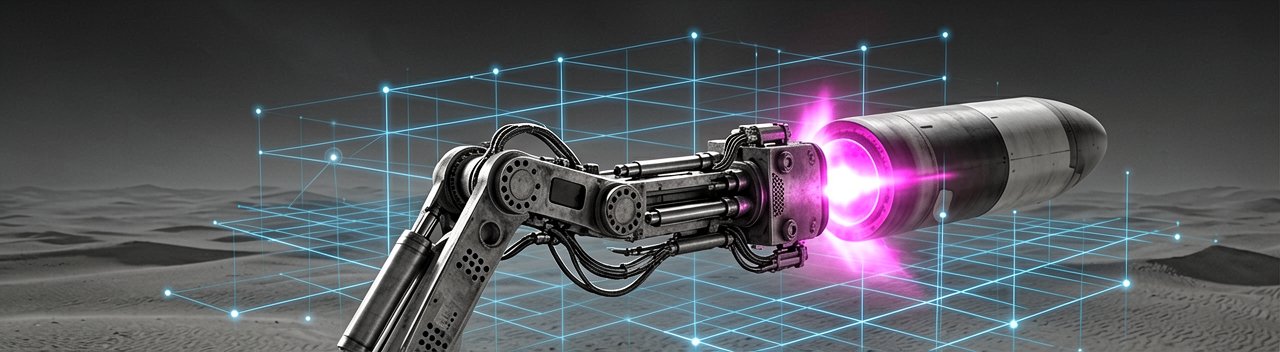
The development trajectory is shaped by real-world demands from entities like the UAE National Guard, Saudi Arabia's Ministry of Interior, and critical infrastructure operators. These aren't theoretical use cases. They represent actual procurement requirements where continuous autonomy and sustained performance are essential for remote surveillance, border control, and industrial operations including oil and gas facilities.
From a technical standpoint, the M1.5 builds on Micropolis' existing portfolio of autonomous systems. The company already deploys the Patrol M1 and Patrol M2 platforms across security, surveillance, and smart infrastructure applications. These systems handle continuous monitoring, autonomous navigation, and real-time data capture in controlled and semi-structured environments. The M1.5 appears to extend that capability envelope into more rugged, less predictable terrain.
Also featured alongside the hardware is Microspot, the company's proprietary AI and software platform. This serves as the intelligence layer across Micropolis' ecosystem, enabling real-time monitoring, fleet coordination, data analytics, and integration with broader command-and-control systems. The combination of robotics, artificial intelligence, and software into scalable solutions is the stated approach, though the depth of AI integration remains somewhat opaque in public documentation.
Micropolis' participation in Make it in the Emirates highlights the strength of Emirati engineering and manufacturing capabilities. The systems are designed, developed, and produced in the UAE, which matters for government procurement and national security considerations. The company works with leading national institutions including Dubai Police, the UAE National Guard, DP World, and Aramco, supporting mission-critical applications across security, logistics, and infrastructure environments.

There's also a financial angle worth noting. Listed on the NYSE American under ticker MCRP, Micropolis is the first UAE robotics company to achieve a public listing in the United States. This reinforces its position as a globally recognized technology developer and provides capital access for scaling operations. From this foundation, the company continues to scale internationally, exporting UAE-built robotics solutions to markets across Saudi Arabia and Africa.
The timing aligns with broader regional trends. As the UAE accelerates integration of artificial intelligence across government and national infrastructure, there's clear alignment between policy direction and practical deployment. Micropolis positions itself as translating that ambition into systems that can be implemented at scale, supporting critical operations locally while extending expertise to global markets.
Independent reporting from Brief Glance corroborates the launch details and emphasizes the growing demand for high-endurance autonomous systems in security and industrial applications. The company's strategic alignment with UAE's AI integration policies and global expansion efforts highlight the broader trend of advanced robotics playing a critical role in mission-critical operations.
What's less clear is the competitive landscape. Other robotics companies operate in similar spaces, though few have the combination of government partnerships and public market access that Micropolis claims. The M1.5's actual performance metrics—battery life, payload capacity, navigation accuracy in GPS-denied environments—remain largely unverified in public sources. (These are the specs that actually matter when you're buying a robot for border patrol.)
The physical reality of deploying these systems involves more than just turning them on. Operators need to understand maintenance cycles, software updates, and integration with existing command infrastructure. The robot's hybrid nature suggests it can operate in multiple modes, but the transition between modes and the reliability of those transitions in field conditions remain questions for potential buyers.
Market expansion is the next phase. How Micropolis scales its UAE-built robotics solutions internationally, particularly in Saudi Arabia and Africa, will determine whether this launch translates into sustained growth. Government partnerships with high-profile entities like the UAE National Guard and Aramco provide credibility, but sustaining those collaborations requires consistent performance and reliability over time.
Technological integration is another variable. The pace at which Micropolis integrates AI and software platforms like Microspot into broader command-and-control systems will affect the robot's long-term value proposition. Command centers need seamless data flows, not just autonomous hardware that operates in isolation.
Whether the M1.5 achieves widespread adoption beyond government contracts remains uncertain. The technology works in controlled demonstrations, but real-world deployment introduces variables that no amount of testing can fully predict. Whether users actually pay for it at scale remains the real question.
Artūras Malašauskas is an AI Systems Integrator with 20+ years of production-grade web engineering experience. He has designed, shipped, and scaled enterprise Python/PHP systems for logistics, SaaS, and public-sector clients. For the past year, he has focused exclusively on AI integrations: deploying open-source LLMs, building generative media pipelines (image, audio, video), and engineering multi-agent workflows for real production environments. His standard: reproducibility, security, cost-efficient inference—no vaporware. He documents and evaluates emerging AI tooling, separating verified capabilities from marketing noise. Technical editor at: muza-ai.eu, ai-verslas.lt, ai-naujinos.lt Connect on LinkedIn
Comments