IBM Launches Sovereign Core Platform for AI Governance

At its annual Think conference, IBM unveiled Sovereign Core, a comprehensive platform designed to address the expanding definition of digital sovereignty in the AI era. The announcement represents a shift from traditional data residency concerns to broader operational control requirements.
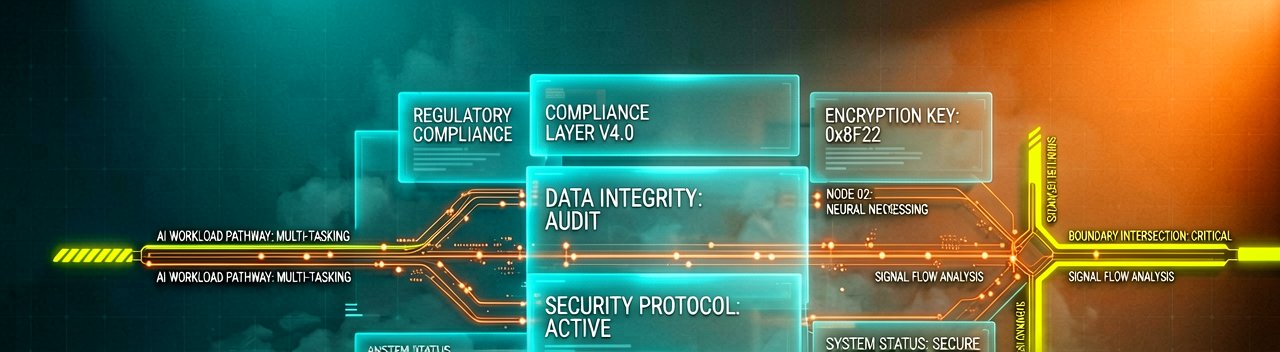
The platform combines platform services, control plane, and security capabilities into a single deployment model that runs on customer-provided infrastructure. This architecture places the customer-operated control plane within the sovereign boundary to manage provisioning, configuration, and lifecycle operations across platform services and tenant environments.
According to the official IBM announcement, core services for identity, access control, and encryption key management operate in-boundary, with logs and audit records also maintained within the sovereign boundary. This helps organizations maintain operational authority over their environments.
The rise of AI has intensified pressure to address digital sovereignty while reshaping what organizations require from it. For years, sovereignty conversations centered on where data resides. While data residency remains of critical importance, sovereignty has expanded to a broader set of concerns: who operates the platform, who controls access, what technology dependencies exist.

IBM Sovereign Core enables organizations to deploy and operate AI models (out of the box or customer-supplied), inference services, agents, and application workloads within the sovereign boundary. AI processing and model execution can be directed to occur locally, without external provider access, helping organizations maintain governance, accountability, and control over AI systems operating on sensitive data.
This is where the rubber meets the road for regulated industries (banks and healthcare providers have been waiting for this kind of control for years). CPU, GPU, virtual machines, and AI inference environments can be provisioned using standardized templates and automated configuration profiles. Infrastructure and workloads are deployed as managed services within sovereign regions, helping teams maintain consistent configuration aligned to sovereignty and compliance requirements.
The platform supports compliance goals through continuous integrated monitoring and automated evidence generation across workloads and system operations. Compliance controls are enforced at runtime, with evidence generated and retained within the sovereign boundary. Over 160 preloaded regulatory frameworks and policy templates help teams quickly evaluate environments against compliance requirements.
Audit-ready evidence is available on demand, giving teams visibility into compliance posture across control and tenant environments. This continuous compliance evidence reduces reliance on manual validation and static audit processes, helping organizations support consistent compliance alignment as environments scale.
IBM Sovereign Core is built on an open-source foundation, providing customers with enhanced visibility, certainty, and control of the key technology. IBM's published Statement of Direction outlines a commitment to open-source core components of the software foundation, reinforcing IBM's commitment to openness, transparency, and client choice.
The platform includes an extensible catalog that organizations can curate for their own users, with their own applications, or populated with pre-vetted IBM, third-party, and open source software and services from an ecosystem of software and infrastructure partners. The partner list includes AMD, ATOS, Cegeka, Cloudera, Dell, Elastic, HCL, Intel, Mistral, MongoDB, and Palo Alto Networks.
According to the IBM Newsroom press release, the announcements address the defining challenge facing enterprises: many have invested heavily in AI, but only few believe it is paying off. The products and capabilities unveiled address this gap for enterprises.
"The enterprises pulling ahead are not deploying more AI – they're redesigning how their business operates," said Arvind Krishna, Chairman and CEO, IBM. "Running AI in the enterprise requires a new operating model, and IBM is enabling organizations to manage AI-driven systems with the same rigor, governance, and scale as their most critical infrastructure."
For organizations moving AI from experimentation to production, this means AI workloads can be deployed in environments designed for traceability, evidence generation, and operational control from the start. The catalog helps organizations accelerate traditional and AI-powered workloads while maintaining control over data, operations, and technology.
IBM Sovereign Core is designed for organizations that need to operate sensitive workloads with greater control, flexibility, and evidence. Across these use cases, the goal is the same: help organizations innovate with AI while maintaining demonstrable authority over the systems, data, operations, and evidence that matter most.
The platform represents a sovereign software foundation offering customer-operated control, automated compliance evidence, governed AI, and an extensible ecosystem. Taken together, these capabilities help organizations deploy and operate AI-ready environments with control, compliance, and operational independence at scale.
Whether enterprises actually adopt this model at scale remains the real question. The technology exists, but the cost and complexity of maintaining sovereign boundaries across multiple jurisdictions could prove prohibitive for many organizations. Time will tell if the compliance benefits outweigh the operational overhead.
Artūras Malašauskas is an AI Systems Integrator with 20+ years of production-grade web engineering experience. He has designed, shipped, and scaled enterprise Python/PHP systems for logistics, SaaS, and public-sector clients. For the past year, he has focused exclusively on AI integrations: deploying open-source LLMs, building generative media pipelines (image, audio, video), and engineering multi-agent workflows for real production environments. His standard: reproducibility, security, cost-efficient inference—no vaporware. He documents and evaluates emerging AI tooling, separating verified capabilities from marketing noise. Technical editor at: muza-ai.eu, ai-verslas.lt, ai-naujinos.lt Connect on LinkedIn
Comments