CT-Unite Unveils China's First GaN Magnetic Encoder for Humanoid Robots
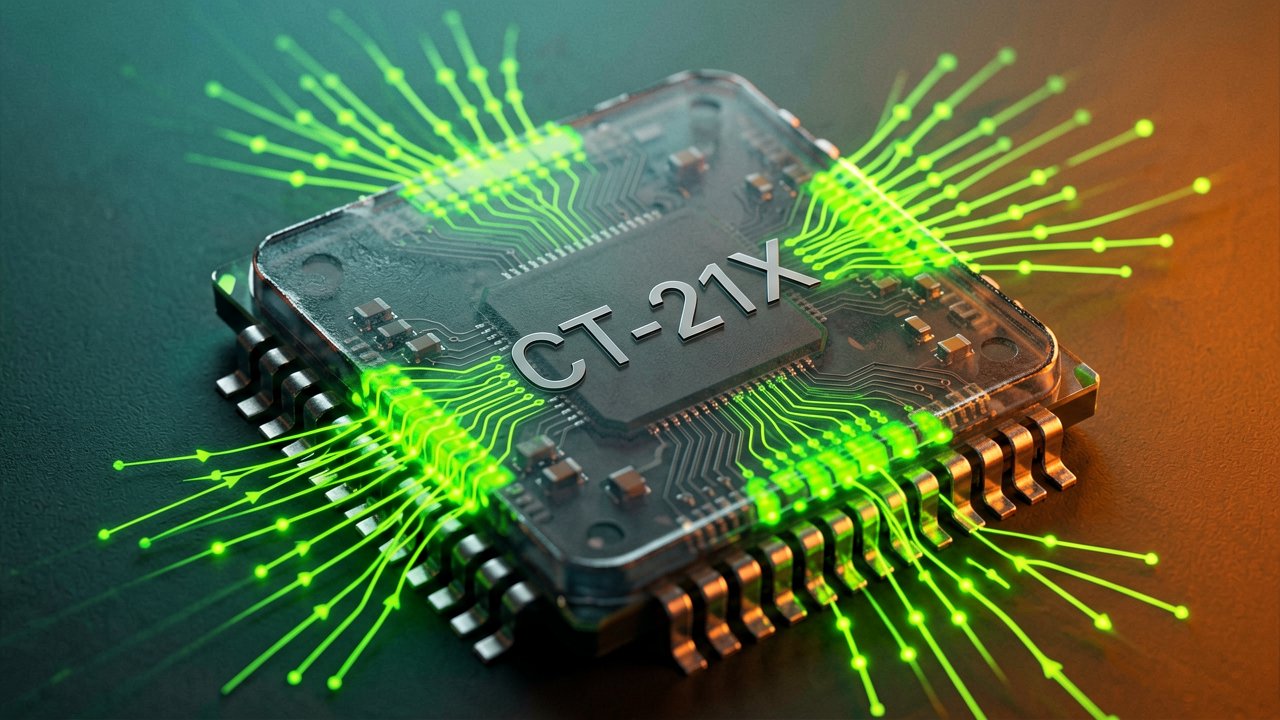
The semiconductor landscape for robotics just got more crowded. CT-Unite has announced the CT-21X, which the company claims is China's first gallium nitride (GaN) magnetic encoder chip specifically engineered for humanoid robot joints. The announcement comes as manufacturers race to solve persistent problems in robotic motion control: heat dissipation, spatial constraints, and the eternal trade-off between precision and reliability.
According to coverage from New Electronics, the chip addresses technical bottlenecks that have plagued humanoid joint systems. Traditional encoders struggle when mounted near motor coils, where temperatures spike and space is at a premium. The CT-21X uses GaN two-dimensional electron gas (2DEG) materials combined with aluminium scandium nitride (AlScN) architecture to operate continuously at 180°C. It can withstand short-term thermal peaks between 250°C and 400°C without degradation.
This thermal tolerance matters because it changes how engineers design robot joints. Instead of building elaborate cooling systems or keeping sensors at a safe distance from heat sources, the CT-21X can be mounted directly near motor coils. That proximity reduces signal latency and eliminates the need for complex thermal management infrastructure. The physical result is simpler, more compact joint designs that fit into the tight spaces of humanoid robot limbs.
Performance specifications from TrendForce corroborate the technical claims. The encoder delivers angular accuracy ranging from 30 to 100 arcseconds with thermal drift between 0.01° and 0.03° per degree Celsius. For context, that level of stability means the sensor won't drift significantly even when ambient temperatures fluctuate during operation (a problem that has plagued users for years, frankly). The chip integrates a 21-bit analogue-to-digital converter with programmable calibration, achieving angular errors of approximately ±0.1°.
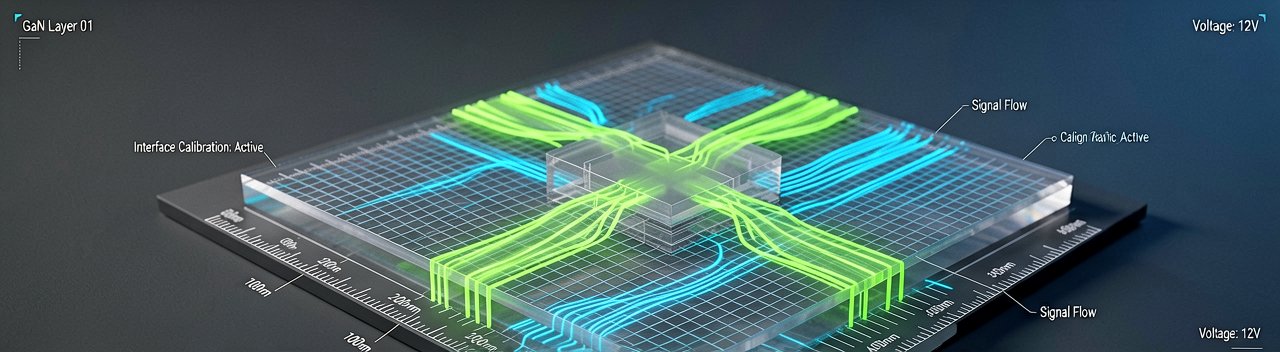
Response time is equally critical for dynamic motion. The CT-21X operates with latency below 2 microseconds and bandwidth between 1MHz and 5MHz. It can handle rotational speeds up to 300,000 revolutions per minute. These numbers translate to smoother, more responsive control during high-speed tasks like running, jumping, or precision assembly. CT-Unite estimates positional accuracy could improve from ±0.2mm to ±0.05mm in certain applications.
The single-chip multi-sensor fusion design reduces overall size by 40% to 50% compared with conventional encoder solutions. That miniaturization enables ultra-thin, compact, and hollow joint configurations common in humanoid robots. Engineers no longer need to sacrifice space for thermal management or sensor arrays. The chip also meets radiation tolerance requirements, opening potential applications beyond robotics into aerospace and specialized industrial equipment.
CT-Unite, also known as Zhongke Wireless Semiconductor, has focused on GaN-based integrated circuits and motion control technologies for years. The company's team originated from the Institute of Semiconductors at the Chinese Academy of Sciences, with expertise in compound power semiconductors. Several chips have already achieved large-scale commercial use across new energy, drones, IoT, and fast charging sectors. The CT-21X forms part of this broader portfolio.
Mass production is expected to begin in the third quarter of 2026. Samples and customization services are already available to potential customers. This timeline aligns with China's 15th Five Year Plan, which has made clear arrangements for key industries including integrated circuits, intelligent robots, and wide bandgap semiconductors. The chip represents a domestic alternative to foreign encoder solutions that have dominated the market.

Humanoid robots require precise, reliable, and compact components. Every joint needs accurate position feedback to maintain balance and execute complex movements. The CT-21X targets these requirements directly. By combining high-temperature reliability, miniaturization, ultra-high precision, low power consumption, high integration, and radiation resistance into a single package, the chip addresses multiple pain points simultaneously.
The physical reality of using this technology involves less thermal throttling and more consistent performance. Engineers designing robot joints can now place sensors closer to heat sources without worrying about accuracy degradation. That means fewer components, simpler assembly, and potentially lower manufacturing costs. The chip's compact form factor also reduces weight, which matters for robots that need to move quickly or carry payloads.
Whether this technology translates to competitive advantage remains to be seen. The humanoid robot market is still emerging, with multiple companies vying for market share. CT-Unite's entry adds another option for manufacturers seeking domestic supply chains. But adoption depends on integration complexity, pricing, and how well the chip performs in real-world deployments compared to established alternatives.
The broader implication extends beyond robotics. GaN-based sensors with radiation tolerance could find applications in aerospace, defense, and specialized industrial equipment. The same thermal and precision characteristics that benefit humanoid joints also serve environments where reliability under extreme conditions is non-negotiable. CT-Unite's positioning suggests awareness of this potential diversification.
China's semiconductor industry has long faced restrictions on advanced technology access. Developing domestic solutions for critical components like motion control encoders reduces dependency on foreign suppliers. The CT-21X represents one piece of that larger strategy. Whether it achieves widespread adoption depends on performance validation and market acceptance.
For now, the chip remains in the pre-production phase. Samples are available for evaluation, but mass production won't begin until Q3 2026. That gives potential customers time to test integration and validate performance claims. Whether users actually pay for it remains the real question.
Artūras Malašauskas is an AI Systems Integrator with 20+ years of production-grade web engineering experience. He has designed, shipped, and scaled enterprise Python/PHP systems for logistics, SaaS, and public-sector clients. For the past year, he has focused exclusively on AI integrations: deploying open-source LLMs, building generative media pipelines (image, audio, video), and engineering multi-agent workflows for real production environments. His standard: reproducibility, security, cost-efficient inference—no vaporware. He documents and evaluates emerging AI tooling, separating verified capabilities from marketing noise. Technical editor at: muza-ai.eu, ai-verslas.lt, ai-naujinos.lt Connect on LinkedIn
Comments