COONTEC Launches AEZIZ 3.0 Supply Chain Security Platform

The convergence security firm COONTEC has released AEZIZ 3.0, a supply chain security platform that combines software bill of materials (SBOM) tracking with a new AI bill of materials (AI-BOM) capability. The platform unifies open source analysis, repository management, and binary analysis into a single system for managing risks across the entire software development lifecycle.
This isn't just another dashboard that promises visibility. The actual workflow involves clicking through component inventories, verifying code signatures, and comparing SBOM versions across projects. That's the physical reality of supply chain security work—endless tabs, constant updates, and the nagging question of whether you've caught everything.
According to the company's announcement, AEZIZ 3.0 enables systematic management of vulnerability and license information through SBOM-based component management. The platform provides visibility across the entire supply chain by integrating functions that were previously dispersed across individual solutions. Thelec.net first reported the launch details.
The AI-BOM feature represents the platform's most significant expansion. This allows organizations to track the provenance and change history of data, libraries, and model structures that comprise AI models. As AI adoption accelerates, security teams now face verification challenges that extend beyond traditional code components into training data, algorithm structures, and model dependencies.

Bang Hyuk-jun, chief executive of COONTEC, stated that AEZIZ 3.0 provides an integrated management framework extending to AI. He added that the AI-BOM feature helps companies operate AI in a more trustworthy manner. The executive also noted at eGISEC 2026 that demand is growing for integrated security responses across supply chain, OT, and AI domains.
Independent reporting from Venture Square corroborates the platform's scope and the expansion into AI supply chain verification. The outlet confirms the integration of SCA, RMS, and binary analysis functions into a single platform structure.
Technical specifications include support for international standards such as SPDX and CycloneDX. These standards help public institutions, financial organizations, and corporations manage supply chain security while meeting regulatory requirements. The integrated dashboard allows visual verification of security status by project, which matters when you're trying to explain risk posture to stakeholders who don't speak developer.
COONTEC has secured experience building supply chain security across finance, public sector, and defense industries. The company highlights its competitive edge through real-world verification via references centered on the financial sector. This matters because supply chain security tools often look great in demos but struggle with the messy reality of legacy codebases and undocumented dependencies.
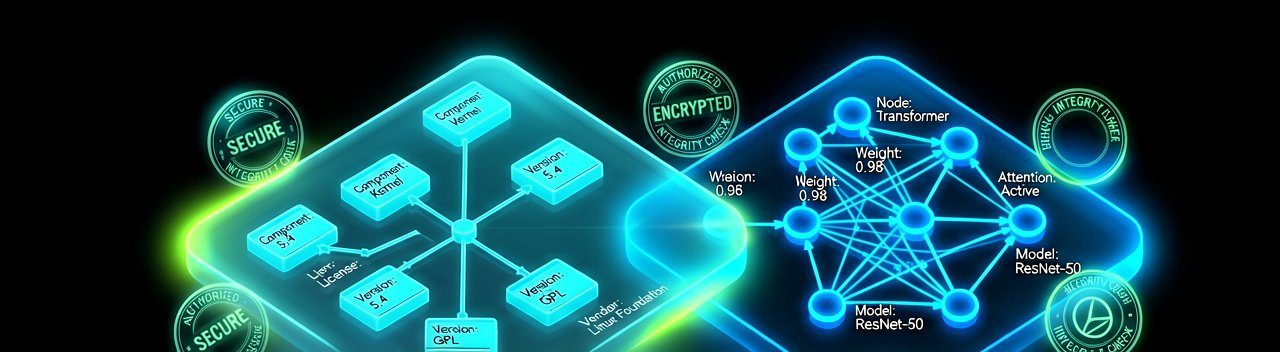
The platform supports code signing verification, binary analysis, and SBOM comparative analysis. These functions help security teams continuously track vulnerability and license information. The comparative analysis feature is particularly useful when you need to understand what changed between releases without manually diffing hundreds of component versions.
COONTEC plans to strengthen platform competitiveness through SBOM and AI-BOM automation, expanded AI model reliability verification, enhanced global regulatory compliance capabilities, and integration with cloud and MLOps environments. The roadmap suggests the company recognizes that supply chain security isn't a one-time implementation but an ongoing operational challenge.
Whether organizations actually adopt AI-BOM tracking at scale remains uncertain. The technology exists, but the question is whether security teams will have the bandwidth to maintain it alongside their existing SBOM obligations. That's the real bottleneck—not the platform capabilities, but the human resources required to operate them.
Artūras Malašauskas is an AI Systems Integrator with 20+ years of production-grade web engineering experience. He has designed, shipped, and scaled enterprise Python/PHP systems for logistics, SaaS, and public-sector clients. For the past year, he has focused exclusively on AI integrations: deploying open-source LLMs, building generative media pipelines (image, audio, video), and engineering multi-agent workflows for real production environments. His standard: reproducibility, security, cost-efficient inference—no vaporware. He documents and evaluates emerging AI tooling, separating verified capabilities from marketing noise. Technical editor at: muza-ai.eu, ai-verslas.lt, ai-naujinos.lt Connect on LinkedIn
Comments