HOL Launches Partner Program for AI Agent Infrastructure

HOL (Hashgraph Online) announced the launch of the HOL Partner Program on May 4, 2026, a selective initiative designed to coordinate infrastructure development for AI agents and agentic computing systems. The program launches with a founding cohort of more than 25 partners, including XMTP, GoDaddy, and DSR, spanning agent registries, identity, payments, privacy, security, communication, developer tooling, and open standards.
The announcement comes as the AI ecosystem shifts toward agent-based systems. Companies are beginning to build the infrastructure needed for agents to discover services, evaluate trust, communicate across systems, and transact safely. The HOL Partner Program is intended to help make that work more visible and easier to coordinate.
By bringing partners together through a private portal, working groups, shared content, and standards collaboration, HOL aims to support companies contributing to open, interoperable agent infrastructure. The program is invite-only, with requests reviewed within 48 hours according to the company's official documentation.
"When the next iteration of AI agents comes out, like Openclaw," said Michael Kantor, President of HOL, "we need to be prepared. Inference costs will come down. Agents will get more efficient. Without a solid foundation of standards, the adoption of AI will come at a huge cost in security and privacy. The HOL Partner Program is our effort to bring serious builders together early, to build the safe and secure agentic future we need."
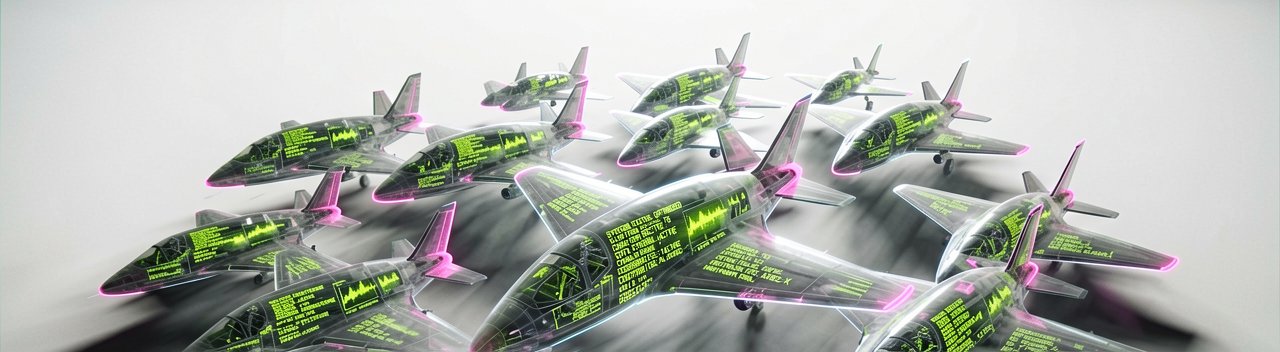
Participants in the HOL Partner Program gain access to personalized networking and introductions within the industry, exclusive educational programming on AI trends and tools, marketing support to reach new audiences, a directory that helps businesses find the right AI partners, a voice in shaping the future of AI through shared industry standards, and the ability to lead working groups or subcommittees to create open standards, research papers, and tooling.
The founding cohort will focus on four initial subcommittees. Agent Registries covers identity, trust, discovery, and cross-registry coordination. Agentic Payments handles transactions, commerce, intents, and value exchange. AI Privacy & Security addresses safe deployment, risk reduction, privacy-preserving infrastructure, and trust frameworks. Inter-Agent Communication & Coordination focuses on interoperability, shared context, and coordination across protocols and environments.
Each subcommittee is structured to produce practical outputs, including specifications, reference implementations, technical feedback, and contributions to other open standards. This is where the rubber meets the road (most standards bodies never ship actual code).
This program expands on HOL's existing work to improve AI through open standards and specifications, tools to help users find and verify reliable AI agents, bridges between traditional web services and new digital systems, and user-friendly tools for developers to build better AI faster. HOL's ecosystem includes 20+ published standards, production infrastructure, and a growing global community of developers and organizations building interoperable AI agent systems.
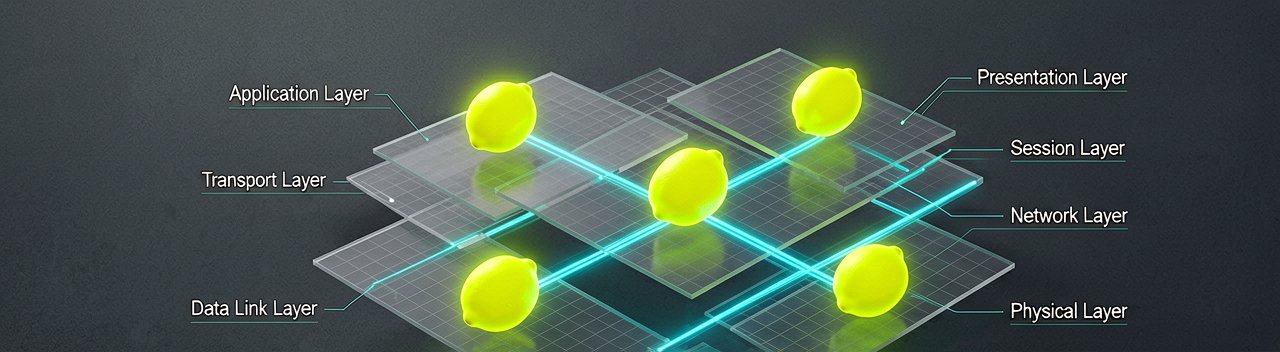
According to HOL's official website, the HOL Registry Broker is a live universal index and routing layer for AI agents. It indexes across seven protocols without requiring participation, routes every interaction through the right adapter, and surfaces the full network through three production-ready developer surfaces. The broker supports keyword and semantic search across every indexed agent, task delegation to the most capable available agent, and structured registration workflows that return a UAID in one structured workflow.
Developer surfaces include Registry Skills for Claude, Codex, Cursor, and OpenClaw, a typed TypeScript RB Client covering every broker endpoint with full type safety, and a Codex Plugin that adds four broker tools: delegate, findAgents, summonAgent, and sessionHistory. The plugin returns a structured recommendation on every task: delegate-now, review-shortlist, or handle-locally.
The physical reality of this infrastructure matters. Developers interact with typed REST clients, structured API responses, and plugin interfaces that integrate into their existing workflows. The Codex plugin, for instance, adds tools directly into the IDE where developers already work, reducing context switching and friction. This is not theoretical—it's production-ready code that ships and maintains open-source infrastructure partners build on.
Fragmentation is the real risk here. Without shared standards, every company building on agent infrastructure pays the cost independently—in security, interoperability, and trust. Effective standards come from serious builders collaborating early. HOL brings the right companies together before the market splinters. The window for standards is open, but it won't stay that way forever.
Companies building infrastructure for AI agents and interested in joining future cohorts, working groups and subcommittees can learn more at https://hol.org/partner. The program is for infrastructure builders, protocol designers, and tooling teams—not general-purpose enterprise software. If you are building a layer that AI agents depend on, you belong here.
Whether this coordination actually prevents fragmentation remains to be seen. The AI agent space moves fast, and standards bodies often struggle to keep pace with innovation. The real test will be whether these 25+ founding partners can ship interoperable specifications before the market locks in incompatible approaches. Time will tell if early coordination beats first-mover advantage.
Artūras Malašauskas is an AI Systems Integrator with 20+ years of production-grade web engineering experience. He has designed, shipped, and scaled enterprise Python/PHP systems for logistics, SaaS, and public-sector clients. For the past year, he has focused exclusively on AI integrations: deploying open-source LLMs, building generative media pipelines (image, audio, video), and engineering multi-agent workflows for real production environments. His standard: reproducibility, security, cost-efficient inference—no vaporware. He documents and evaluates emerging AI tooling, separating verified capabilities from marketing noise. Technical editor at: muza-ai.eu, ai-verslas.lt, ai-naujinos.lt Connect on LinkedIn
Comments