Sonos Launches Play Portable Speaker at $299
The audio equipment manufacturer Sonos has officially announced the Sonos Play, a new portable speaker designed to bridge the gap between its ultra-portable Roam 2 and the heavier Move 2. Priced at $299, the Play becomes available on March 31, 2026, according to the company's official product documentation.
This launch marks Sonos' first portable speaker release since May 2024, following a period where the company focused on fixing its botched mobile app update from July 2024. The Play represents a return to hardware innovation after months of software remediation (which frankly, most customers were waiting for).
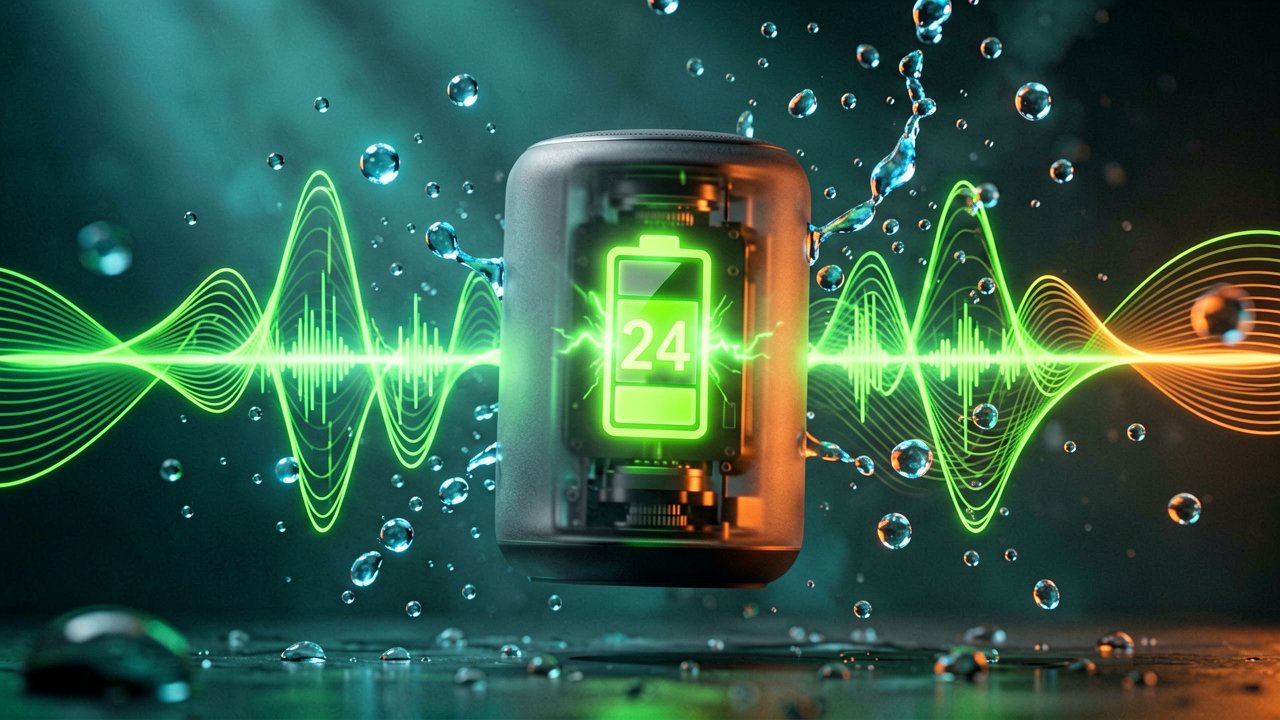
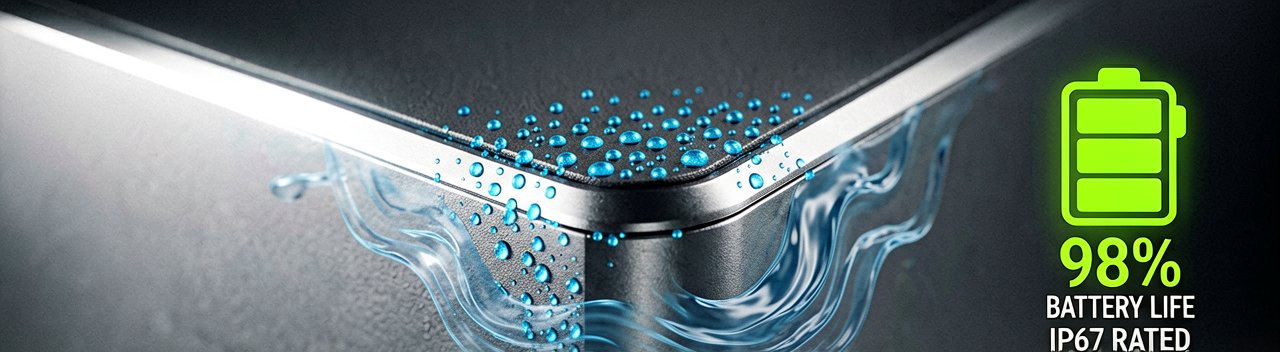
Technical specifications from the official Sonos product page reveal a 2.87-pound speaker with dual angled tweeters, one midwoofer, and three class-H digital amplifiers. The unit features an IP67 dustproof and waterproof rating, allowing submersion in up to one meter of water for 30 minutes. Battery life reaches 24 hours at moderate volume levels, though pushing higher volumes reduces this to approximately 14-17 hours.
The speaker includes a replaceable battery ($69), a feature few portable speakers offer. This design choice extends the product's usable lifespan and reduces electronic waste. The Play also functions as a power bank via its USB-C port, allowing users to charge phones while the music plays—a practical feature for outdoor use.
Connectivity options include Wi-Fi 6 for home integration and Bluetooth 5.3 for on-the-go use. For the first time, Sonos portable speakers can group directly via Bluetooth without requiring a Wi-Fi network. Users can link up to four Play or Move 2 speakers together when away from home, enabling synchronized audio at campsites or beaches.
Independent testing from CNET confirms the Play earns an Editors' Choice award, noting its premium build quality and impressive sound for its compact size. The review highlights that while the larger Move 2 produces more bass and volume, the Play delivers significantly richer sound than the smaller Roam 2 at a $120 price premium.
The speaker supports Sonos' Automatic Trueplay tuning technology, which uses built-in microphones to analyze room acoustics and optimize sound accordingly. Users can also manually adjust bass, treble, and loudness through the Sonos app. Voice control is available through three beam-forming microphones supporting Sonos Voice Control and Amazon Alexa, with a physical mic switch for privacy.
Positioning in the market places the Play at $299, which is $200 cheaper than the Move 2 ($499) but $120 more expensive than the Roam 2 ($179). The speaker also launches alongside the Sonos Era 100 SL, a $189 entry-level device that lacks voice control but offers similar stereo sound capabilities.

Physical interaction with the Play reveals a 7.57-inch tall speaker with a utility loop for carrying. The wireless charging base is included, though the power adapter is not—users need at least an 18-watt adapter, with 45-watt recommended for optimal charging speed. The matte finish comes in Black and White color options.
Sound quality testing shows the Play avoids distortion at higher volumes better than expected, though certain complex tracks with multiple instruments can experience slight frequency clipping. Stereo separation improves dramatically when pairing two Play speakers in stereo mode, addressing a limitation of single-unit playback.
Comparison with the similarly priced Bose SoundLink Plus ($269) reveals both speakers share IP67 ratings, but the Bose floats while the Sonos does not. The Bose offers a slightly wider soundstage and warmer default sound, but lacks Wi-Fi multi-room integration and battery replacement capability.
The Play's spiritual predecessor, the original Play:1, was a wired speaker. This new portable version maintains that naming convention while adding modern features like Trueplay tuning and Bluetooth grouping. Longtime Sonos users will recognize the design language, though the Play incorporates lessons learned from the Move 2's bulkier form factor.
Whether the $299 price point justifies the upgrade from existing portable speakers remains the real question for budget-conscious consumers. The replaceable battery and multi-room integration provide long-term value, but the upfront cost is substantial compared to non-Sonos alternatives.
Artūras Malašauskas is an AI Systems Integrator with 20+ years of production-grade web engineering experience. He has designed, shipped, and scaled enterprise Python/PHP systems for logistics, SaaS, and public-sector clients. For the past year, he has focused exclusively on AI integrations: deploying open-source LLMs, building generative media pipelines (image, audio, video), and engineering multi-agent workflows for real production environments. His standard: reproducibility, security, cost-efficient inference—no vaporware. He documents and evaluates emerging AI tooling, separating verified capabilities from marketing noise. Technical editor at: muza-ai.eu, ai-verslas.lt, ai-naujinos.lt Connect on LinkedIn
Comments