Foxconn Launches Second-Generation PEARL Satellites via SpaceX Falcon 9
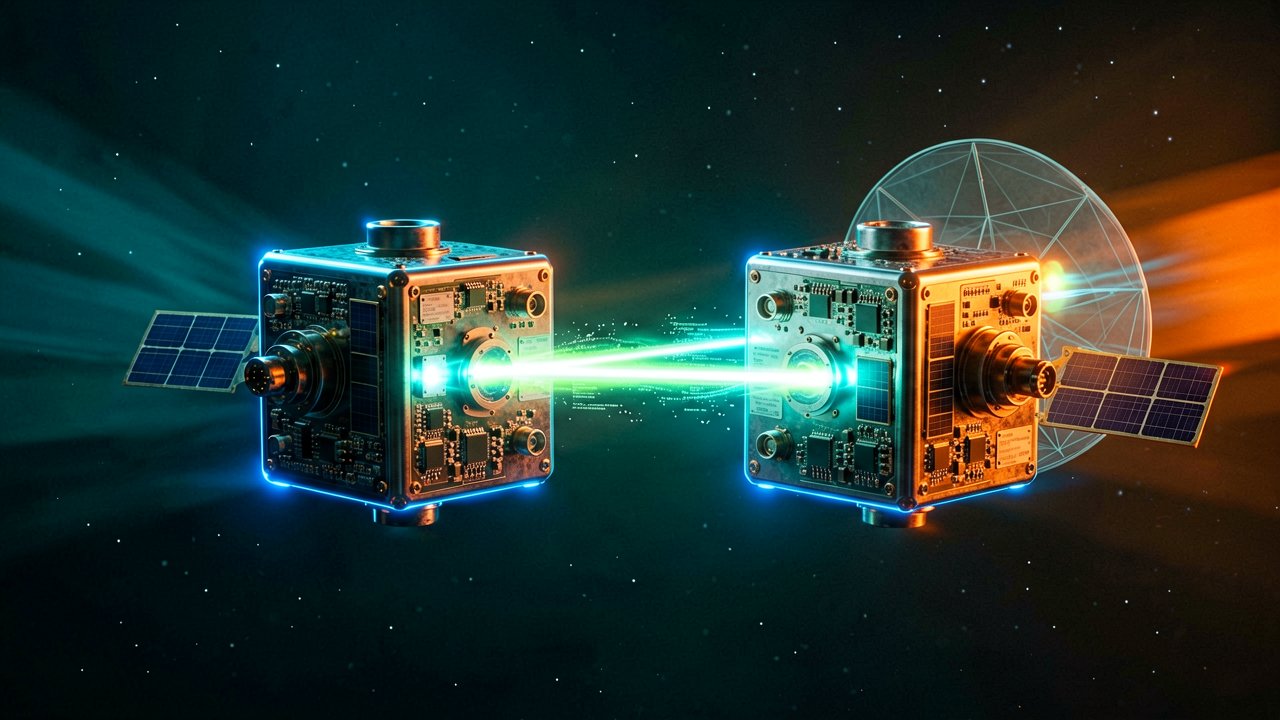
Hon Hai Technology Group, better known globally as Foxconn, has successfully deployed its second-generation low-Earth orbit satellites. The two spacecraft, designated PEARL-1A and PEARL-1B, lifted off aboard a SpaceX Falcon 9 rocket from Vandenberg Space Force Base in California on Sunday, May 3, 2026. This mission marks a tangible shift for the electronics manufacturing giant, which has spent decades assembling other companies' hardware before now attempting to own and operate orbital infrastructure.
The satellites are not toys. They are 6U-class CubeSats designed for a five-year operational lifespan, positioned in a Sun-Synchronous Orbit at approximately 520 kilometers altitude. That's roughly 323 miles up, where the air is thin enough to ignore but gravity still demands constant orbital velocity. The primary technical objective is straightforward: verify advanced intersatellite communication links (ISLs). These crosslinks allow satellites to talk directly to one another without routing through ground stations, which reduces latency and creates a more resilient network architecture.
According to the satnews.com mission report, the PEARL program builds on lessons from first-generation proof-of-concept cubesats launched in late 2023. Those earlier satellites, PEARL-1H and PEARL-1C, focused on satellite-to-ground communication and basic system validation. The second generation carries a Ka-band intersatellite link payload, which is a significant technical upgrade. Ka-band frequencies enable higher data throughput but are more susceptible to atmospheric interference, making the validation work non-trivial.
Independent reporting from Taiwan News confirms the deployment details and adds context about the operational infrastructure. Foxconn's satellite control center in Taipei's Neihu District has been running continuous daily experiments since the first-generation mission began. The team collected operational data over a two-year period, which informed the design improvements for PEARL-1A and PEARL-1B. This iterative approach mirrors how aerospace companies typically validate hardware before scaling to constellation deployments.
The satellites will conduct docking and transmission verification tests alongside a small ionospheric probe. This probe monitors the space communication environment, which matters because ionospheric conditions can degrade signal quality for high-frequency transmissions. Engineers need to understand these variables before committing to commercial-scale constellations. The data gathered will feed into beam planning and constellation design for future satellite communication networks.
Strategically, this mission anchors Foxconn's "3+3" initiative. The framework prioritizes three emerging industries—electric vehicles, digital health, and robotics—supported by three core technologies: artificial intelligence, semiconductors, and next-generation communications. By owning satellite hardware and the communications stack, Foxconn aims to offer vertically integrated services for automotive and industrial sectors. Real-time telemetry for its electric vehicle platform is one stated application. That's ambitious, given that most automakers still rely on third-party connectivity providers for their connected car features.
The Foxconn Research Institute oversaw development of the second-generation satellite systems, as well as on-orbit control and data verification. Academic and industrial partners, including National Central University, contributed to the program. This collaboration model is common in space technology development, where universities provide specialized research capabilities while industry partners handle manufacturing and integration. The satellites integrate Foxconn-developed camera payloads alongside internal and external components, which demonstrates the company's attempt to maintain supply chain control even in space hardware.
Following successful orbital insertion, PEARL-1A and PEARL-1B have established initial contact with Foxconn's ground receiving stations. The next phase involves a multi-month commissioning period to calibrate the communication payloads and begin intersatellite relay tests. This is where the rubber meets the road. Commissioning often reveals issues that ground testing cannot predict. Thermal cycling in orbit, radiation effects on electronics, and unexpected interference patterns can all degrade performance. The five-year mission timeline provides runway for these discoveries.
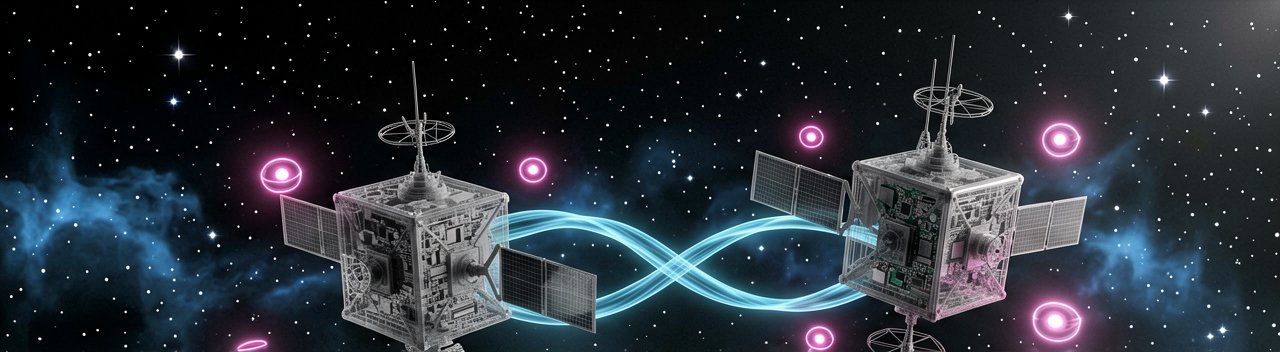
Industry observers note that Foxconn's entry into satellite communications competes indirectly with established players like Starlink, though the scope differs significantly. Starlink operates thousands of satellites for consumer broadband. Foxconn's stated applications focus on industrial use cases: global supply chain tracking, environmental monitoring, mobile communication support, direct-to-cell connectivity, remote area networking, and backup communications for critical sites. These are niche markets compared to consumer internet, but they offer higher margins and less regulatory friction in some jurisdictions.
The company emphasized that the Pearl program aims to build practical on-orbit experience and enhance system integration capabilities for future satellite generations. Vertical integration is the stated goal—increasing component self-sufficiency to boost industrial competitiveness. In practice, this means Foxconn wants to manufacture more of its own satellite components rather than sourcing from external suppliers. That's a hard sell in the space industry, where specialized subsystems often require decades of expertise to develop reliably.
Whether this translates to actual market advantage remains uncertain. The satellite communications sector is crowded, capital-intensive, and heavily regulated. Foxconn has manufacturing scale and supply chain leverage, but orbital operations require different competencies. Ground station networks, spectrum licensing, and mission control expertise don't transfer easily from electronics assembly lines. The company will need to prove it can maintain constellation operations over years, not just launch hardware once.
The PEARL satellites represent a calculated bet on infrastructure ownership. If the intersatellite link tests succeed and the five-year mission delivers usable data, Foxconn could position itself as a provider of integrated space-to-ground services for industrial clients. If they fail or underperform, the satellites become expensive orbital debris with limited strategic value. Either way, the launch demonstrates that traditional manufacturing giants are no longer content to remain on the ground.
Time will tell if Foxconn can navigate the complexities of orbital operations while maintaining its core manufacturing business. The real question isn't whether the satellites work technically—it's whether the company can monetize the data and services they generate. That's where most space ventures stumble, regardless of launch success.
Artūras Malašauskas is an AI Systems Integrator with 20+ years of production-grade web engineering experience. He has designed, shipped, and scaled enterprise Python/PHP systems for logistics, SaaS, and public-sector clients. For the past year, he has focused exclusively on AI integrations: deploying open-source LLMs, building generative media pipelines (image, audio, video), and engineering multi-agent workflows for real production environments. His standard: reproducibility, security, cost-efficient inference—no vaporware. He documents and evaluates emerging AI tooling, separating verified capabilities from marketing noise. Technical editor at: muza-ai.eu, ai-verslas.lt, ai-naujinos.lt Connect on LinkedIn
Comments