Big Tech AI Alliances Reshuffle as Agent Payments Evolve

The artificial intelligence landscape is undergoing a significant realignment as major technology companies restructure partnerships and race to define the infrastructure for autonomous agent payments. OpenAI has revised its partnership contract with Microsoft, allowing the company to offer its models on cloud platforms beyond Microsoft Azure.
Amazon Web Services was the first to capitalize on this shift, adding OpenAI models to its Bedrock platform. Bedrock had previously hosted models from Anthropic, Amazon Nova, Cohere, Alibaba Qwen, and DeepSeek, but the absence of OpenAI's offerings was a notable gap for the world's largest public cloud provider. This move strengthens Bedrock's portfolio while giving OpenAI additional enterprise market leverage.
Some AWS customers remain skeptical about the timing. Reports indicate that existing Bedrock models, particularly Anthropic's, are now sufficient for many use cases—a sentiment that would not have been true two to three years ago (a problem that has plagued users for years, frankly).
The competition extends beyond cloud infrastructure into the underlying payment technologies that will power AI agent transactions. Multiple protocols are now vying to become the industry standard. OKX unveiled the Agent Payments Protocol (APP), designed to compete with Coinbase's x402 protocol and Stripe's Machine Payments Protocol.
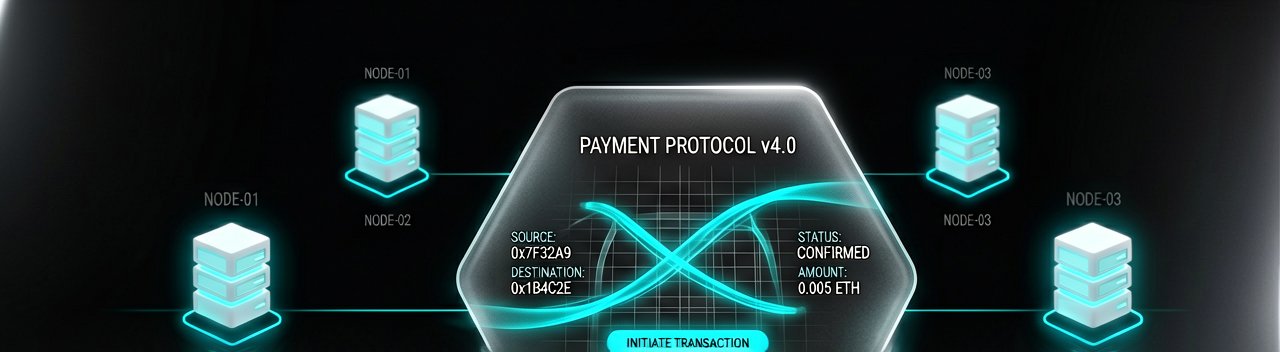
Google announced the Agent Payments Protocol (AP2), an open protocol developed with more than 60 organizations including Adyen, American Express, Mastercard, PayPal, and Salesforce. The protocol addresses three critical questions: authorization (proving a user gave an agent authority to make a purchase), authenticity (ensuring the agent's request reflects true user intent), and accountability (determining responsibility for fraudulent transactions).
AP2 uses cryptographically-signed digital contracts called Mandates to create verifiable proof of user instructions. When you ask an agent to "find me new white running shoes," your request is captured in an Intent Mandate. After the agent presents options, your approval signs a Cart Mandate, creating a secure, unchangeable record of the exact items and price.
Mastercard launched Agent Pay in April 2025, introducing Agentic Tokens that build upon existing tokenization capabilities. The program requires trusted AI agents to be registered and verified before they can make secure payments on behalf of users. Mastercard is collaborating with Microsoft to integrate Azure OpenAI Service and Copilot Studio with its payment solutions.
The physical reality of these systems matters. When an AI agent executes a purchase, the transaction must feel seamless—no extra clicks, no confusing authentication screens, no waiting for bank verification. The friction that currently exists in online checkout flows needs to disappear entirely for agent payments to scale.

Stripe introduced Link, a digital wallet supporting AI agent payments, at its annual conference. Kakao Pay joined the x402 Foundation as a founding member alongside Google, Microsoft, Visa, Mastercard, and Coinbase. The x402 protocol is designed to make online value transfer as simple as email by reducing complex authentication procedures.
Enterprise management is also evolving. Microsoft officially launched Agent 365, a platform that centrally manages AI agents in enterprise environments. The system includes agents operating within Microsoft Copilot, Teams, and Microsoft 365, as well as agents from external partners. Microsoft also released Legal Agent, an AI agent for legal documents in Word.
AWS expanded Amazon Connect into four industry-specific AI agent services and unveiled Amazon Quick, a desktop AI app that automates various tasks. Adobe is expanding an agentic ecosystem spanning major technology companies, agencies, and system integrators. Salesforce launched Agentforce Operations for back-office automation.
The regulatory landscape is catching up. Cisco unveiled the Model Provenance Kit, an open-source tool to help companies address security and compliance issues related to using external AI models. The Digital Sovereignty Alliance has been active in policy discussions around stablecoins and tokenized deposits in real-world payments infrastructure.
For businesses, the practical question is less about which protocol wins and more about how to integrate these capabilities without creating security vulnerabilities. The technology is advancing faster than most organizations can adapt their internal controls (though that's hardly surprising given the pace of change).
As these protocols mature, the focus will shift from standardization to implementation. Companies need to evaluate which payment infrastructure aligns with their existing systems, risk tolerance, and customer expectations. The winners won't necessarily be those with the most advanced AI models, but those who can deliver secure, reliable agent payments at scale.
The infrastructure is being built now. The question is whether organizations will be ready to use it when it arrives.
Artūras Malašauskas is an AI Systems Integrator with 20+ years of production-grade web engineering experience. He has designed, shipped, and scaled enterprise Python/PHP systems for logistics, SaaS, and public-sector clients. For the past year, he has focused exclusively on AI integrations: deploying open-source LLMs, building generative media pipelines (image, audio, video), and engineering multi-agent workflows for real production environments. His standard: reproducibility, security, cost-efficient inference—no vaporware. He documents and evaluates emerging AI tooling, separating verified capabilities from marketing noise. Technical editor at: muza-ai.eu, ai-verslas.lt, ai-naujinos.lt Connect on LinkedIn
Comments