Magenta Robotics Unveils AI-Powered FAST Painting Automation
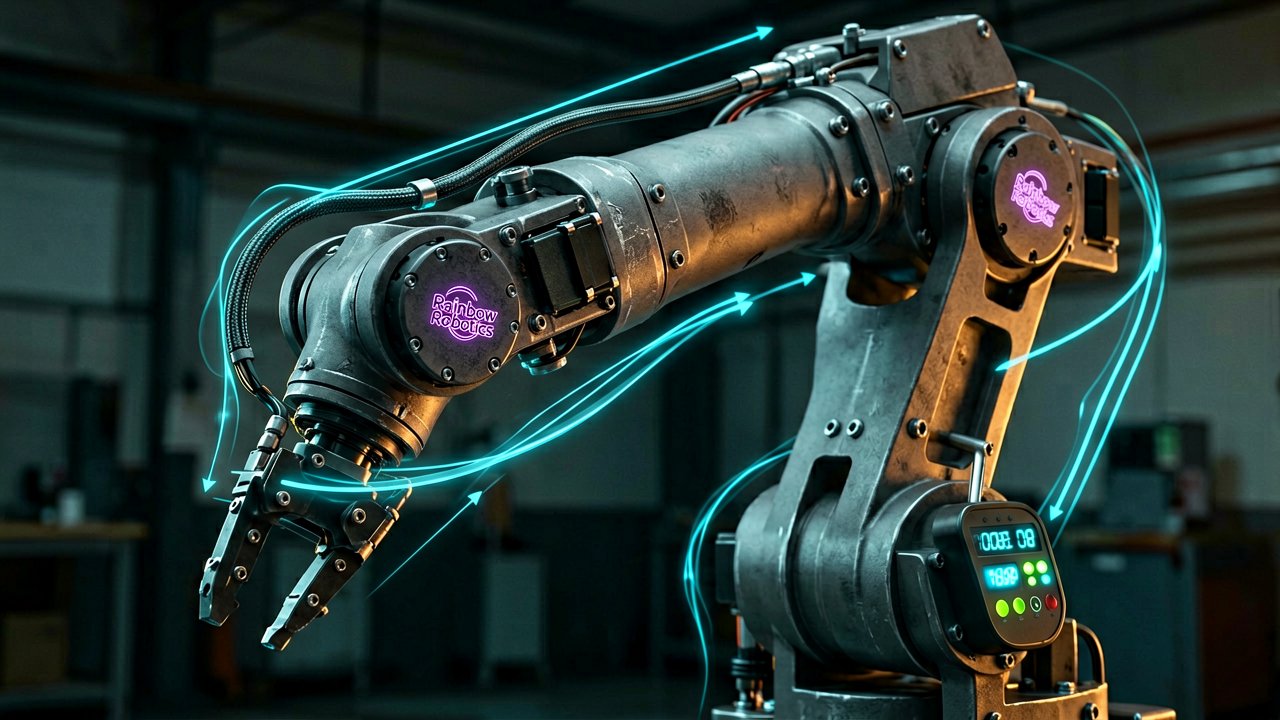
Industrial painting automation just got a significant upgrade. Magenta Robotics announced its FAST (Factory Automation with Smart Teaching) Solution at a briefing event held at the Daejeon Convention Center on October 13. The system pairs Rainbow Robotics collaborative robot arms with proprietary AI-based motion planning technology.
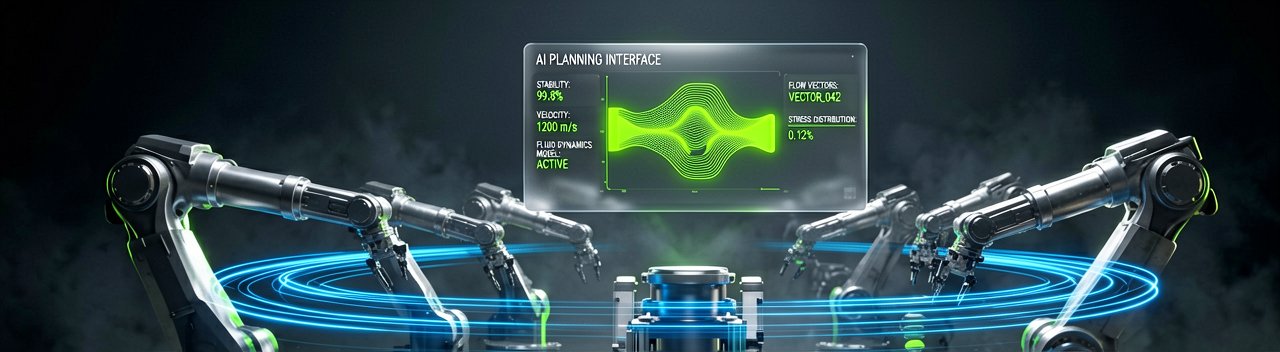
Here's what actually matters: the robot learns by watching humans work. Instead of requiring complex command inputs typical of conventional industrial robots, the autonomous painting collaborative robot mimics operator movements through an intuitive teaching method. This reduces the technical barrier for deployment (which has historically been a major friction point in factory automation).
According to the Venture Square report, the briefing introduced two core offerings: the FAST Solution and the Autonomous Painting Collaborative Robot. Both target compliance with Korea's Serious Accidents Punishment Act while simultaneously addressing labor cost reduction and workplace safety improvements.
The physical reality of this technology becomes clear during demonstrations. At the event, participants watched the robot replicate motion work on a car door in real time. The system recognized human movements and automatically learned painting trajectories. This isn't theoretical—manufacturing companies could deploy this on actual production lines.
Kwon Ki-hyun, CEO of Magenta Robotics, stated the company's goal is to automate labor-based processes in the domestic powder coating industry using collaborative robots. The firm, founded in 2015, specializes in motion planning systems and provides automation SI solutions across construction, shipbuilding, and manufacturing sectors.
Independent coverage from DongA Business Review provides additional context on the product lineup. The company also showcased GT PAINTER, an independently developed autonomous painting robot equipped with generative learning technology. GT PAINTER optimizes painting paths for objects of various shapes and materials.
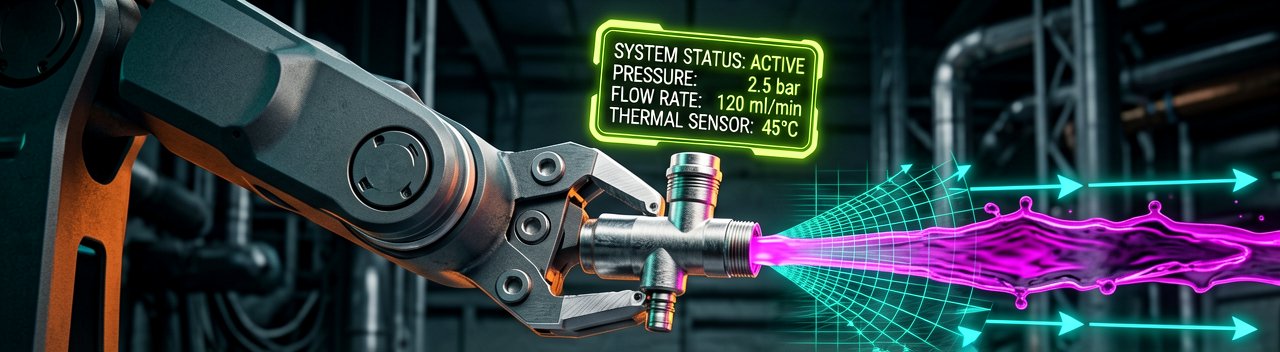
During the on-site demonstration, GT PAINTER performed painting motions on car bumpers applicable in real industrial settings. A 5-meter lifting high-altitude robot was also exhibited. These aren't lab prototypes—they're designed for actual factory floors where workers currently face hazardous substance exposure and work-at-height risks.
The technical architecture combines Rainbow Robotics' ultra-precision collaborative robot arm RB series with Magenta's AI motion planning. This integration allows robots to automatically learn and replicate painting trajectories by recognizing human movements. Complex-shaped products that previously required manual painting can now be automated.
Industry attendance at the event included major domestic companies related to manufacturing, painting, and robotics. Attendees such as KCC and Noroo Paint showed interest in the technology. Following the presentation, networking sessions continued with discussions on business proposals, investment opportunities, and collaboration strategies.
Compliance with the Serious Accidents Punishment Act drives much of this adoption. Korean manufacturers face increasing pressure to reduce worker exposure to hazardous environments. The autonomous painting robot addresses this by removing humans from dangerous painting operations while maintaining precision.
The company's official website details additional capabilities. The FAST software supports motion path editing, TCP positioning, YAML file functions, and robot path editing. A feature called PAINT-anything uses non-contact sensors (camera, LiDAR) to recognize objects and paint them without requiring user motion input.
Physical AI technology enables the system to interact with the real world. Through physical interfaces, the robot learns real-time data continuously and performs autonomous actions. This represents a shift from simple robot control to process evolution through AI-based autonomous learning.
GT PAINTER 5 and Centaur ROBOT GENTA expand the application beyond surface treatment. These systems handle loading, unloading, and assembly operations through mechanical integration. The end-effector exchange capability allows various tasks within a single robotic platform.
Market positioning matters here. Magenta Robotics aims to strengthen its position in the painting automation market and expand customized solution supply to various manufacturing sites. The briefing served as a launch point for customer-tailored solutions combining Rainbow Robotics' hardware with Magenta's AI technology.
Whether factories actually adopt this at scale depends on cost-benefit calculations. The technology solves real problems—safety compliance, labor shortages, quality consistency—but implementation costs and integration complexity remain factors for manufacturing decision-makers to weigh.
Artūras Malašauskas is an AI Systems Integrator with 20+ years of production-grade web engineering experience. He has designed, shipped, and scaled enterprise Python/PHP systems for logistics, SaaS, and public-sector clients. For the past year, he has focused exclusively on AI integrations: deploying open-source LLMs, building generative media pipelines (image, audio, video), and engineering multi-agent workflows for real production environments. His standard: reproducibility, security, cost-efficient inference—no vaporware. He documents and evaluates emerging AI tooling, separating verified capabilities from marketing noise. Technical editor at: muza-ai.eu, ai-verslas.lt, ai-naujinos.lt Connect on LinkedIn
Comments