NVIDIA Unveils Ising AI Models for Quantum Computing Calibration
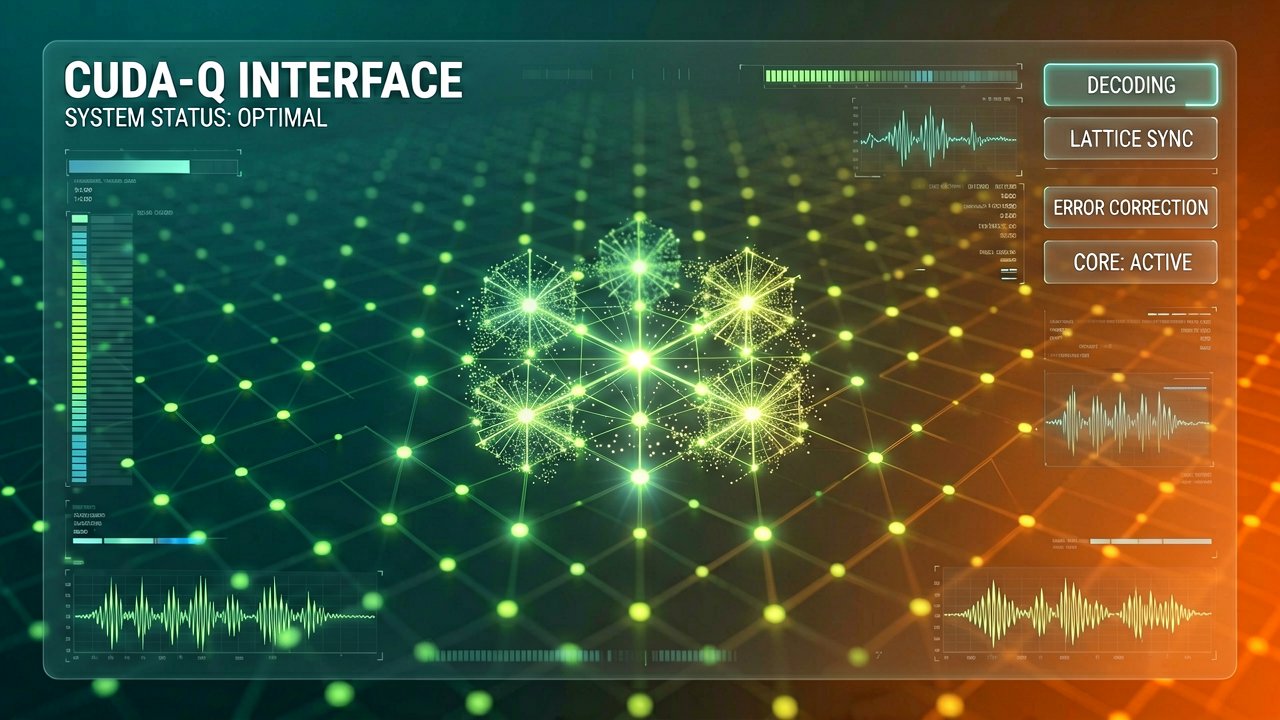
The graphics processing unit giant NVIDIA has officially launched the Ising family of open-source AI models, designed to address two persistent bottlenecks in quantum computing: processor calibration and error correction. This isn't a quantum processor itself. It's software infrastructure meant to make existing quantum hardware more reliable and easier to operate.
According to the official NVIDIA press release, the Ising models deliver up to 2.5x faster performance and 3x higher accuracy compared to traditional approaches for quantum error correction decoding. The company positions this as essential infrastructure for hybrid quantum-classical systems, where classical GPUs manage the control plane for fragile quantum qubits.
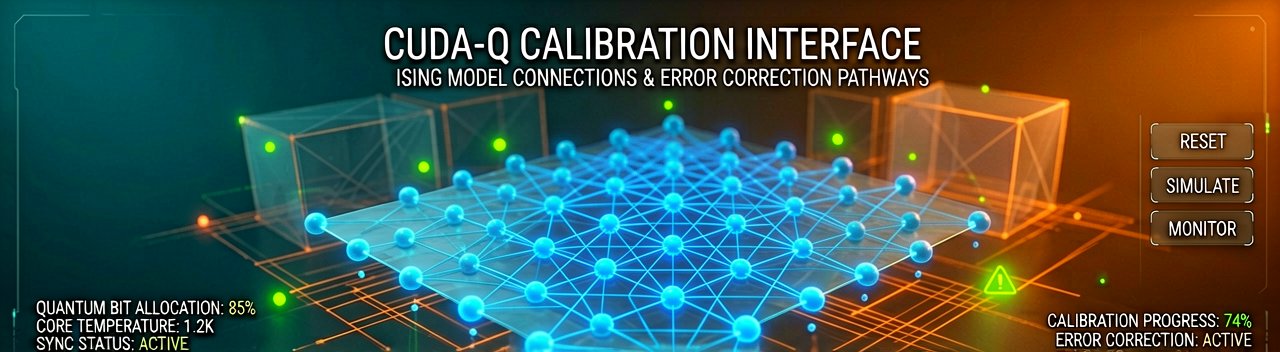
Two distinct model variants comprise the release. Ising Calibration is a 35-billion parameter vision language model that interprets experimental data from quantum processing units (QPUs) and automates continuous tuning. Current calibration methods often require human intervention and can take days. Ising Calibration reduces this to hours by connecting to AI agents that react to hardware measurements in real time.
Ising Decoding consists of two 3D convolutional neural network models optimized for either speed or accuracy. These handle the real-time decoding required for quantum error correction, processing terabytes of qubit measurement data thousands of times per second. The models outperform pyMatching, the current open-source industry standard, according to NVIDIA's benchmark documentation.
The physical reality of this integration matters. Researchers no longer need to manually adjust calibration parameters through command-line interfaces while monitoring hardware drift. Instead, the AI agent continuously interprets QPU status and applies corrections automatically. This reduces the cognitive load on quantum engineers and allows them to focus on algorithm development rather than hardware maintenance (which frankly, is where most quantum projects stall).
Ising complements NVIDIA's existing quantum computing stack. The models integrate with CUDA-Q, the company's software platform for hybrid quantum-classical computing, and NVQLink, a hardware interconnect that brings GPUs and QPUs into a single ecosystem. This architecture allows developers to program quantum and classical workloads in one unified system rather than managing separate environments.
Adoption has already begun across the research community. Ising Calibration is deployed by Atom Computing, IonQ, Infleqtion, IQM Quantum Computers, Fermi National Accelerator Laboratory, Harvard, and the U.K. National Physical Laboratory. Ising Decoding sees use at Cornell University, Sandia National Laboratories, and multiple UC campuses. The models are available on GitHub, Hugging Face, and build.nvidia.com with permissive licensing.
This strategy reflects NVIDIA's broader positioning in quantum computing. The company isn't building its own QPUs. Instead, it's betting that hybrid systems will dominate the near-term future, where classical GPUs handle the heavy lifting of control, calibration, and error correction while QPUs execute specific quantum algorithms. It's a low-risk approach that leverages existing GPU infrastructure.
The quantum computing market is projected to exceed $11 billion by 2030, according to analyst firm Resonance. However, this growth depends entirely on solving engineering challenges like error correction and scalability. Ising addresses the error correction piece, but the timeline for commercially viable quantum applications remains uncertain.
For developers, the immediate benefit is access to pre-trained models with documented training methods and datasets. NVIDIA provides a cookbook of quantum computing workflows and NVIDIA NIM microservices for fine-tuning models on specific hardware architectures. The models can run locally on researchers' systems, protecting proprietary data from cloud exposure.
Whether this actually accelerates useful quantum applications depends on factors beyond software. QPU hardware quality, coherence times, and qubit counts still constrain what's possible. Ising makes the existing hardware more manageable, but it doesn't create new quantum capabilities from thin air.
The real question isn't whether the models work technically. They appear to perform as claimed in benchmarks. The question is whether quantum computing will mature fast enough to make this infrastructure relevant before classical AI advances render some quantum use cases obsolete. Time will tell if the investment pays off.
Artūras Malašauskas is an AI Systems Integrator with 20+ years of production-grade web engineering experience. He has designed, shipped, and scaled enterprise Python/PHP systems for logistics, SaaS, and public-sector clients. For the past year, he has focused exclusively on AI integrations: deploying open-source LLMs, building generative media pipelines (image, audio, video), and engineering multi-agent workflows for real production environments. His standard: reproducibility, security, cost-efficient inference—no vaporware. He documents and evaluates emerging AI tooling, separating verified capabilities from marketing noise. Technical editor at: muza-ai.eu, ai-verslas.lt, ai-naujinos.lt Connect on LinkedIn
Comments