Shoolini University Launches Robotics and AI Centre with Sirena Technologies
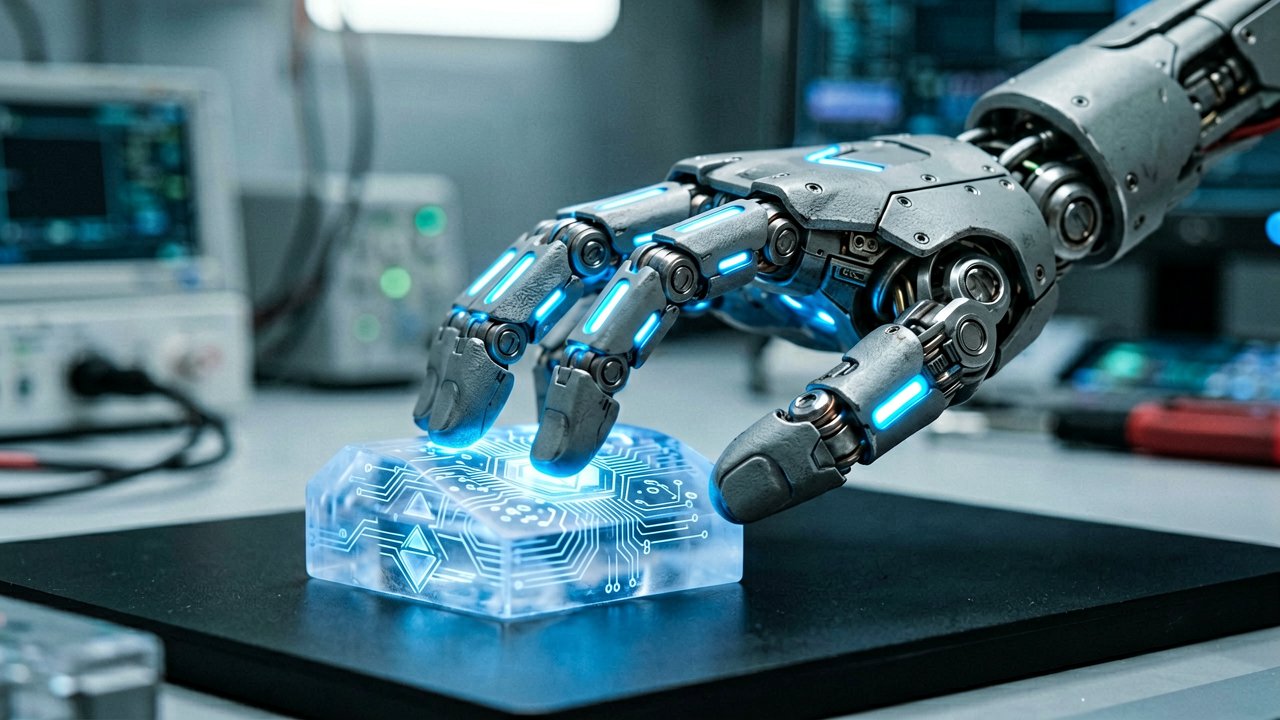
Shoolini University launched a Centre for Robotics and AI on April 13, 2026, in collaboration with Bengaluru-based Sirena Technologies. The facility operates under the Department of AI, Computers and Data Science, marking a shift from theoretical instruction to hands-on engagement with industrial-grade robotics and humanoid systems.
The announcement comes from Shoolini University's official news portal, which details the centre's operational scope and partnership structure. Independent coverage from The People Management confirms the timeline and key program elements.
Students will interact with actual hardware rather than simulations. The launch event featured live demonstrations of humanoid systems, with technical walkthroughs conducted by Sirena's engineering team. This physical exposure matters because robotics education often remains abstract until learners touch the equipment, calibrate sensors, or debug motor controllers in real time.
The partnership includes a three-month training program led by Sirena professionals. Faculty training is part of the package, alongside project-based work in applied robotics. Sirena will also contribute to mentorship, program design, and recruitment support, with explicit focus on placement readiness. (Nobody wants graduates who can recite algorithms but freeze when a robot arm won't calibrate.)

Vishal Anand, Founder and Pro Chancellor of Shoolini University, stated the mission is to translate academic research directly into implementation. He noted that organisations globally are filling skill gaps in AI, automation, and robotics as the world evolves rapidly. The centre aims to embed innovation into pedagogical design, enabling students to become creators and problem-solvers before entering the workforce.
Hariharan Bojan, CEO and Founder of Sirena Technologies, emphasized that robotics is moving from labs to the real world. Early exposure for students is not just an advantage but a gamechanger. By aligning training with actual industry use cases, the partnership bridges the gap between classroom learning and real-world deployment.
Shoolini University is upgrading its dedicated AI Centre into a state-of-the-art hub for research, development, and training. The institution ranks among India's top 100 universities in the National Institutional Ranking Framework (NIRF) rankings. Academic partnerships span the UK, USA, and Europe, with strong industry linkages in pharma, biotechnology, and IT.
The centre expands Shoolini's technological capacity for multi-disciplinary research across engineering, computing, data science, and AI. Operating as a live environment for training and applied research, it is set to expand its scope to include interdisciplinary programs in artificial intelligence and automation.

Students gain hands-on experience through industry-sponsored projects, research internships, and startup incubation. Practical exposure is a core part of the learning process across disciplines. This approach addresses a persistent problem in technical education: graduates who understand concepts but lack deployment experience.
The timing aligns with broader industry trends. Humanoid robotics has moved from research prototypes to commercial applications in manufacturing, logistics, and service sectors. Companies increasingly seek candidates who can work with physical systems, not just write code. The three-month intensive program attempts to compress years of trial-and-error into a structured curriculum.
However, the model faces inherent challenges. Industrial-grade robotics equipment is expensive to maintain. Faculty turnover could disrupt program continuity. And while Sirena provides initial training, long-term sustainability depends on whether the university can retain expertise and refresh hardware as technology evolves.
Other Indian institutions have attempted similar partnerships, with mixed results. Some centres launch with fanfare but struggle to maintain equipment or secure industry engagement beyond the initial announcement. The difference here may be Sirena's commitment to ongoing mentorship and recruitment support, which creates accountability beyond the launch event.
The centre's location in Himachal Pradesh also presents logistical considerations. Bengaluru-based Sirena must coordinate remote support with on-site operations. This geographic separation could complicate troubleshooting or equipment upgrades, though the three-month intensive program may mitigate some of these issues.
For students, the value proposition is clear: access to hardware they would otherwise never touch. For employers, the promise is graduates who understand both the software and physical constraints of robotics systems. Whether this translates to actual placement outcomes remains to be seen.
The partnership represents a pragmatic approach to skills development. Rather than waiting for students to learn through internships or entry-level jobs, the centre attempts to front-load practical experience. This reduces the friction between graduation and employment, though it also raises the stakes for program quality.
Industry observers will watch whether the centre produces measurable outcomes: placement rates, project completions, research publications. The initial announcement is promising, but execution determines long-term value. Whether students actually benefit beyond the marketing materials remains the real question.
Artūras Malašauskas is an AI Systems Integrator with 20+ years of production-grade web engineering experience. He has designed, shipped, and scaled enterprise Python/PHP systems for logistics, SaaS, and public-sector clients. For the past year, he has focused exclusively on AI integrations: deploying open-source LLMs, building generative media pipelines (image, audio, video), and engineering multi-agent workflows for real production environments. His standard: reproducibility, security, cost-efficient inference—no vaporware. He documents and evaluates emerging AI tooling, separating verified capabilities from marketing noise. Technical editor at: muza-ai.eu, ai-verslas.lt, ai-naujinos.lt Connect on LinkedIn
Comments