Pudu Robotics Secures $150M, Opens Dallas HQ, Launches AI Cleaning Platform
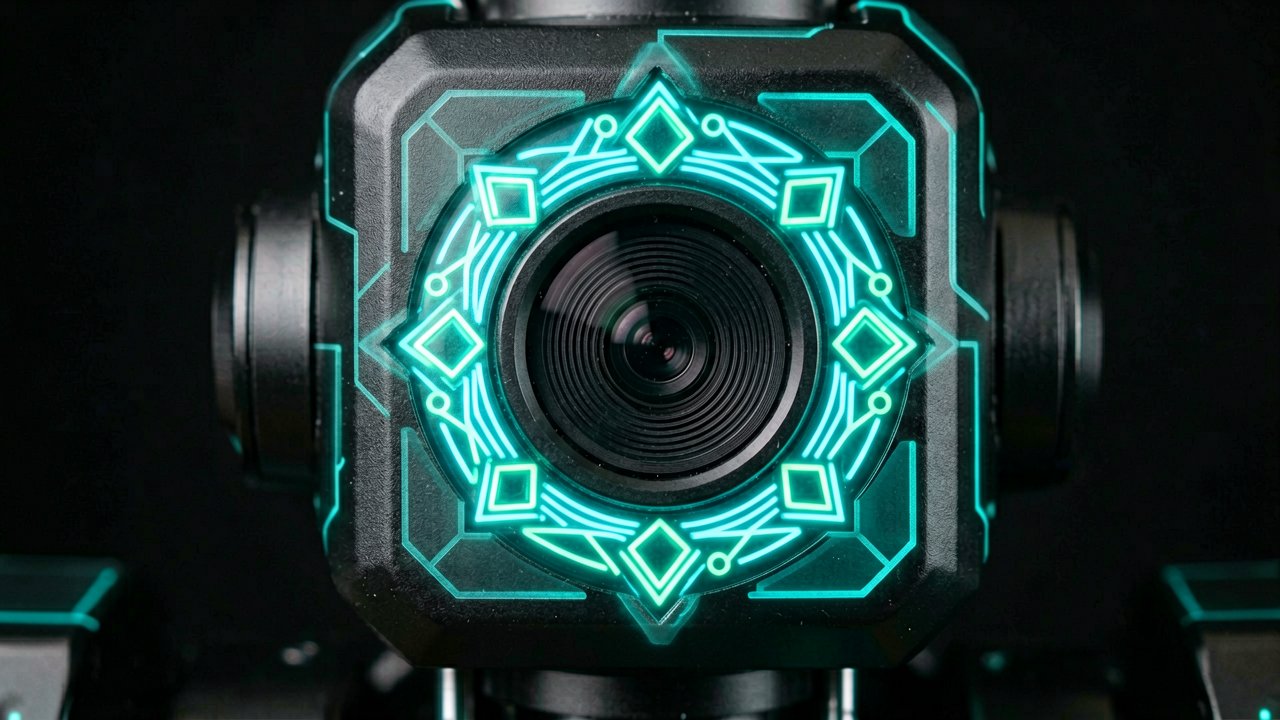
Pudu Robotics has secured nearly $150 million in new funding, pushing its valuation above $1.5 billion and bringing total capital raised to over $300 million. The Shenzhen-based commercial service robotics company announced the financing alongside two major operational moves: the opening of a new U.S. headquarters in Dallas and the launch of its AI-native BG1 Series cleaning platform. These coordinated announcements signal a strategic pivot from market entry to localized execution in the Americas.
The Dallas facility, located in Richardson's Sherman Tech Center, combines offices, a product showroom, and on-site warehousing. It will serve as the central hub for North and South American operations. As part of a logistics overhaul, Pudu converted its Santa Clara site into a lean logistics outpost and adopted a dual-warehouse model on both U.S. coasts to accelerate nationwide delivery. The company has deployed nearly 15,000 robots in the Americas and posted 285% year-over-year regional revenue growth.
According to the company's official announcement, proceeds from the financing will be strategically deployed to accelerate embodied AI technologies, expand the product portfolio, deepen global market expansion, scale manufacturing capacity, and strengthen supply chain capabilities. The official press release details the funding structure and strategic priorities.
Commercial cleaning now represents over 70% of Pudu's total revenue, a shift from its earlier focus on service delivery robots like the BellaBot. The newly launched BG1 Series is a large scrubber-dryer platform built on a dual-chip, high-compute architecture with 3D VSLAM and LiDAR. The BG1 supports AI-driven spot cleaning, adaptive brush pressure, and an all-in-one docking station for unmanned 24/7 operation. This completes the cleaning lineup for warehouses, retail complexes, industrial plants, and transport hubs.

The BG1 leverages millions of operating hours from earlier models and reinforces Pudu's "One Brain, Multiple Embodiments" AI framework across hardware form factors. The company has shipped more than 120,000 units across over 80 countries and claims a 23% share of the commercial service robotics market, ranking first worldwide per Frost & Sullivan's 2023 research. (That market share claim is bold, but the Frost & Sullivan citation gives it teeth.)
Raymond Pan, General Manager of the Americas at Pudu Robotics, positioned the Dallas hub and optimized logistics as foundations for long-term, scalable growth. The company has scaled its local U.S. organization from a small entry team into a multifunctional operation spanning sales, after-sales service, solutions, and marketing. Partnerships with local distributors have increased 63.6% year over year, expanding its blue-chip customer base to include Walmart, Accenture, NASA, Norwegian Cruise Line, and Honeywell.
The Dallas headquarters announcement confirms the facility opened on April 23, 2026. The location offers strategic advantages including well-developed logistics infrastructure, a business-friendly environment, and access to enterprise customers. Its central location allows more efficient coverage across both North and South America.
The company's portfolio spans four major product lines: service delivery, commercial cleaning, industrial delivery, and general embodied AI. The T-series industrial delivery robots provide versatile logistics support with payload capacities ranging from 150kg to 600kg. The D5 series extends embodied AI into more complex, human-centric environments. This multi-sector approach resulted in a 100% year-over-year revenue surge in 2025.
Independent reporting from The Robot Report corroborates the funding amount and valuation figures. The outlet also notes that Pudu isn't the only Chinese robotics company bringing in large funding rounds, with D-Robotics reportedly raising $270 million in Series B funding earlier in the month.
Felix Zhang, Founder and CEO of Pudu Robotics, called the funding milestone a validation of the company's industry leadership, product strength, and commercial infrastructure. He emphasized the company's commitment to innovating with the spirit of an inventor and leveraging a global vision to accelerate robot adoption. The company's vision is building a global intelligent robotics infrastructure that serves 10 billion people worldwide.
Whether the Dallas hub can truly compete with established U.S. robotics firms remains to be seen. The company has achieved full-stack proprietary R&D in core technologies including navigation algorithms, multi-robot scheduling, swarm control, motion controllers, and integrated joint modules. But scaling manufacturing and supply chain capacity in a competitive market is easier said than done.
The real test will be whether enterprise customers actually deploy these robots at scale beyond the initial showroom demonstrations. Commercial cleaning robots face stiff competition from established players, and the BG1's AI capabilities need to prove themselves in real-world environments with unpredictable obstacles and maintenance requirements. The funding gives Pudu runway to iterate, but market adoption is the only metric that matters.
Artūras Malašauskas is an AI Systems Integrator with 20+ years of production-grade web engineering experience. He has designed, shipped, and scaled enterprise Python/PHP systems for logistics, SaaS, and public-sector clients. For the past year, he has focused exclusively on AI integrations: deploying open-source LLMs, building generative media pipelines (image, audio, video), and engineering multi-agent workflows for real production environments. His standard: reproducibility, security, cost-efficient inference—no vaporware. He documents and evaluates emerging AI tooling, separating verified capabilities from marketing noise. Technical editor at: muza-ai.eu, ai-verslas.lt, ai-naujinos.lt Connect on LinkedIn
Comments