Axis Bank Opens First Digital Locker Branch in Delhi
The private-sector lender Axis Bank opened its first digital locker-focused branch in New Delhi on May 2, 2026, targeting a widening gap between urban demand and safe-deposit locker supply. The facility at Capital Green, DLF Midtown Plaza represents a shift toward technology-enabled vault access that removes traditional branch-hour constraints.
According to the bank's official release, the shortage is acute: by 2030, nearly 6 crore affluent Indians are projected to require bank lockers, while current supply stands at approximately 60 lakh units. The deficit is most pronounced in large cities where premium residential complexes cluster around financial districts.
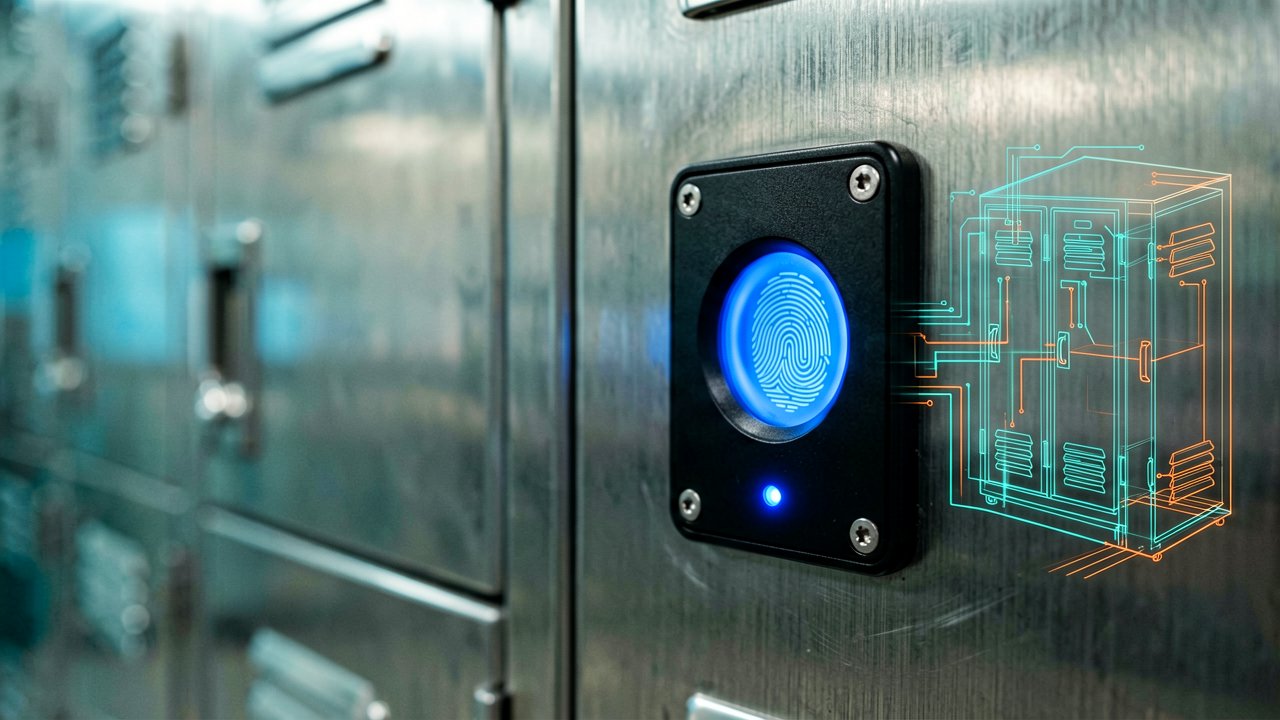
The new branch operates as a compact, automated format designed for dense urban locations. Customers access lockers through biometric, keyless entry systems without staff dependency. An automated retrieval mechanism delivers individual lockers to private access lounges, allowing users to operate them discreetly without entering shared vault spaces. The vault itself features multi-layered surveillance and sensor-based protection with centralized monitoring.
Managing Director and CEO Amitabh Chaudhry inaugurated the facility alongside M Nagaraju, Secretary of the Department of Financial Services under India's Ministry of Finance. Chaudhry stated the initiative responds to evolving customer expectations around control, transparency, and convenience in safeguarding valuables.

"As customers seek greater control, transparency and convenience in safeguarding their valuables, our Digital Locker-focused branch reimagines the experience by placing access, privacy and security firmly in their hands, supported by advanced technology," Chaudhry said at the launch event.
The physical experience differs markedly from traditional locker access. Instead of queuing during banking hours and waiting for staff to retrieve a locker from a shared vault room, customers now approach a private lounge where the system delivers their specific locker unit directly to them. The biometric authentication happens at the entry point, eliminating the need for physical keys or staff intervention. (This removes the awkward dance of coordinating with tellers who may be busy with other customers.)
Axis Bank plans to assess the New Delhi branch's performance before scaling the model across other locations. Chaudhry indicated the bank expects more such branches to emerge following this pilot, though he provided no specific targets for expansion. The approach aligns with the bank's broader investment in artificial intelligence and automation, which it expects to drive meaningful bottom-line impact over the next 18–24 months.
The timing reflects broader industry pressures. India's scheduled commercial banks saw 16.1% loan growth through March 2026, while Axis Bank's net advances grew 18.5% to INR 12.34 trillion. As wealth accumulation accelerates in urban centers, the infrastructure for securing physical assets—gold, documents, heirlooms—has not kept pace.

Independent reporting from CNBC TV18 corroborates the launch details and notes the format targets customers within premium residential ecosystems where convenience and security intersect. The Tribune's coverage of the event, sourced through ANI News, provides the market context and official statements from bank leadership.
Security architecture remains a critical component. The vault operates under centralized monitoring with sensor-based protection layers, though the bank has not disclosed specific technical specifications for the surveillance systems or biometric authentication protocols. This level of detail typically remains proprietary in banking infrastructure.
The model addresses longstanding friction points in traditional locker services: fixed operating hours, staff dependency, and the lack of privacy when accessing valuables in shared vault spaces. By automating retrieval and creating private access zones, the bank removes the social awkwardness of handling personal items in front of other customers or employees.
Whether this format becomes the new standard for urban banking remains uncertain. The pilot phase will determine if customers actually value 24x7 automated access enough to justify the infrastructure investment. For now, the Delhi branch stands as a single data point in what could become a broader shift toward embedded, technology-led banking touchpoints.
The real test comes when customers actually need to access their lockers during emergencies or outside traditional banking hours. If the system performs reliably under stress, other lenders may follow. If it doesn't, the experiment becomes a case study in over-engineering a simple problem. Time will tell if the automation delivers on its promises.
Artūras Malašauskas is an AI Systems Integrator with 20+ years of production-grade web engineering experience. He has designed, shipped, and scaled enterprise Python/PHP systems for logistics, SaaS, and public-sector clients. For the past year, he has focused exclusively on AI integrations: deploying open-source LLMs, building generative media pipelines (image, audio, video), and engineering multi-agent workflows for real production environments. His standard: reproducibility, security, cost-efficient inference—no vaporware. He documents and evaluates emerging AI tooling, separating verified capabilities from marketing noise. Technical editor at: muza-ai.eu, ai-verslas.lt, ai-naujinos.lt Connect on LinkedIn
Comments