Mac Mini Sold Out for Months as AI Developers Grab Them for Local Agent Workloads
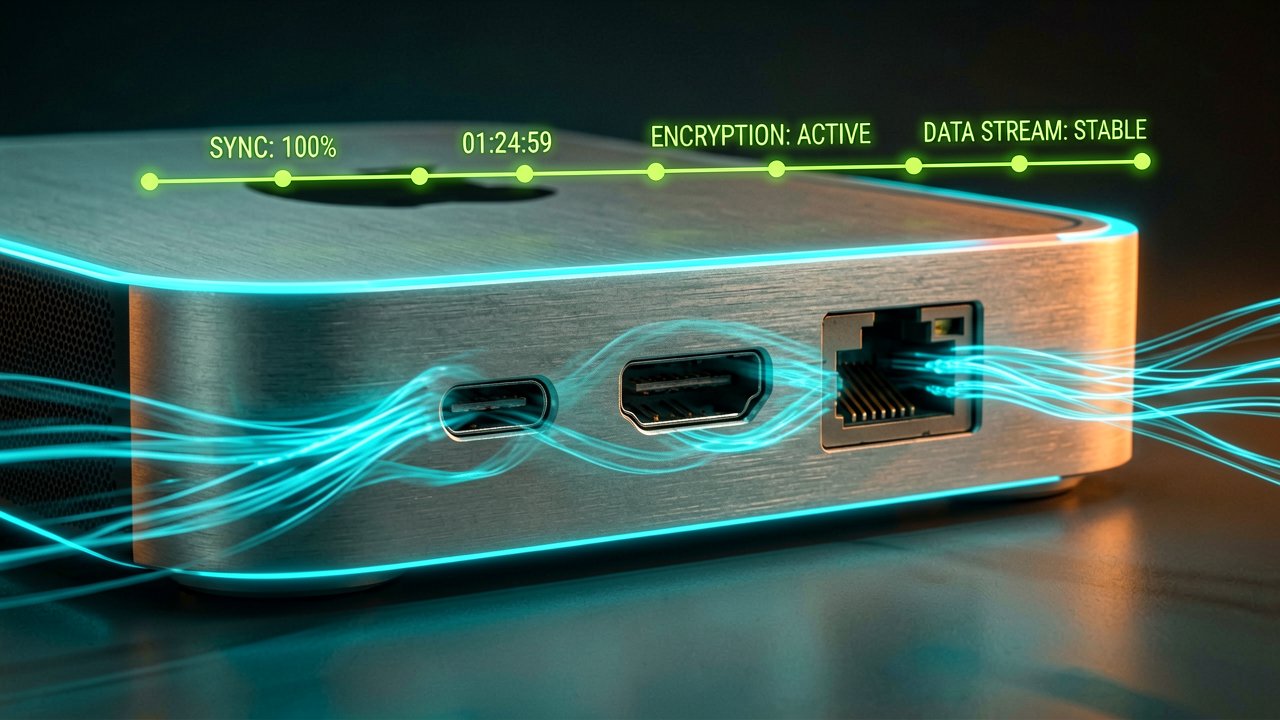
Apple CEO Tim Cook confirmed during the company's latest earnings call that customers may face delays of several months to receive a Mac Mini. The shortage stems from an unexpected demand surge among AI developers using the machine as a local platform for running autonomous agent tools, rather than from typical desktop buyers.
"On the Mac Mini and Mac Studio, both are excellent platforms for AI and agentic tools," Cook said. "Customer adoption of these is happening faster than we anticipated."
This quote, reported by gHacks, captures the core of Apple's supply challenge. The Mac Mini was never designed as an AI workhorse, yet it is increasingly being used as one.
Independent reporting from TechSpot corroborates the timeline and scope of the shortage. By late April, even the base model was sold out through Apple's online store, with wait times stretching several months.
The Mac Mini's appeal for AI developers centers on its ability to run agent workloads continuously without relying on cloud infrastructure. Apple Silicon's unified memory architecture allows the machine to handle inference and orchestration tasks efficiently without requiring a discrete GPU, which remains expensive and difficult to source.
Higher-memory configurations can run persistent autonomous agents without tying up a primary workstation. Some configurations have already been discontinued from Apple's lineup, including a 512GB memory variant. This is the kind of supply friction that makes developers scratch their heads when they try to order one (and then wait months for it to ship).
The release of OpenClaw earlier this year, an open-source tool for building and running autonomous AI agents, appears to have accelerated adoption. Developers experimenting with local-first agent setups have gravitated toward the Mac Mini as a dedicated, always-on system for that purpose.
Physically, the Mac Mini is unassuming. It sits quietly on a desk, humming softly, with no moving parts to generate heat or noise. But inside, the Apple Silicon chip is managing memory bandwidth that would choke most consumer desktops. The aluminum chassis stays cool to the touch even under sustained agent workloads, a stark contrast to the fan noise of GPU-heavy workstations.
Mac sales reached $8.4 billion this quarter, which is a small share compared to nearly $57 billion from iPhone revenue. While the Mac Mini accounts for a modest portion of Mac sales, it has become important in AI development workflows in ways Apple did not anticipate when planning production capacity.
Apple is also experiencing supply constraints on iPhone due to limited chip access. Additionally, strong demand for the MacBook Neo is putting more pressure on the Mac lineup. Cook noted that the demand pattern for the Mac Mini was something the company had not fully prepared for at their current production levels.
The situation highlights a broader tension in the AI hardware market. Developers want local control over agent systems, but supply chains were built for consumer electronics, not distributed AI infrastructure. The Mac Mini fills a gap, but not by design.
Whether Apple can scale production to meet this demand remains uncertain. The company's more immediate challenge is practical: building enough of a product that was never intended to become this important to a fast-growing corner of the tech industry.
For now, buyers face a choice: wait months for a Mac Mini, or look elsewhere. The real question is whether Apple will prioritize this niche demand over its core iPhone business when chip allocations tighten further.
Artūras Malašauskas is an AI Systems Integrator with 20+ years of production-grade web engineering experience. He has designed, shipped, and scaled enterprise Python/PHP systems for logistics, SaaS, and public-sector clients. For the past year, he has focused exclusively on AI integrations: deploying open-source LLMs, building generative media pipelines (image, audio, video), and engineering multi-agent workflows for real production environments. His standard: reproducibility, security, cost-efficient inference—no vaporware. He documents and evaluates emerging AI tooling, separating verified capabilities from marketing noise. Technical editor at: muza-ai.eu, ai-verslas.lt, ai-naujinos.lt Connect on LinkedIn
Comments