AkzoNobel's Aircraft Inspection Drones Measure Paint, Don't Apply It
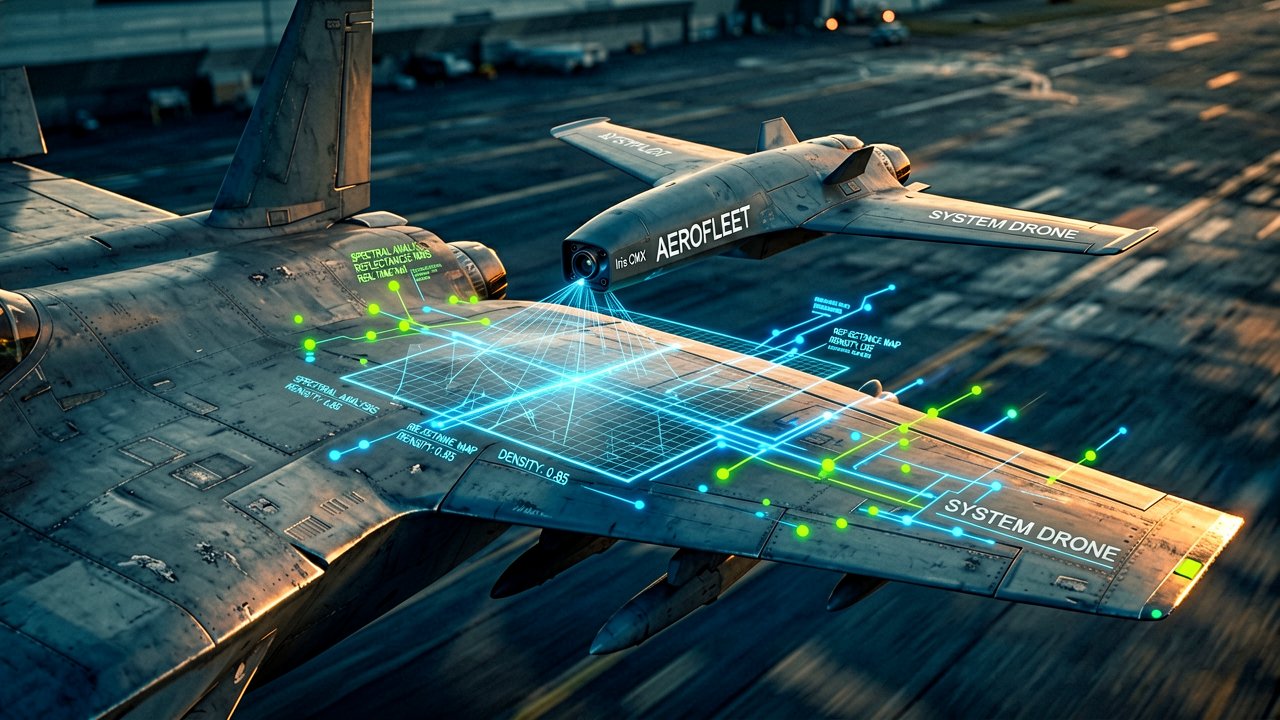
The headline about AkzoNobel unveiling an airplane painting drone requires immediate correction: these drones don't paint aircraft. They inspect them. The Dutch coatings giant's Aerofleet Coatings Management service has evolved with a new drone-based inspection tool, but the technology measures existing paint conditions rather than applying fresh coats.
This distinction matters because the aviation maintenance industry has been searching for ways to reduce unnecessary repainting cycles. Traditional schedules relied on time or flight hours, which often led to premature maintenance or unexpected failures. AkzoNobel's official announcement details how the new system addresses this through data-driven decision-making.
The core innovation involves two distinct drones working in tandem. The Iris GVI drone flies a predetermined grid over an aircraft's surface, capturing up to 600 high-definition photos for full-surface visual analysis. The newer Iris CMX (Coatings Management eXpert) uses a three-in-one contact-based sensor to directly measure dry film thickness, color data, and gloss measurements. This combination brings quantitative precision to what was previously a largely visual assessment process.
Developed in partnership with Donecle, the Iris CMX represents a significant upgrade from the original 2023 launch of Aerofleet Coatings Management. The contact-based sensor physically touches the aircraft surface during inspection—a tactile interaction that distinguishes it from purely optical systems. This physical contact ensures measurements aren't skewed by lighting conditions or surface reflections (a problem that has plagued users for years, frankly).
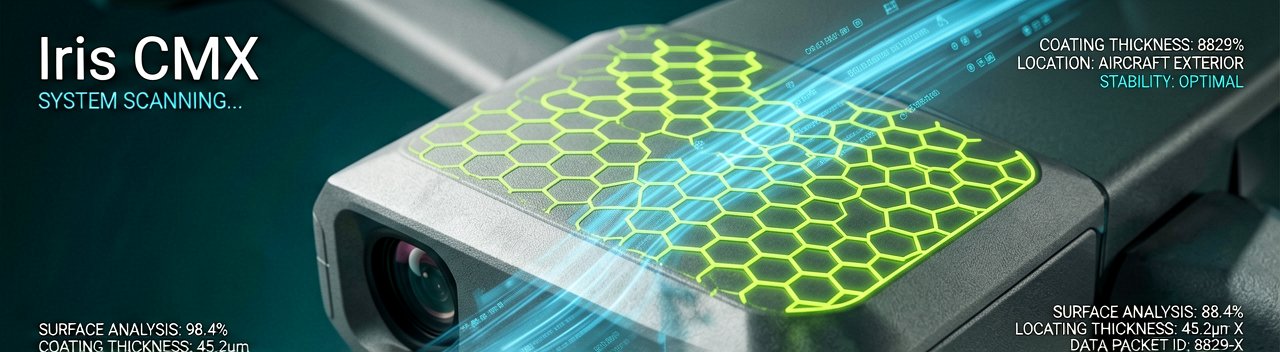
Trained teams can operate both drones simultaneously, one on each side of the aircraft, completing a full inspection of a narrowbody plane in approximately 30 minutes. The coatings management software then processes the images and sensor data to flag coating issues or wear patterns. This speed advantage alone makes the system attractive for airlines managing tight maintenance windows.
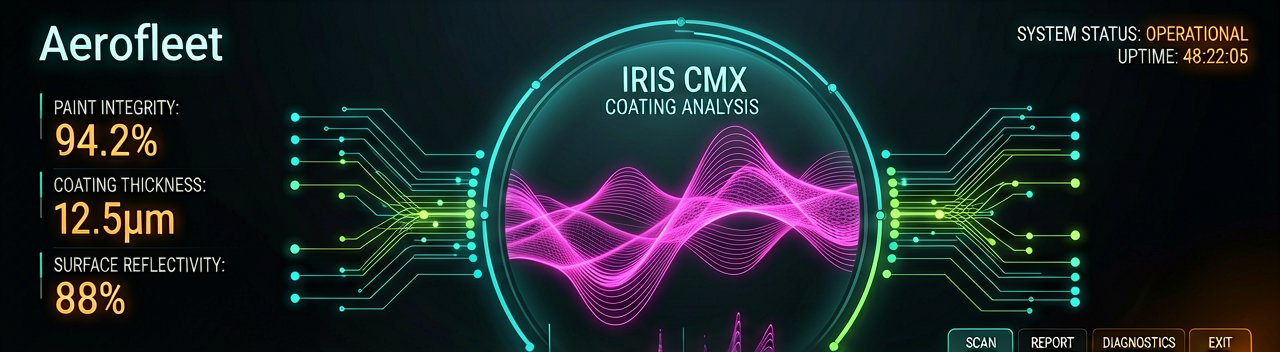
Three core data inputs now feed into the comprehensive view of coating performance: flight and environmental data including route profiles, UV exposure, and humidity; full-surface visual analysis from the Iris GVI drone; and targeted, high-precision measurement from the Iris CMX. The integration creates a continuously evolving picture of the fleet over time, according to Products Finishing Online's coverage.
Patrick Bourguignon, Director of AkzoNobel's Automotive and Specialty Coatings business, emphasized the strategic value. "Aerofleet Coatings Management has always been about giving airlines greater confidence in when and why they maintain or repaint their aircraft," he stated. "The addition of the Iris CMX brings precise, consistent measurement into the process to strengthen the data that underpins our predictive models."
The service targets fleets of 100 aircraft or more, where the cumulative savings from reduced unnecessary repainting become meaningful. Airlines can lower maintenance costs, increase aircraft availability, and potentially reduce environmental impact through more efficient resource use. The drones can also serve quality control during OEM production and MRO processes, promoting coatings that meet specifications from the outset.
Michael Green, segment business services manager at AkzoNobel Aerospace Coatings, noted the clear development roadmap from the 2023 launch. "From the outset, we had a clear roadmap to improve the service with more advanced measurement capabilities," Green explained. The Iris CMX represents a significant step forward in that vision, bringing objective, consistent, and repeatable inspections to support expert assessment.
Adoption challenges remain substantial. Airlines must navigate regulatory hurdles around drone operations near aircraft, manage high initial investment costs, and integrate new systems with existing maintenance operations. The technology requires trained operators and creates a dependency on AkzoNobel's central database for fleet-wide analysis.
Competitors are accelerating research and development efforts in similar drone technologies to maintain market positions. The aviation coatings sector has long been conservative about adopting new inspection methods, but the efficiency gains are becoming harder to ignore as fleet sizes grow and maintenance costs escalate.
Whether airlines actually pay for the service remains the real question. The technology works, but the business case depends on fleet size, current maintenance practices, and willingness to shift from time-based to condition-based maintenance schedules. For smaller operators, the investment may never make sense.
The paint still needs human hands to apply it. These drones simply tell you when that work is actually necessary.
Artūras Malašauskas is an AI Systems Integrator with 20+ years of production-grade web engineering experience. He has designed, shipped, and scaled enterprise Python/PHP systems for logistics, SaaS, and public-sector clients. For the past year, he has focused exclusively on AI integrations: deploying open-source LLMs, building generative media pipelines (image, audio, video), and engineering multi-agent workflows for real production environments. His standard: reproducibility, security, cost-efficient inference—no vaporware. He documents and evaluates emerging AI tooling, separating verified capabilities from marketing noise. Technical editor at: muza-ai.eu, ai-verslas.lt, ai-naujinos.lt Connect on LinkedIn
Comments