Germany Launches Program for Open Source Maintainers in Standards Bodies
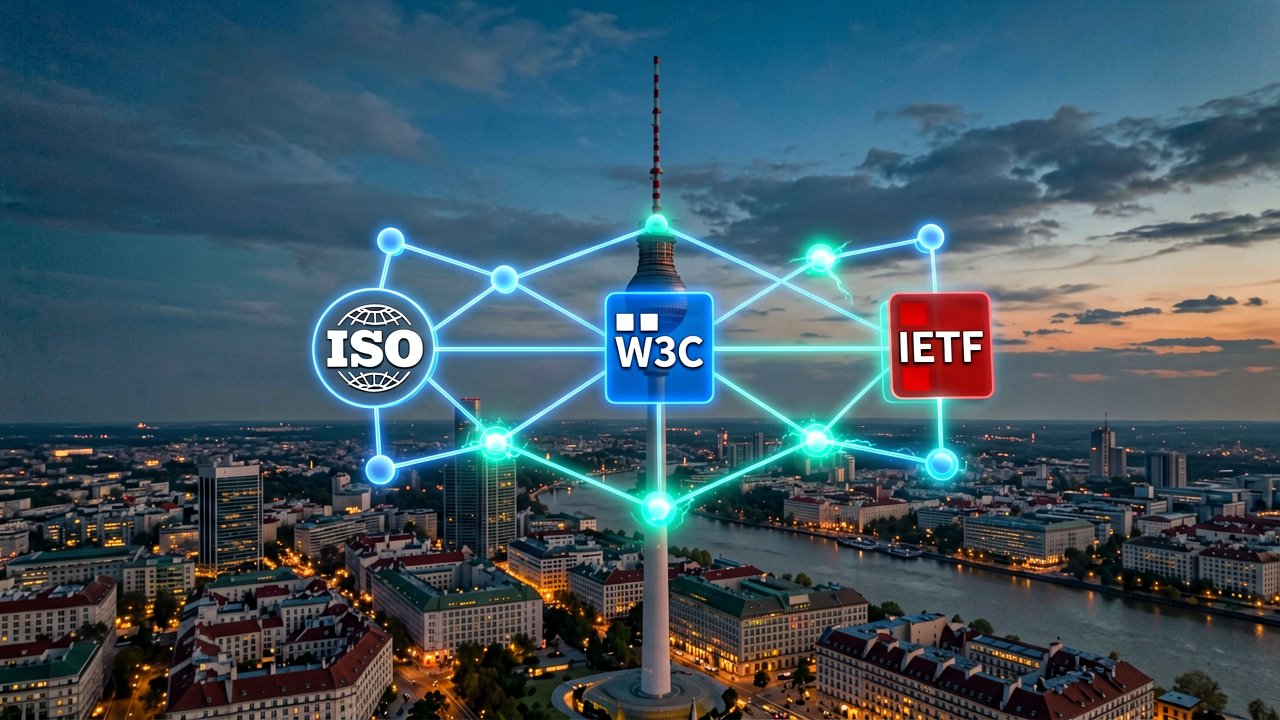
The Sovereign Tech Agency, a subsidiary of Germany's federal innovation office SPRIND, announced a new initiative this week designed to bridge a persistent gap in the technology ecosystem. The program invites open source maintainers to participate directly in standards development at major organizations like ISO, W3C, and IETF.
According to the official Sovereign Tech Standards announcement, the pilot will select up to ten maintainers for structured participation. Each participant receives a fixed monthly payment between €4,800 and €5,200. This covers time spent contributing to standards work, which is typically uncompensated for independent developers.
The program includes training, mentoring, and reimbursement for participation fees and travel to in-person meetings. (Standards meetings are notoriously tedious, but someone has to show up.) The application deadline is May 19, 2026.
Three-quarters of open source maintainers actively rely on technical standards, yet very few can afford sustained participation in their development. The Sovereign Tech Agency conducted a survey of maintainers working with or alongside standards to inform the program's design. The results guided the compensation structure and support mechanisms.
Technical standards are not software themselves. They specify how software should behave—the rules and requirements that ensure systems function as intended and work together. When standards are open, practical to implement, and developed through transparent processes, they become a shared resource that keeps the digital commons secure.
The Sovereign Tech Agency was established in 2022 to strengthen digital sovereignty by supporting open digital infrastructure. The initiative connects to the EU's broader push toward digital sovereignty, which aims to reduce reliance on U.S. technology providers and boost competitiveness.
The Agency manages a Sovereign Tech Fund, which supports foundational open source components such as libraries, protocols, and development tools. This technology operates below the application layer and is usually difficult to monetize. The fund, established by the German Federal Ministry for Economic Affairs and Climate Action, has invested 37.3 million euros (US$43.8 million) to date.
Supported projects include Mastodon, the Python Software Foundation, and Fedify. In parallel, the organization is exploring collaboration with German industry and with ZenDiS, the German Center for Digital Sovereignty, which focuses on public administration.
Independent reporting from Biometric Update corroborates the program details and timeline. The outlet notes the initiative closes the gap between those who write open standards and those who implement them.
Participation in standards bodies like IETF, W3C, and ISO requires time, expertise, and sustained engagement. For large technology companies, this is a strategic investment in shaping the technologies they depend on. For independent open source maintainers—the people who build and maintain the software components that implement these standards—the same participation is often out of reach.
Imagine sitting in a conference room in Geneva or Boston, reading through hundreds of pages of technical specifications. The air conditioning hums. Someone argues about a comma placement in a protocol definition. This is the physical reality of standards work. Most maintainers never get to sit in that room.
The Sovereign Tech Standards network aims to change that dynamic. By involving the experts closest to the code, the program advances how open standards are created. This ensures that the technologies comprising digital infrastructure remain interoperable, open, and grounded in real-world practice.
Open standards are part of the invisible architecture of the digital world. They shape how systems communicate, how data flows, and how secure and accessible digital infrastructure is. Stable digital infrastructure, built on well-designed standards, creates conditions for innovation, interoperability, and long-term economic competitiveness.
Whether ten maintainers can meaningfully shift standards development remains to be seen. The real question is whether this model scales beyond a pilot program. For now, the application window is open through mid-May. Whether users actually benefit from the resulting standards is another matter entirely.
Artūras Malašauskas is an AI Systems Integrator with 20+ years of production-grade web engineering experience. He has designed, shipped, and scaled enterprise Python/PHP systems for logistics, SaaS, and public-sector clients. For the past year, he has focused exclusively on AI integrations: deploying open-source LLMs, building generative media pipelines (image, audio, video), and engineering multi-agent workflows for real production environments. His standard: reproducibility, security, cost-efficient inference—no vaporware. He documents and evaluates emerging AI tooling, separating verified capabilities from marketing noise. Technical editor at: muza-ai.eu, ai-verslas.lt, ai-naujinos.lt Connect on LinkedIn
Comments