Microbot Medical Appoints Alon Tamir as EMEA Sales VP
Microbot Medical announced on April 30, 2026 that it has appointed Alon Tamir as Vice President of Sales for Europe, the Middle East, and Asia (EMEA). The move signals the company's intent to prepare for international commercialization of its LIBERTY Endovascular Robotic System while maintaining primary focus on the U.S. market.
The appointment comes as the company navigates post-FDA clearance commercialization. Microbot received U.S. Food and Drug Administration clearance in September 2025 and has since completed both Limited Market Release and Full Market Release phases domestically. Now the firm is building the infrastructure needed to enter markets where it can leverage either its FDA clearance or the CE mark, which the company expects by the end of 2026.
According to the official press release, Mr. Tamir brings over two decades of experience in medical technology. His role encompasses developing go-to-market strategies, establishing distribution networks, forming strategic partnerships, and managing regulatory requirements across the EMEA region. The company estimates Europe alone represents approximately 2.3 million peripheral endovascular procedures annually—comparable to U.S. volumes.
This is not merely a personnel announcement. It's a signal that Microbot is transitioning from a single-market commercialization phase to multi-regional preparation. The physical reality of this expansion involves navigating different regulatory frameworks, establishing local service capabilities, and training physicians who will interact with the robotic system in catheterization labs across dozens of countries.

Harel Gadot, Chairman, CEO and President of Microbot Medical, framed the hire as part of a disciplined commercialization approach. The company will continue prioritizing U.S. adoption while simultaneously building EMEA capabilities. This dual-track strategy is common in medical device commercialization but carries execution risk—dividing resources between established and emerging markets can strain operational capacity.
Tamir's own statement emphasized the technology's positioning. He noted that endovascular robotics is at an inflection point, with LIBERTY already FDA-cleared and commercially launched in the U.S. The CE mark approval timeline—expected by end of 2026—would enable formal market entry across European Union member states. (The regulatory timeline is ambitious, but not unprecedented for devices with FDA clearance.)
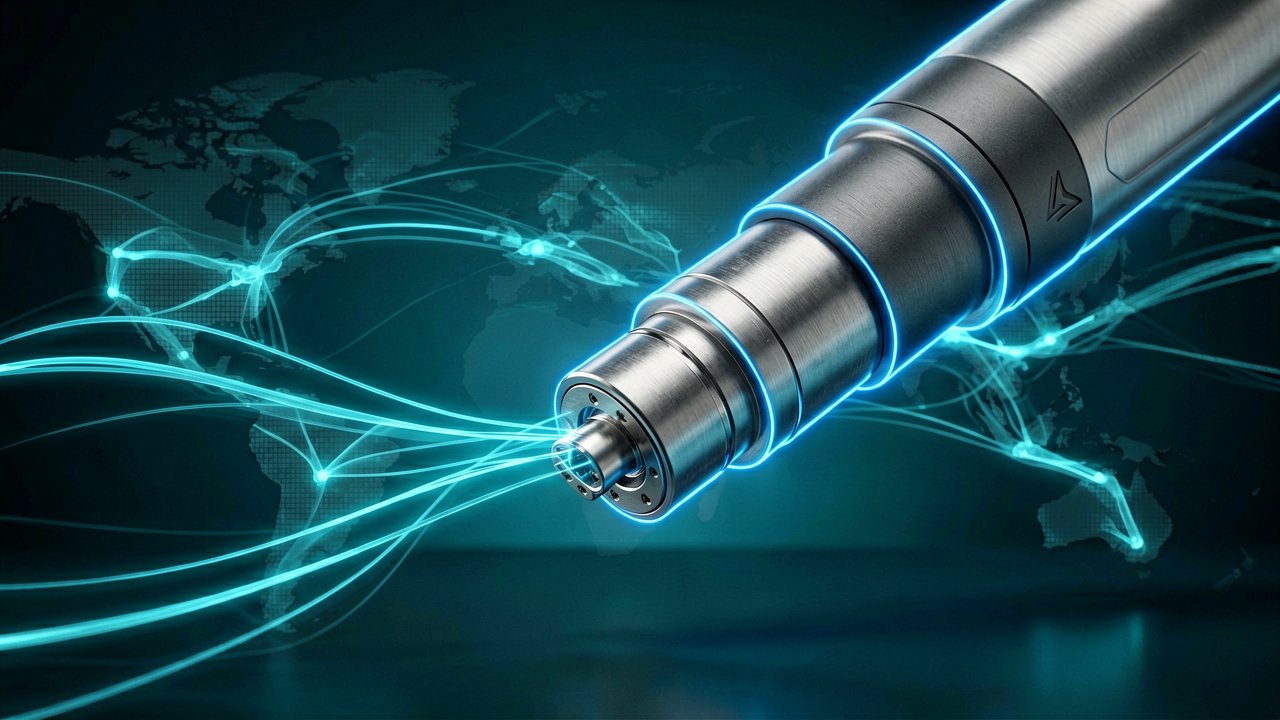
The LIBERTY system itself is a single-use, remotely operated robotic solution designed for endovascular procedures. Physicians operate the system from a console, manipulating catheters and guidewires through a robotic interface. This physical separation from the radiation source is the core value proposition—reducing occupational exposure during procedures that can last hours. The system's adoption depends on physicians feeling comfortable with the interface, the latency between hand movement and robotic response, and the tactile feedback during delicate vascular navigation.
Secondary coverage from StockTitan contextualized the announcement within recent company milestones. The firm has been actively commercializing since March 2026, with clinical case reports from Emory University and publication of the ACCESS-PVI pivotal study. Stock performance has been volatile around commercial announcements, suggesting investor skepticism about execution timelines.

The company's approach to EMEA expansion will leverage its FDA clearance in countries that accept it, while pursuing CE mark approval for EU markets. This dual regulatory pathway is standard but requires distinct commercial strategies. Some European markets may accept FDA-cleared devices through national pathways, while others require CE marking under the Medical Device Regulation. Each route demands different documentation, clinical evidence packages, and local partner relationships.
Commercial readiness in EMEA involves more than regulatory approval. The company must establish service infrastructure, training programs, and supply chains capable of supporting single-use robotic systems across multiple time zones. Unlike the U.S. launch, where Microbot could concentrate resources on a defined territory, EMEA spans 50+ countries with varying reimbursement landscapes, competitive dynamics, and procurement processes.
Physician interest at the Society of Interventional Radiology conference reportedly supports commercial readiness, according to the press release. Conference engagement is a leading indicator but not a guarantee of adoption. Actual revenue recognition requires completed procedures, which depend on hospital procurement cycles, reimbursement approval, and physician training throughput.
The Safe Harbor section of the announcement includes standard forward-looking statement disclaimers. It explicitly notes risks including regulatory pathway uncertainty, geopolitical conditions affecting operations, and commercialization challenges. These are not boilerplate warnings—medical device companies frequently face delays in international expansion due to regulatory complexity, reimbursement hurdles, or competitive pressure from established players.
Whether this hire translates into measurable market penetration remains to be seen. The company has the regulatory clearance and the personnel, but execution across EMEA will require sustained capital investment, partner alignment, and physician adoption that takes years to materialize. Investors should watch for concrete partnership announcements, CE mark filing confirmations, and actual procedure volume data rather than personnel changes alone.
Artūras Malašauskas is an AI Systems Integrator with 20+ years of production-grade web engineering experience. He has designed, shipped, and scaled enterprise Python/PHP systems for logistics, SaaS, and public-sector clients. For the past year, he has focused exclusively on AI integrations: deploying open-source LLMs, building generative media pipelines (image, audio, video), and engineering multi-agent workflows for real production environments. His standard: reproducibility, security, cost-efficient inference—no vaporware. He documents and evaluates emerging AI tooling, separating verified capabilities from marketing noise. Technical editor at: muza-ai.eu, ai-verslas.lt, ai-naujinos.lt Connect on LinkedIn
Comments