Walrus Launches MemWal Memory SDK for AI Agents

The blockchain storage protocol Walrus has officially launched MemWal, a memory SDK designed to give AI agents persistent, verifiable memory that isn't locked into any single provider's ecosystem. The announcement, first reported by Yahoo Tech, marks a significant attempt to solve one of AI development's most persistent friction points: context loss when switching between models or platforms.
Abinhav Garg, a product manager at Mysten Labs—the developer behind both the Sui blockchain and Walrus—explained the core philosophy during interviews with Decrypt. "With Walrus plus MemWal, memory lives on an open, verifiable data layer, so that means it's not tied to any one model or vendor," Garg stated. This architectural choice directly addresses the walled garden problem that currently traps users within individual AI provider ecosystems.
The practical implication is straightforward: a user could begin a complex task with one AI model, then seamlessly continue with another without losing conversation history, preferences, or learned behaviors. Think of it like carrying your browser bookmarks across different computers, except for AI context (which is actually a much bigger deal than it sounds).
MemWal delivers four specific capabilities that distinguish it from centralized alternatives. Verifiability ensures all stored memory is cryptographically signed, preventing tampering. Availability means data persists as long as the Walrus network operates, with no single point of failure. Portability allows memory migration between different AI models and applications. Shareability enables selective memory sharing between agents for collaborative workflows.
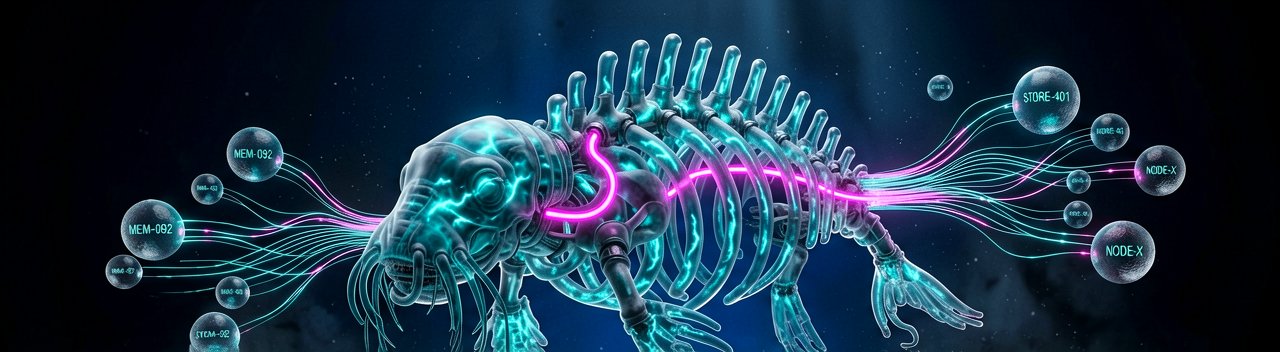
From a developer perspective, the SDK handles the tedious parts: encryption, indexing, and retrieval. Developers can define custom memory schemas for conversation history, user preferences, task states, and learned behaviors. The integration with agent orchestration frameworks OpenClaw and NemoClaw reduces friction—builders can equip agents with durable memory using tools they're already familiar with rather than wrestling with decentralized storage primitives.
This matters because current AI memory architectures are fundamentally siloed. Most agents operate in isolated environments, losing context when switching between models or applications. The friction is tangible: developers spend hours rebuilding context windows, users lose their preferences when changing providers, and enterprises can't share learned behaviors across teams without rebuilding everything from scratch.
Walrus itself launched on Sui's mainnet in late 2024, providing decentralized blob storage optimized for large data objects. MemWal builds on this foundation by adding a structured memory layer specifically for AI agents. The system stores memory objects with metadata including timestamps, ownership, and access controls. Each memory object inherits Walrus's built-in guarantees around verifiability, portability, and availability.
Privacy remains a critical concern as agents handle increasingly sensitive data. MemWal includes encryption at rest and in transit, with users controlling access through cryptographic keys. Even storage providers cannot read the contents—only authorized parties with proper keys can access specific memory segments. This programmable access control becomes essential when agents operate in enterprise workflows handling financial information or proprietary data.

The market timing aligns with growing regulatory pressure for data portability in AI systems. The European Union's AI Act includes provisions for user data rights that could benefit from decentralized memory solutions. Industry analysts note this approach positions Walrus differently from proprietary alternatives offered by OpenAI, Anthropic, and Google, all of which have announced efforts to improve context windows but remain platform-specific.
Real-world use cases span multiple sectors. Personal AI assistants can maintain consistent user preferences across different platforms. Enterprise agents can share context and learned behaviors across teams working on the same project. Gaming AI could enable NPCs to remember player interactions across different game sessions. Healthcare AI might maintain patient context across different diagnostic and treatment planning tools.
Technical challenges remain. Decentralized storage introduces latency compared to centralized solutions, which could impact real-time AI interactions. The Mysten Labs team has implemented caching and optimization strategies to mitigate this, but the trade-off between decentralization and speed is inherent to the architecture. Cost is another consideration—Walrus uses a storage market where users pay for data persistence, which could become significant for applications with large memory requirements.
Since its mainnet launch, Walrus has reportedly gained traction with over 1,000 developers building on the platform. Whether MemWal converts that developer interest into sustained adoption remains uncertain. The causal chain—news to developer adoption to increased data storage to ecosystem growth—is plausible but unproven.
Whether users actually pay for decentralized memory when centralized alternatives offer lower latency remains the real question. The technology solves a genuine problem, but market adoption depends on whether the benefits outweigh the complexity and cost for everyday developers and end users.
Artūras Malašauskas is an AI Systems Integrator with 20+ years of production-grade web engineering experience. He has designed, shipped, and scaled enterprise Python/PHP systems for logistics, SaaS, and public-sector clients. For the past year, he has focused exclusively on AI integrations: deploying open-source LLMs, building generative media pipelines (image, audio, video), and engineering multi-agent workflows for real production environments. His standard: reproducibility, security, cost-efficient inference—no vaporware. He documents and evaluates emerging AI tooling, separating verified capabilities from marketing noise. Technical editor at: muza-ai.eu, ai-verslas.lt, ai-naujinos.lt Connect on LinkedIn
Comments