TU/e Establishes Eindhoven Institute for Health Tech

The Executive Board of TU/e (Eindhoven University of Technology) has approved the creation of a new research institute dedicated to Transformative Health Technology. The institute, officially named HEALTH, will launch in January 2027 and represents a strategic consolidation of health-related research across the university's departments.
This isn't just another administrative reshuffle. The move aligns with TU/e's Institutional Plan 2026-2030, which prioritizes four technology domains: Energy Technologies, Health Technologies, Digital & Semiconductor technologies, and Advanced Materials. The university is betting that bundling fragmented research efforts will generate actual critical mass rather than just more meetings.
According to the official announcement from TU/e, the institute will bring together researchers from Biomedical Engineering, Electrical Engineering, Industrial Engineering & Innovation Sciences, and Mathematics & Computer Science. Department leads include Carlijn Bouten, Ruud van Sloun, Josette Gevers, and Jeanine Duistermaat respectively.
The institute operates around two core research themes. Future Health targets chronic inflammatory diseases—cardiovascular, autoimmune, and rheumatic disorders—with the goal of shifting from disease management to prevention and cure. Future Cure & Care addresses the implementation challenge: how innovations actually get adopted in healthcare systems, accepted by professionals, and integrated into care processes.
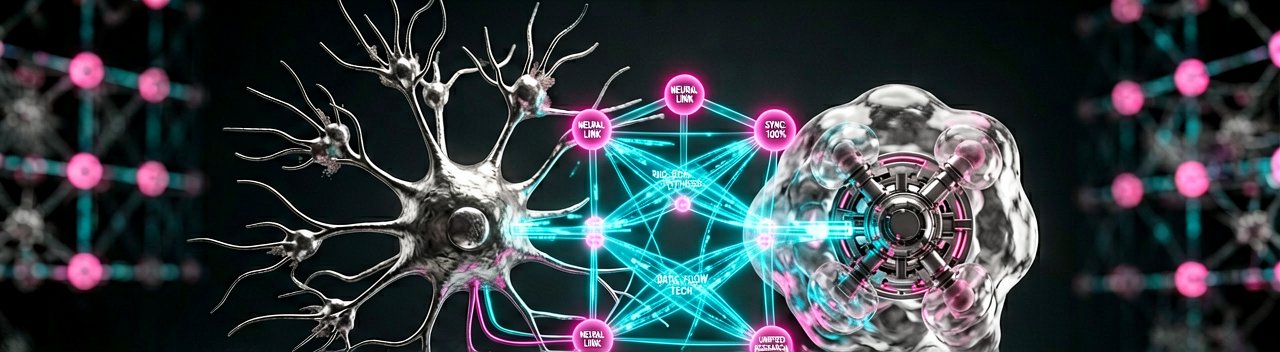
That second theme matters more than most universities admit. Building a medical device is one thing. Getting doctors to use it, patients to trust it, and hospitals to reimburse it is an entirely different problem set. The institute explicitly recognizes this gap.
Maarten Merkx, Dean leading the Steering Committee Health, outlined the scope: "Health-related research at TU/e covers the full breadth of health technology, from molecular and material-level innovations to societal implementation." The committee identified existing strengths in biomaterials, regenerative medicine, imaging, digital health, robotics, wearables, and human-technology interaction.
AI-driven approaches will play a significant role, though the university is simultaneously restructuring how it handles artificial intelligence across the organization. A task force led by Carlo van de Weijer is exploring whether AI should remain a standalone institute or embed more broadly throughout TU/e's operations.
The groundwork began in 2024-2025 with an internal analysis mapping TU/e's health research capabilities. The review also cataloged the university's collaboration network: regional hospitals, academic medical centers, industry partners, SMEs, patient organizations, and stakeholders including Brainport Development, Pivot Park, the Brabant Development Agency, and the Province of North Brabant.
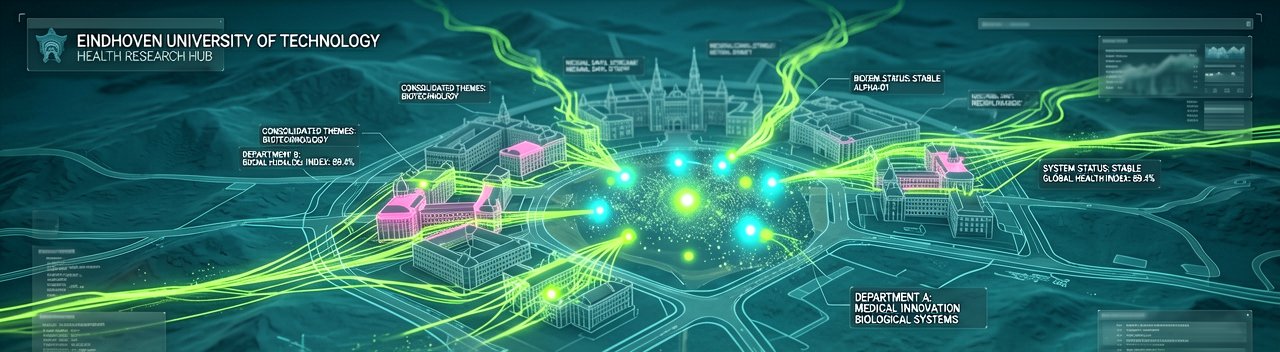
Rectormagnificus Silvia Lenaerts emphasized the consolidation logic: "There is a lot of excellent research at TU/e, and by bundling our forces we achieve real critical mass in health-related research, connecting to a broader community of hundreds of researchers working on health across the university."
That's the pitch. The reality check comes in execution. Universities have a long history of announcing institutes that sound impressive on paper while researchers continue working in departmental silos. The difference between a successful institute and a bureaucratic shell depends on funding allocation, incentive structures, and whether collaboration actually becomes easier or just adds another layer of administration.
The institute's stated ambition focuses on affordable, accessible, and sustainable health solutions. That's a tall order when healthcare costs continue climbing across Europe. The real test won't be the number of papers published or patents filed. It will be whether these technologies reach patients at scale and whether the healthcare system can absorb them without breaking.
Whether the January 2027 launch delivers on these promises remains to be seen. For now, the framework exists. The work begins when the researchers actually start collaborating across departmental boundaries—and that's where most initiatives stumble.
Artūras Malašauskas is an AI Systems Integrator with 20+ years of production-grade web engineering experience. He has designed, shipped, and scaled enterprise Python/PHP systems for logistics, SaaS, and public-sector clients. For the past year, he has focused exclusively on AI integrations: deploying open-source LLMs, building generative media pipelines (image, audio, video), and engineering multi-agent workflows for real production environments. His standard: reproducibility, security, cost-efficient inference—no vaporware. He documents and evaluates emerging AI tooling, separating verified capabilities from marketing noise. Technical editor at: muza-ai.eu, ai-verslas.lt, ai-naujinos.lt Connect on LinkedIn
Comments