Rocsys Raises $13M for Robotaxi Charging Automation
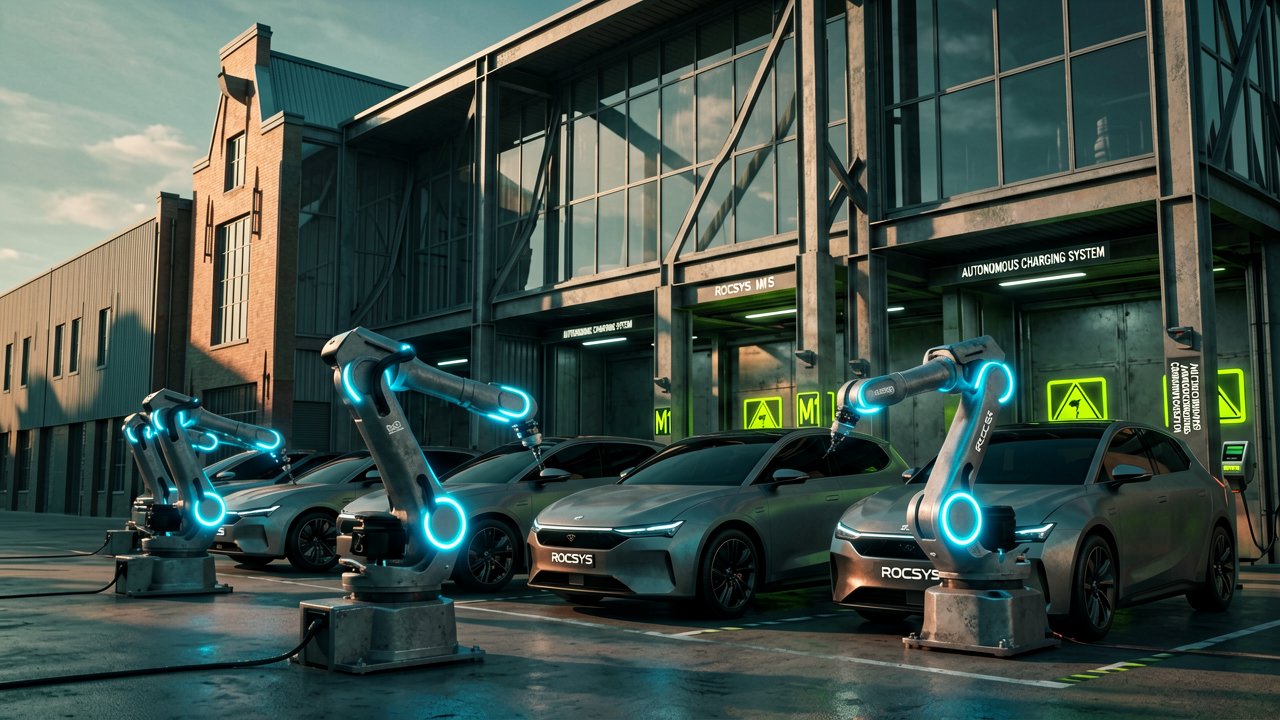
The autonomous vehicle industry has spent years perfecting the technology that lets cars drive themselves. The final mile of automation, however, remains stubbornly human: someone still has to plug them in. Rocsys announced today that it is closing that gap with the launch of the M1, a hands-free charging system capable of serving multiple robotaxi bays, alongside a $13 million Series A extension to fund deployment.
The funding round brings Rocsys' total capital raised to $56 million. Capricorn Partners led the investment, with participation from Scania Invest, Forward.One, SEB Greentech Venture Capital, and Graduate Ventures. The capital will support the M1's transition from pilot deployments to large-scale rollout across North America and Europe, with full commercial deployment targeted for 2027.
The depot bottleneck is real and growing. Waymo currently operates roughly 500,000 paid rides per week across 10 U.S. metropolitan areas with a fleet of 3,000 vehicles. Each vehicle requires charging multiple times daily, and the current process still depends on human workers physically plugging and unplugging cables at depot facilities. This labor-intensive operation creates safety risks, operational downtime, and a hard constraint on fleet scaling.
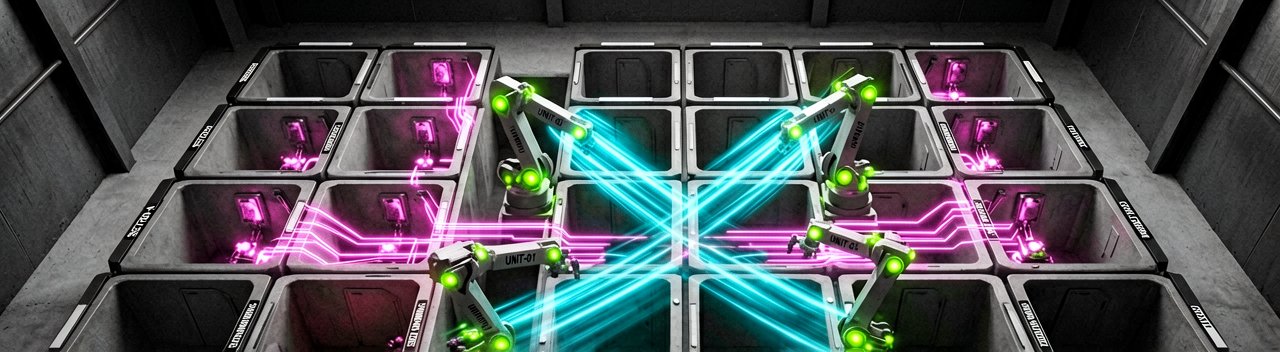
The M1 addresses this through an overhead rail-mounted robotic arm that slides along a track to serve up to 10 different parking bays from a single unit. Unlike competing solutions that dedicate one robot per bay or require vehicles to stop at fixed charging points, Rocsys' multi-bay architecture preserves depot floor space and allows parallel operations like interior cleaning and inspection to proceed while vehicles charge.
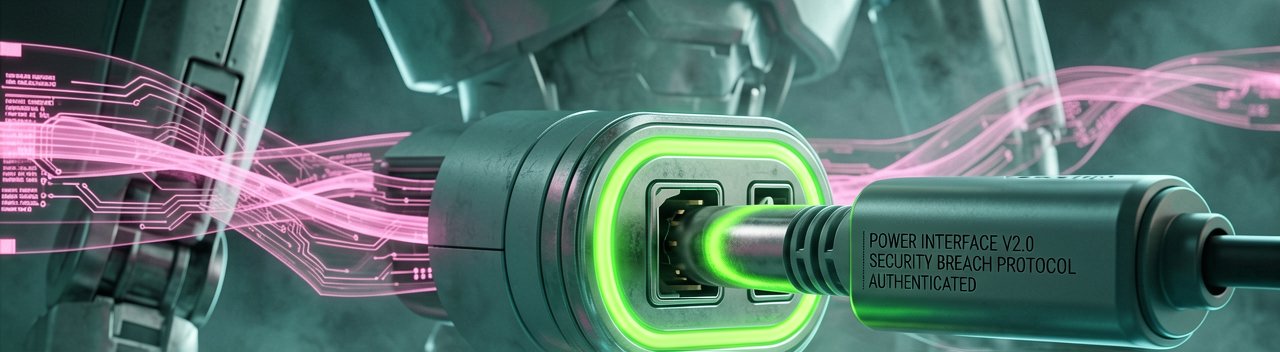
Using AI-driven computer vision and patented soft robotics technology, the system identifies the vehicle's charging port and connects the plug autonomously. The company claims a plug-in success rate exceeding 99.9% in live environments, trained on more than six years of real-world operational data from its earlier port and logistics deployments. The system works with any EV model, charger brand, and connector type, including CCS and MCS standards.
This interoperability matters. Fleet operators can automate depots without expensive retrofitting or being locked into a specific charging vendor. Ground- and roof-mounted configurations are available to integrate with different depot layouts, which is critical when operators are working with existing infrastructure rather than building from scratch.
The economic case is straightforward. In a standard 50-bay depot, Rocsys estimates the M1 can increase operational efficiency by 75% and deliver up to $1.7 million in annual savings by reducing the need for manual oversight and maximizing vehicle uptime. The same staff can oversee charging rather than perform it, which changes the labor economics significantly at scale.
Crijn Bouman, CEO and co-founder of Rocsys, framed the problem bluntly: "Without hands-free operations, autonomy stops at the depot. The M1 is the missing link for robotaxi operators to move from pilots to global deployment." The company has validated the M1 with what it describes as a major robotaxi deal, though the operator has not been named.
Competitors exist. Volkswagen and Hyundai have both shown robotic charging prototypes, and ABB is developing automated charging systems for commercial fleets. Tesla is taking a different route entirely with its Cybercab, which uses wireless inductive charging rather than plug-in Superchargers. But Tesla's approach requires purpose-built vehicles, not a retrofit solution for existing fleets.
Rocsys' multi-bay overhead rail approach is architecturally distinct because it dramatically reduces the number of robots needed per depot. This is not a theoretical design preference; it directly affects depot economics at the scale robotaxi operators are planning for. The company holds over 130 granted patents and pending applications in the space.
The global robotaxi market is projected to reach $45.7 billion by 2030, according to MarketsandMarkets. As fleets scale from dozens to hundreds to thousands of vehicles, the depot infrastructure problem moves from a logistical inconvenience to a hard constraint on growth. Uber has explicitly acknowledged the scope of the challenge, committing more than $100 million specifically to charging infrastructure as part of its autonomous vehicle strategy.
The M1 is the first product in what Rocsys describes as a broader depot autonomy platform that will eventually encompass automated interior cleaning and inspection, extending the hands-free principle beyond the charging cable to every operational task currently requiring a human to touch the vehicle between rides. A visualization of the M1 will be showcased at Rocsys' booth 3401 at ACT Expo in Las Vegas from May 4-6.
Whether Rocsys can establish the M1 as the standard charging infrastructure layer for the robotaxi market will be determined by the 2027 rollout and the customer names it can announce alongside it. The unnamed major robotaxi deal is intriguing, but until operators publicly commit to the system at scale, the 99.9% reliability claim remains unproven in the wild across different vehicle types and weather conditions. Whether fleet operators actually pay for this infrastructure remains the real question.
Artūras Malašauskas is an AI Systems Integrator with 20+ years of production-grade web engineering experience. He has designed, shipped, and scaled enterprise Python/PHP systems for logistics, SaaS, and public-sector clients. For the past year, he has focused exclusively on AI integrations: deploying open-source LLMs, building generative media pipelines (image, audio, video), and engineering multi-agent workflows for real production environments. His standard: reproducibility, security, cost-efficient inference—no vaporware. He documents and evaluates emerging AI tooling, separating verified capabilities from marketing noise. Technical editor at: muza-ai.eu, ai-verslas.lt, ai-naujinos.lt Connect on LinkedIn
Comments