Goa Unveils Draft AI Policy Targeting Global Tech Hub Status
The Goa government has released its draft Artificial Intelligence policy, a document prepared in just 50 days that aims to transform the coastal state into what officials call a "global hub for high-tech innovation."
Information Technology, Electronics and Communications Minister Rohan Khaunte unveiled the framework at Paryatan Bhavan in Panaji, marking a significant acceleration of the government's original 100-day commitment to deliver an AI governance structure.
The draft policy will be available for public feedback starting May 4 for a 15-day consultation period. Citizens can review the document on the state portal, Goa Online portal, and the Department of Information Technology, Electronics and Communications (DITE&C) website.
According to The Economic Times, the policy focuses on five core pillars: AI skilling, startup promotion, innovation ecosystem development, governance improvement, and research infrastructure creation.
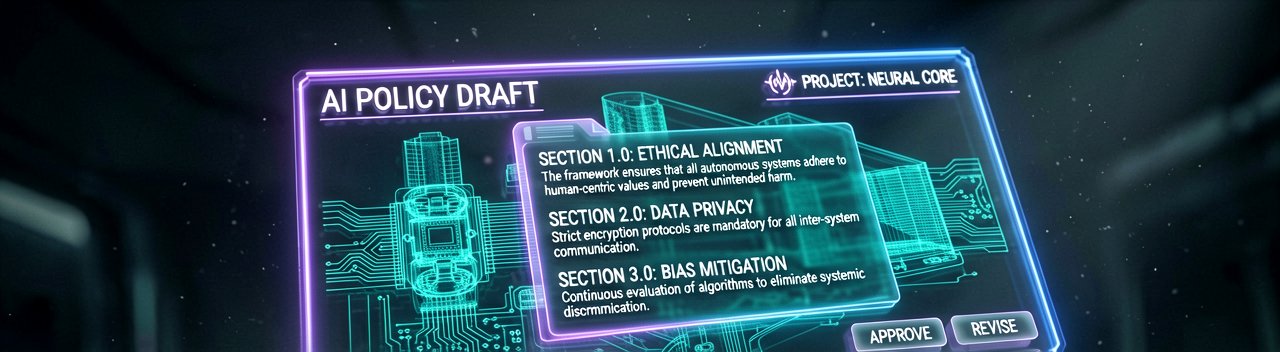
Under the proposed "Goa AI Mission 2027," the state plans to leverage local talent and develop large language models (LLMs) while ensuring safety and accountability in AI deployment. This is ambitious for a state with a population of roughly 1.5 million people.
The minister stated the policy aims to ensure technological advancements benefit the common citizen while equipping the state's youth with competitive skills. The framework targets implementation across finance, tourism, and governance sectors.
During the press conference, Khaunte revealed the government is deliberating on restricting social media access for children below 16 years of age. The proposal promotes AI-driven educational tools as a more productive alternative (a move that will likely face pushback from teenagers everywhere).
Independent reporting from The Goan corroborates the timeline and scope of the policy release, confirming the document was finalised after extensive consultations with industry leaders, academia, and other stakeholders.
The physical reality of this policy means Goan residents will soon navigate new digital interfaces when accessing government services. The friction of logging into portals, waiting for verification, and understanding new AI-driven workflows will test whether the promised improvements actually materialise.
Industry analysts note this positions Goa differently from other Indian states that have released AI frameworks. The emphasis on tourism and local talent development suggests a strategy tailored to the state's unique economic profile rather than a generic copy of national guidelines.
The document was placed in the public domain to invite suggestions before finalisation. Officials indicated they are awaiting further inputs from stakeholders before sharing the proposal with Chief Minister Pramod Sawant to take up with the Centre.
Whether the state can realistically compete with established tech hubs like Bangalore or Hyderabad remains uncertain. Goa's small size and tourism-dependent economy present both advantages and constraints for building a comprehensive AI ecosystem.
The 50-day preparation timeline raises questions about the depth of stakeholder engagement. While the government claims extensive consultations occurred, the compressed schedule may have limited the breadth of feedback incorporated into the draft.
For developers and startups, the policy signals potential opportunities in AI skilling programs and innovation grants. However, the actual funding mechanisms and implementation details remain vague in the current draft.
The social media restriction proposal for minors under 16 represents one of the more controversial elements. Enforcement would require technical infrastructure and parental cooperation that may prove difficult to achieve at scale.
Public consultation periods often reveal gaps between policy ambition and practical feasibility. The 15-day window gives residents a chance to identify these issues before the policy becomes law.
Whether users actually pay for the promised benefits remains the real question. Many state-level AI policies sound impressive on paper but struggle with execution when confronted with budget constraints and bureaucratic inertia.
Artūras Malašauskas is an AI Systems Integrator with 20+ years of production-grade web engineering experience. He has designed, shipped, and scaled enterprise Python/PHP systems for logistics, SaaS, and public-sector clients. For the past year, he has focused exclusively on AI integrations: deploying open-source LLMs, building generative media pipelines (image, audio, video), and engineering multi-agent workflows for real production environments. His standard: reproducibility, security, cost-efficient inference—no vaporware. He documents and evaluates emerging AI tooling, separating verified capabilities from marketing noise. Technical editor at: muza-ai.eu, ai-verslas.lt, ai-naujinos.lt Connect on LinkedIn
Comments