ShengShu Technology Launches Motubrain Unified Robotics Model
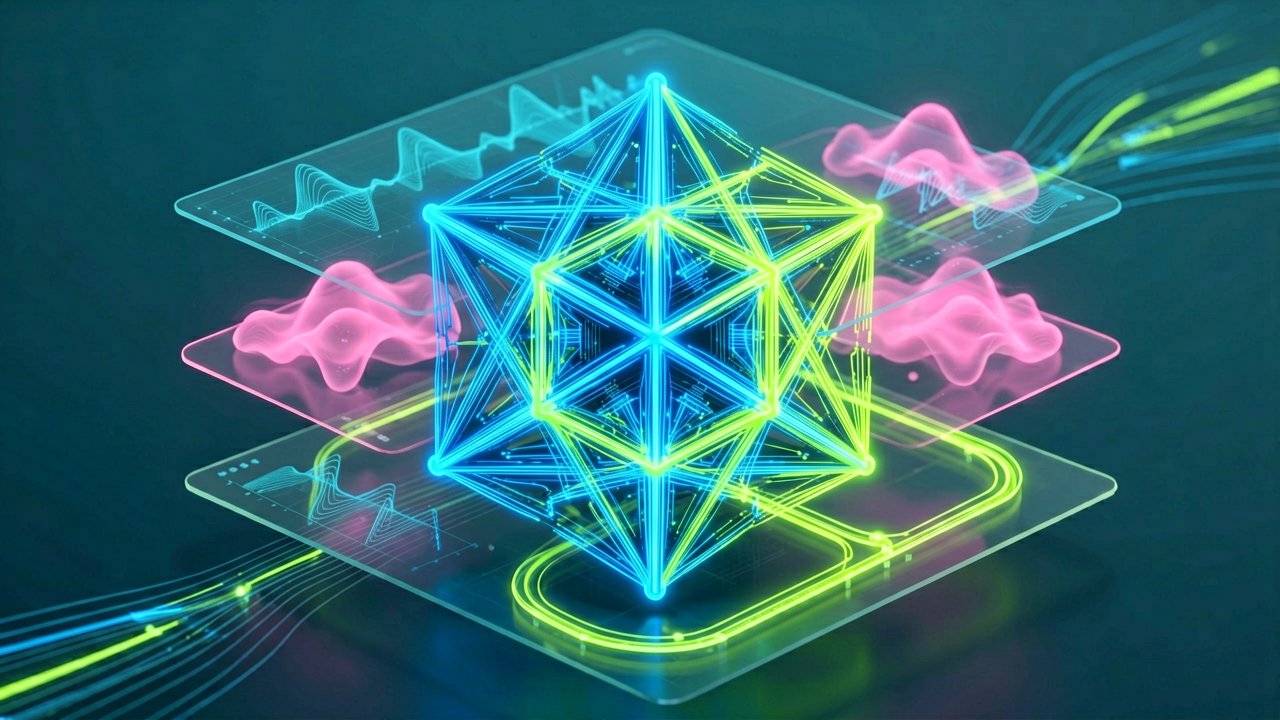
On April 29, 2026, ShengShu Technology announced Motubrain, a World Action Model designed to replace fragmented, task-specific robotic systems with a single unified architecture. The company describes it as a robotic brain capable of handling perception, reasoning, prediction, generation, and action within one system. This marks a significant departure from conventional embodied AI approaches that chain together separate modules for each function.
The announcement comes from Singapore via PRNewswire, positioning Motubrain as an industry first in unified world action modeling. ShengShu is best known for its video generation model Vidu, and the company is now leveraging that generative video foundation to simulate robots in real-world environments at scale before deploying them physically.
Founder Jun Zhu framed the core philosophy clearly: "A true world model must be able to build a unified representation of the real world and predict how it evolves." Video, he argues, naturally captures time, space, motion, causality, and physical dynamics at scale. The alternative—stitching together perception, planning, and control modules—creates friction points where errors compound. (Anyone who has tried to debug a three-module pipeline knows what I mean.)
Motubrain's benchmark performance is the headline metric. On WorldArena, it achieved a 63.77 EWM Score. On RoboTwin 2.0, it averaged 96.0 across 50 predetermined tasks and reportedly remains the only model to exceed 95.0 in randomized environments. These numbers matter because they represent standardized testing conditions rather than cherry-picked demonstrations. The difference between a controlled demo and a randomized environment is the difference between a robot performing on a clean lab floor versus navigating a cluttered warehouse with shifting obstacles.

The architecture rests on four principles. First, "One Brain, Many Skills" means the model handles diverse tasks simultaneously, with success rates increasing as task variety grows. Second, "One Brain, Universal Across Robots" breaks the traditional one-robot-one-model pattern, allowing the system to power multiple robot types. Third, "One Brain, End-to-End" enables handling of complex multi-step tasks involving up to 10 atomic actions—the smallest unit of movement in robotics—far beyond the typical 2–3 actions conventional systems manage. Fourth, "One Brain, Able to Anticipate" processes environmental change, task progression, and execution together inside one model.
Under the hood, Motubrain uses a Unified Multimodal Model treating video and action as continuous modalities learned together. A single training run delivers five capabilities: vision-language-action control (VLA), world modelling, video generation, inverse dynamics modelling (IDM), and joint video-action prediction. A three-stream Mixture-of-Transformers (MoT) brings video, action, and language together by drawing on pretrained models. Unlike systems that chain separate modules, Motubrain processes the full loop in one pass.
Data sourcing is where the real innovation may lie. Motubrain learns from unlabelled video, task recordings without language annotations, and data from different robot embodiments. A proprietary latent action framework extracts physical motion directly from large-scale video—including human footage, simulation data, and multi-robot task trajectories—without requiring labelled or tagged action data. This broader learning paradigm translates into scaling behavior that competitors struggle to match.
In task-scaling evaluations, Motubrain's average success rate continued rising as training tasks increased, reaching approximately 92% at 50 tasks. By comparison, Pi-0.5 declined to roughly 68% over the same range. In data-scaling evaluations, Motubrain achieved about 92% average success at 27,500 episodes, compared with roughly 85% for Motus and 68% for Pi-0.5. A three-stage pipeline built on a six-layer data pyramid lets the model generalize skills across environments and robot types while remaining precise enough for fine-grained deployment.

Secondary reporting from TipRanks adds financial context: ShengShu secured a $293 million Series B round led by Alibaba Cloud, with Motubrain already in active deployment with multiple robotics partners. This funding validates the technical claims with capital commitment, though the actual deployment details remain opaque.
The physical reality of using Motubrain-trained robots differs from simulation. In real-world tests, robots have carried out complete multi-step tasks with adaptability beyond most conventional systems. But here's the thing: benchmark scores don't capture latency spikes when a robot's camera feed lags, or the jitter when a motor controller fights a prediction. Engineers deploying this will need to understand the compute footprint, the fine-tuning requirements, and the failure modes when the model encounters edge cases outside its training distribution.
Industry context matters. Companies working on embodied AI increasingly combine large-scale video pretraining with simulation to bootstrap policies and world models. Simulation-driven pretraining can speed iteration and broaden environment coverage, but independent replication of benchmark claims is often required before practitioners rebase production stacks. Integrating perception and control in a single multimodal architecture raises engineering tradeoffs around latency, safety gating, and domain transfer that teams commonly encounter when moving from simulation to real robots.
For practitioners, the critical questions remain: Where are the published technical papers or model cards disclosing training data composition, compute used, and evaluation protocols? What do deployment case studies from robotics partners reveal about latency, compute footprint, and safety or failure modes? Are there SDKs, APIs, or open weights that would affect adoption workflows and cost tradeoffs for teams experimenting with embodied agents?
Whether Motubrain actually delivers on its "one brain, infinite possibilities" promise depends less on benchmark scores and more on whether it survives the messy reality of physical deployment. The technology is impressive on paper. Whether users actually pay for it remains the real question.
Artūras Malašauskas is an AI Systems Integrator with 20+ years of production-grade web engineering experience. He has designed, shipped, and scaled enterprise Python/PHP systems for logistics, SaaS, and public-sector clients. For the past year, he has focused exclusively on AI integrations: deploying open-source LLMs, building generative media pipelines (image, audio, video), and engineering multi-agent workflows for real production environments. His standard: reproducibility, security, cost-efficient inference—no vaporware. He documents and evaluates emerging AI tooling, separating verified capabilities from marketing noise. Technical editor at: muza-ai.eu, ai-verslas.lt, ai-naujinos.lt Connect on LinkedIn
Comments