Dreame Unveils 20+ Smart Home Products at DREAME NEXT, Expands Bionic Robotic Arm Platform
Dreame Technology held its largest international product showcase to date at the Palace of Fine Arts in San Francisco, debuting more than 20 smart home products during the Living Next segment of DREAME NEXT. The event, running through April 30, 2026, centers on the company's strategy to transform a single engineering capability into a cross-category platform.
The core announcement involves Dreame's bionic robotic arm technology, first introduced in 2023 for robot vacuums, now appearing in fundamentally different appliance categories. According to the official press release, the technology now powers air conditioners, range hoods, steam ovens, and dishwashers alongside the cleaning appliances where it originated. The company's press release details the full product lineup.
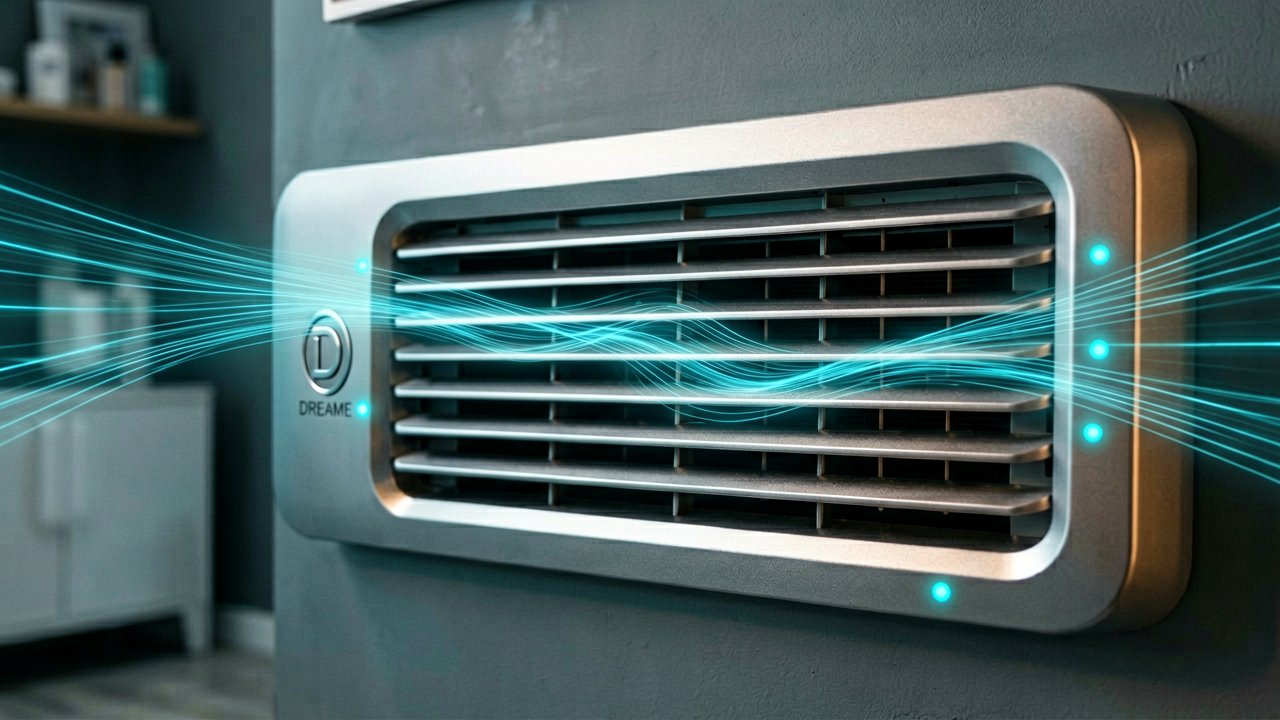
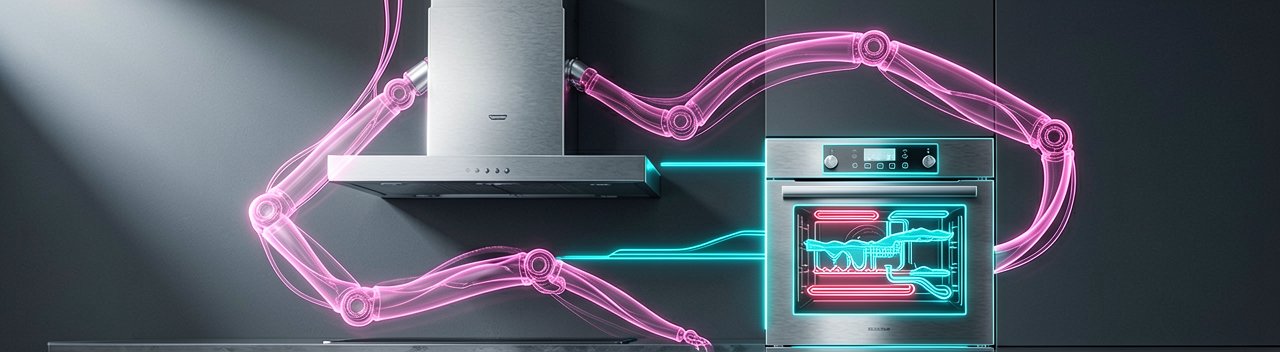
This isn't just marketing rebranding. The physical implementation varies significantly across products. On the X Series Air Conditioner, the bionic arm manifests as a dual-arm airflow system delivering 126° wide-angle and zone-targeted air distribution. The HX01 range hood uses articulated wing arms with millimeter-wave radar to detect cookware position and adjust smoke capture angle in real time. The OX01 steam oven employs it as a full-zone airflow guide. The DX01 dishwasher features an AI-powered robotic arm for automated cruising wash coverage.
These aren't conceptual prototypes either. The cleaning appliance lineup shows concrete specifications. The X60 Pro Ultra Complete introduces second-generation bionic robotic arm technology with 18cm mop pad extension and 12cm side brush extension. It also features a 42kPa suction fan operating at 150,000 RPM. The Aqua20 Pro Ultra Roller Complete combines 160°C high-temperature steam mopping with 75°C hot water mopping, 18N bionic pressure, and 100°C base station hot water wash. The Aero Ultra Steam targets North American households with steam cleaning, hot water washing, and foam cleaning in one unit.
Beyond the robotic arm expansion, the showcase included products built around Dreame's intelligent algorithms and high-speed motor technology. The Z1 Laundry Robot features a multi-joint robotic arm, multimodal sensing, and proprietary AI perception for autonomous clothing pickup, washing, drying, and retrieval. The AI coffee machine learns from user preferences and connects with wearable devices to monitor physiological data and recommend beverages accordingly.
Chang Xinwei, Global President of Dreame Technology, framed the strategy explicitly: "Bionic robotic arm technology started with solving a single problem on a robot vacuum. Today it powers products across various appliance categories. When a core technology can evolve from cleaning floors to managing airflow, directing heat, and handling laundry autonomously, it stops being a product feature. It becomes a platform."
The scale of this launch reflects Dreame's broader market position. Founded in 2017, the company now operates in more than 120 countries with over 6,500 offline stores and serves more than 42 million households globally. As of December 31, 2025, Dreame has filed more than 10,000 patents worldwide and holds over 3,000 granted patents. Research personnel make up more than 70 percent of the company.
NBA three-time champion Dwyane Wade appeared on stage during the robot vacuum and wet floor cleaner demonstrations, testing the products live. His presence signals Dreame's attempt to position intelligent cleaning technology as compatible with active lifestyles rather than just a convenience for busy households.
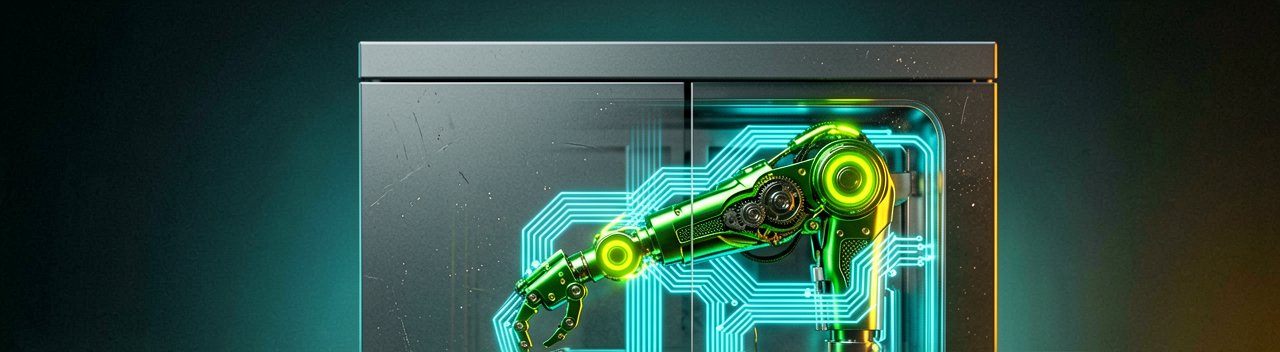
The Living Next lineup represents the broadest single-day product launch in Dreame's history. The company is attempting to reposition itself from a robot vacuum manufacturer into a multi-category home technology brand built on a shared engineering foundation. Three pillar technologies—high-speed digital motors, intelligent algorithms, and bionic robotic arms—power innovations across major product categories.
Overseas revenue accounted for nearly 80 percent of total sales in 2025, with North American revenue growing 189 percent year-on-year. The compound annual growth rate has hit 100 percent for eight consecutive years. These numbers suggest Dreame has the capital to sustain aggressive R&D, but they also create pressure to maintain momentum across multiple product categories simultaneously.
There's a practical question here. Can a company that started with motors actually compete across industries that have traditionally been siloed? Air conditioners, range hoods, steam ovens, and dishwashers each have entrenched competitors with decades of category-specific expertise. Dreame's approach assumes that shared technology foundations can overcome category-specific barriers.
The event also featured a forum with industry leaders including Sebastian Thrun, William Fong, Robert Scoble, Julie Zhuo, and James W. Keyes discussing "In the Age of AI, Every Product Deserves a Reinvention." Thrun concluded that Dreame is "really positioned to start moving from AI software into the physical world." Whether that positioning translates to consumer adoption remains to be seen.
For consumers, the immediate question is availability. The press release doesn't specify pricing or release dates for most products. The bionic robotic arm technology has been refined since 2023, but applying it to fundamentally different appliances introduces new engineering challenges. Edge coverage on a robot vacuum is one thing. Managing airflow in an air conditioner or smoke capture in a range hood involves different physics and different failure modes.
Dreame's patent portfolio suggests serious investment in R&D, but patents don't guarantee product reliability. The company will need to prove that its cross-category technology platform delivers consistent performance across products that serve fundamentally different purposes. Whether users actually pay for this platform approach, rather than just buying individual products that happen to share engineering DNA, remains the real question.
Artūras Malašauskas is an AI Systems Integrator with 20+ years of production-grade web engineering experience. He has designed, shipped, and scaled enterprise Python/PHP systems for logistics, SaaS, and public-sector clients. For the past year, he has focused exclusively on AI integrations: deploying open-source LLMs, building generative media pipelines (image, audio, video), and engineering multi-agent workflows for real production environments. His standard: reproducibility, security, cost-efficient inference—no vaporware. He documents and evaluates emerging AI tooling, separating verified capabilities from marketing noise. Technical editor at: muza-ai.eu, ai-verslas.lt, ai-naujinos.lt Connect on LinkedIn
Comments