Faraday Future Launches Embodied AI Developer Platform for Students and Engineers
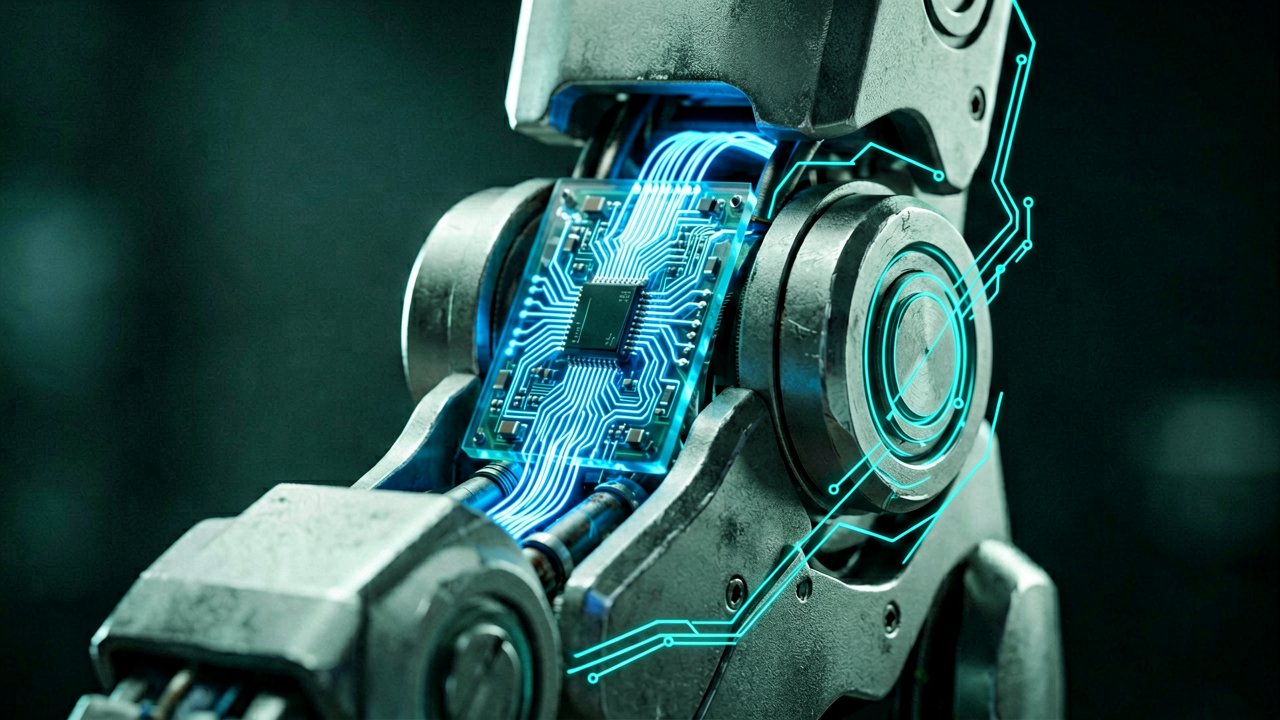
Faraday Future Intelligent Electric Inc. (NASDAQ: FFAI) officially launched its Embodied AI Developer Platform on April 25, 2026, in San Francisco. The company is positioning 2026 as the inaugural year of EAI robotics education, opening recruitment for what it calls "AI natives" across three developer categories.
The announcement comes via Faraday Future's official investor relations channel, where the company detailed the FF EAI Brain & Open Developer Platform. This is not a toy kit. It's a full-stack infrastructure designed to let users build executable robot capabilities called Agent Skills.
Here's what actually ships: six developer tools and four core infrastructure layers. The tools include Brain Blocks (block-based programming for K-12), Create Studio (teleoperation and video imitation), EAI Soul (personality and conversation style), EAI Scribe (natural language skill generation), EAI Studio (full data collection through inference pipeline), and an SDK/API for professional engineers. The infrastructure covers a unified developer portal, a Sim-to-Real evolution field, a data closed-loop engine, and an agile development toolchain.
That's a lot of jargon. The practical effect is supposed to be making robot development as accessible as mobile app development. Whether that's true depends on how well the abstraction layers actually work in practice (a problem that has plagued users for years, frankly).

Recruitment targets three distinct groups. Young Futurist covers K-12 students aged 6 to 18. EAI Futurist targets scenario experts and creators. EAI Builder recruits professional engineers, research teams, and OEM partners. Each category follows a four-tier progression from Beginner to Leader. The company is now accepting applications for its first batch of 1.0 co-creation partners.
During the forum, FF demonstrated FF Futurist, its full-size professional EAI humanoid robot, executing nine end-to-end Agent Skills across Home Assistant, Commercial Security, Pet Companion, and Hospitality scenarios. The company also previewed home security integration combining FX Aegis, its professional EAI quadruped robot, with smart home automation. These demos matter because they show the platform isn't just theoretical—there's actual hardware running the code.
The incentive structure includes revenue sharing, grants, hackathons, a Campus Program, and a tier-based seniority system. Higher tiers receive greater revenue shares. The company also announced a strategic cooperation with BIBS (Boston International Business School) to establish the BIBS–FF AI and Robotics Institute, with a launch ceremony planned for early May at the University of Nebraska.
Chris Chen, Co-CEO of FF AI-Robotics, framed the launch as ecosystem-building rather than product release. The goal is connecting devices, data, and intelligence at scale while cultivating a global community of AI-native developers. Founder and Co-CEO YT Jia noted in a weekly investor update that his own children are beginning to receive Master humanoid robots and Aegis robotic dogs for educational settings.
For investors, this matters because adding a "body" to AI creates different revenue streams, capital needs, and regulatory risks compared to software-only products. An SDK matters because widespread developer use can boost adoption and create new revenue streams. The sim-to-real approach—if it works—can sharply cut development time and costs.
The platform's success hinges on whether developers actually build on it. A developer portal signals how easily outside developers can integrate with a company's products, which can speed adoption and lower sales friction. But portals alone don't guarantee engagement. The incentive program needs to deliver real value, not just promises.
Faraday Future's broader strategy connects this platform to its EAI vehicles and robotics business. The company's flagship FF 91 vehicle began deliveries in 2023, while its second brand FX targets the high-volume mainstream market with the Super One EAI-MPV, with deliveries planned for 2026. The robotics business is positioned as a third pillar alongside vehicles.
Whether users actually pay for it remains the real question. The platform is live, recruitment is open, and the hardware exists. But the difference between a working demo and a sustainable developer ecosystem is often measured in months of actual usage, not forum announcements. Time will tell if the incentive structure attracts enough contributors to make this more than another corporate initiative that quietly fades.
Artūras Malašauskas is an AI Systems Integrator with 20+ years of production-grade web engineering experience. He has designed, shipped, and scaled enterprise Python/PHP systems for logistics, SaaS, and public-sector clients. For the past year, he has focused exclusively on AI integrations: deploying open-source LLMs, building generative media pipelines (image, audio, video), and engineering multi-agent workflows for real production environments. His standard: reproducibility, security, cost-efficient inference—no vaporware. He documents and evaluates emerging AI tooling, separating verified capabilities from marketing noise. Technical editor at: muza-ai.eu, ai-verslas.lt, ai-naujinos.lt Connect on LinkedIn
Comments