Nvidia Unveils Ising Open Source AI Suite for Quantum Calibration
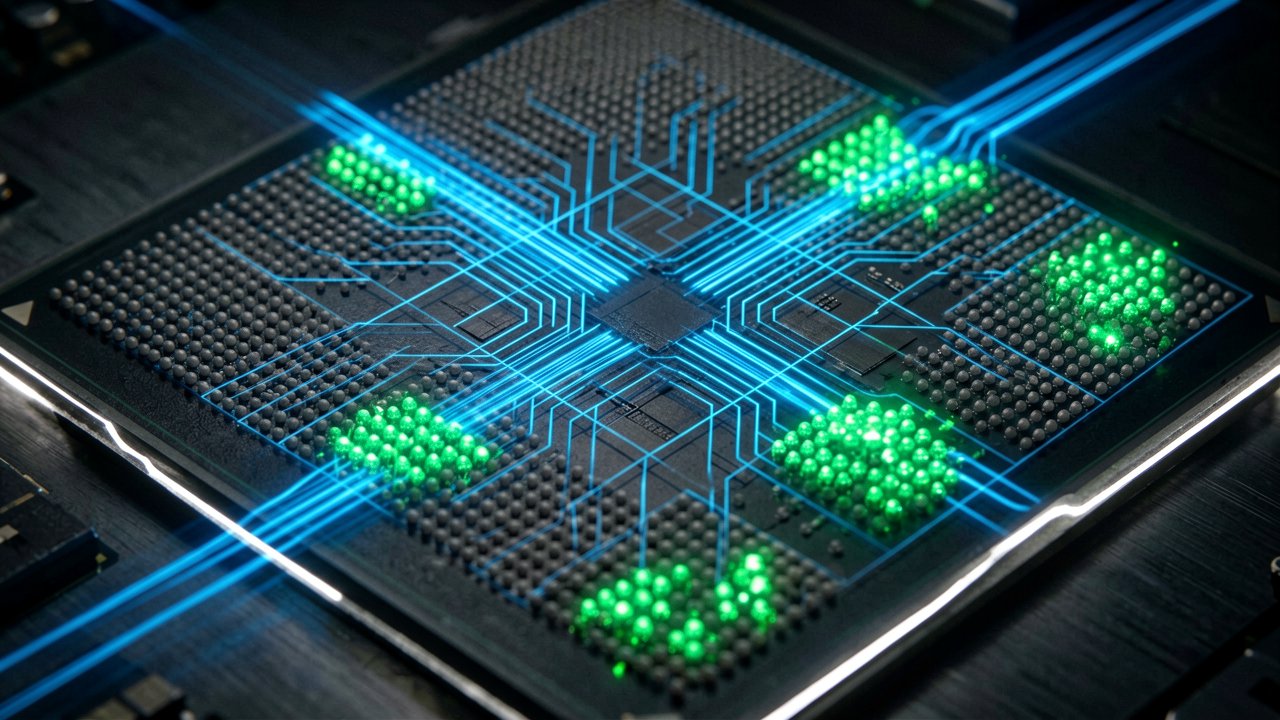
Nvidia has officially launched Ising, marking the first public release of open-source AI models specifically engineered for quantum computing infrastructure. The announcement, made through the company's official news channel, positions the suite as a critical tool for addressing two persistent bottlenecks in quantum hardware development: processor calibration and error correction decoding.
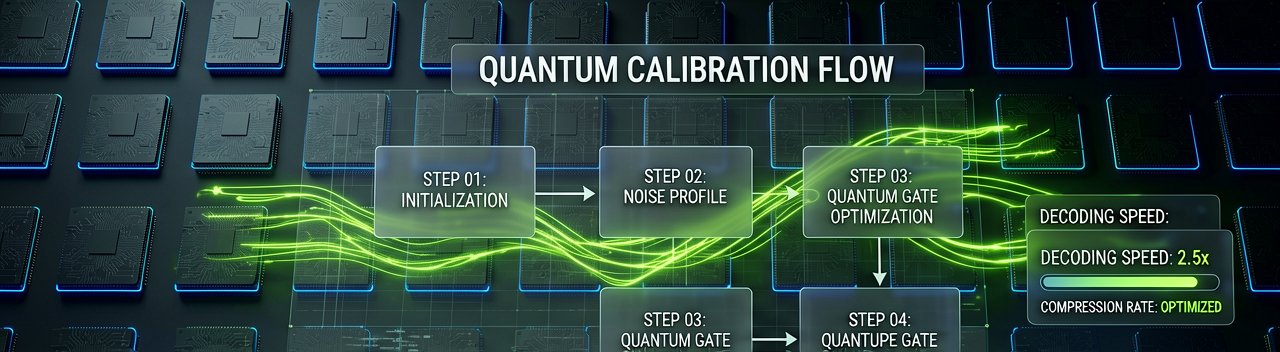
The release represents a strategic pivot from proprietary quantum software to an open model approach. According to the official press release, Ising delivers calibration capabilities that reduce setup time from days to hours while providing decoding performance up to 2.5x faster and 3x more accurate than the current industry standard, pyMatching.
Named after the Ising model—a mathematical framework that simplified understanding of complex physical systems—the suite includes two distinct model families. Ising Calibration functions as a vision language model capable of interpreting measurements from quantum processors and triggering automated correction actions. Ising Decoding consists of two 3D convolutional neural network variants optimized for either speed or accuracy in real-time error correction scenarios.
This distinction matters because quantum processors require constant tuning. Qubits drift due to environmental noise, temperature fluctuations, and hardware imperfections. Traditional calibration methods rely heavily on human intervention or simple algorithms that cannot scale. The physical reality of working with quantum hardware involves staring at measurement data, adjusting parameters manually, and waiting hours for results to stabilize. Ising Calibration attempts to replace that friction with an AI agent that continuously monitors and corrects.
Jensen Huang, founder and CEO of Nvidia, framed the technology as a control plane for quantum machines. "With Ising, AI becomes the operating system of quantum machines," Huang stated in the announcement. The language suggests Nvidia views this not as a peripheral tool but as foundational infrastructure for hybrid quantum-classical systems.
The models integrate with Nvidia CUDA-Q software platform and the NVQLink hardware interconnect, which enables real-time communication between quantum processing units and GPUs. This integration is critical because quantum error correction requires processing terabytes of qubit measurement data thousands of times per second. Classical decoding algorithms struggle with this throughput; the 3D CNN architecture in Ising Decoding is designed to handle it.
Adoption has already begun across the quantum ecosystem. The official documentation lists early users including Atom Computing, IonQ, IQM Quantum Computers, Fermi National Accelerator Laboratory, Harvard University, and the U.K. National Physical Laboratory. Ising Decoding specifically is being deployed by Cornell University, Sandia National Laboratories, and University of California San Diego, among others.
The breadth of institutional adoption signals more than marketing momentum. These organizations represent the core of quantum hardware development—national labs, academic research centers, and commercial quantum computer manufacturers. If they're integrating Ising into their workflows, the models have likely passed internal validation against their specific hardware architectures.
Availability is straightforward for developers. The models, training data, and workflow cookbooks are hosted on GitHub, Hugging Face, and Nvidia's build platform. Permissive licensing allows researchers to fine-tune models for proprietary hardware while maintaining control over their data. Nvidia NIM microservices provide instant deployment options for those who prefer managed infrastructure.
This open approach contrasts with Nvidia's typical strategy of keeping core AI models proprietary. The decision likely reflects the reality that quantum computing requires ecosystem-wide standardization. No single company can build the entire stack alone. By releasing Ising openly, Nvidia positions itself as the infrastructure provider rather than a competitor to quantum hardware manufacturers.
The market context matters here. Analyst firm Resonance projects the quantum computing market will exceed $11 billion by 2030. That growth trajectory depends entirely on solving engineering challenges like error correction and scalability. Without reliable qubits, quantum computers remain scientific curiosities rather than practical tools.
Performance claims warrant scrutiny. The 2.5x speed improvement and 3x accuracy gains are measured against pyMatching, the current open-source industry standard for decoding. Nvidia's documentation includes benchmark papers with transparent methodology and reproducible results. The models are evaluated against physics-consistency standards and include uncertainty quantification—a critical feature for scientific applications where false positives can derail months of research.
Ising Calibration uses a 35-billion parameter vision language model fine-tuned on quantum processor experimental data. Ising Decoding ships with two variants: a 0.9M parameter model optimized for speed and a 1.8M parameter model prioritizing accuracy. Both work with depolarizing noise models for surface codes of any distance, and the training framework supports custom noise models through PyTorch and CUDA-Q.
The technical architecture reflects Nvidia's broader AI strategy. These models leverage the same underlying infrastructure as Nemotron for agentic systems, Cosmos for physical AI, and BioNeMo for biomedical research. The difference lies in the domain-specific training data and evaluation metrics. Quantum computing requires physics-consistent outputs, not just statistical accuracy.
For researchers, the practical impact involves less time spent on manual calibration and more time on actual experiments. The cookbook of quantum computing workflows provides step-by-step guidance for fine-tuning models on specific hardware. This reduces the barrier to entry for institutions without dedicated AI teams.
However, the technology does not solve all quantum computing problems. Ising addresses calibration and error correction—necessary but not sufficient conditions for useful quantum applications. Qubit coherence times, gate fidelity, and algorithm development remain separate challenges. The suite is a tool, not a magic bullet (which would be nice, but physics doesn't work that way).
Integration with existing quantum software stacks requires effort. Researchers must adapt their workflows to incorporate AI-based calibration and decoding. The models run locally on researchers' systems to protect proprietary data, but this demands local GPU infrastructure. Not every lab has the compute resources to host these models at scale.
The open-source nature invites scrutiny and improvement. Researchers can inspect the model architecture, verify training data provenance, and contribute improvements. This transparency builds trust in a field where reproducibility has historically been problematic. The documented training methods and datasets allow independent validation of performance claims.
Whether the quantum computing community fully embraces this approach remains uncertain. Some researchers prefer custom solutions tailored to their specific hardware. Others may view Nvidia's involvement with skepticism given the company's commercial interests. The models' success depends on whether they deliver real-world value beyond benchmark performance.
For now, Ising represents a significant step toward practical quantum computing. The technology addresses genuine bottlenecks in the field and makes them accessible to a broader range of developers. Whether users actually adopt it at scale—and whether it accelerates the path to useful quantum applications—depends on real-world deployment results that won't be available for months.
Artūras Malašauskas is an AI Systems Integrator with 20+ years of production-grade web engineering experience. He has designed, shipped, and scaled enterprise Python/PHP systems for logistics, SaaS, and public-sector clients. For the past year, he has focused exclusively on AI integrations: deploying open-source LLMs, building generative media pipelines (image, audio, video), and engineering multi-agent workflows for real production environments. His standard: reproducibility, security, cost-efficient inference—no vaporware. He documents and evaluates emerging AI tooling, separating verified capabilities from marketing noise. Technical editor at: muza-ai.eu, ai-verslas.lt, ai-naujinos.lt Connect on LinkedIn
Comments