Stryker Brings Trident II Hip System to Indian Market
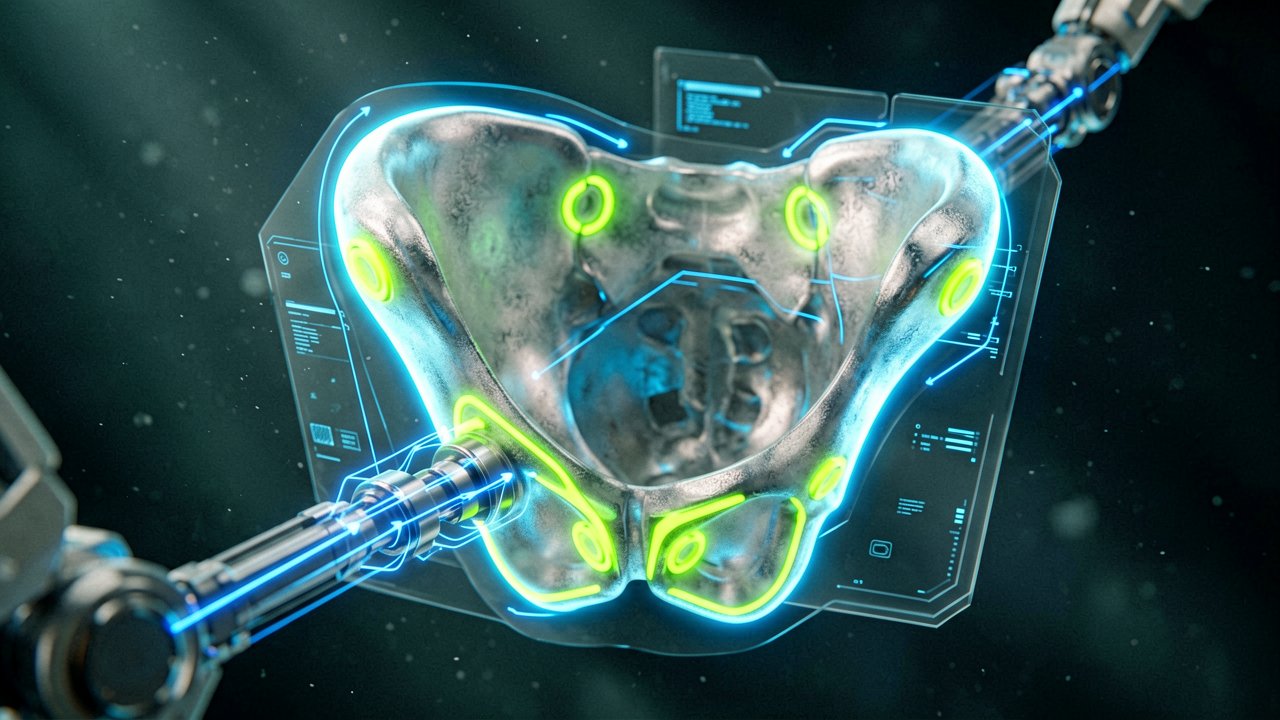
Medical technology firm Stryker has officially launched the Trident II Acetabular System in India, marking a significant expansion of its joint replacement portfolio in the region. The announcement, reported by Indian Pharma Post, positions the system as a precision-focused solution for total hip arthroplasty (THA) procedures.
This isn't the first time Trident II has appeared on the market. The system originally launched globally in 2018, receiving FDA clearance in October 2016 with limited market release following in 2017. The India launch represents a regional rollout of an established platform rather than a new product introduction. (The distinction matters more than most press releases admit.)
The hardware itself combines two primary fixation technologies: Tritanium In-Growth Technology and PureFix HA. Tritanium uses additive manufacturing to create a porous surface structure designed to mimic cancellous bone characteristics. PureFix HA offers a hydroxyapatite coating option that Stryker has used since 1987. Surgeons can select between hemispherical or peripheral self-locking shell configurations depending on patient anatomy.
What actually changes in the operating room? The system maintains the Innerchange Locking Mechanism, giving surgeons intraoperative flexibility to switch bearing options without removing the shell. Compatible liners include Modular Dual Mobility, X3 highly crosslinked polyethylene, and constrained options. The slim wall design enables larger femoral head sizes while maintaining optimal polyethylene thickness.
Robotic integration remains a key selling point. Trident II works with Mako SmartRobotics, which uses CT-based 3D modeling to create personalized surgical plans. The system leverages over 520 CT scans from Stryker's SOMA database to verify screw hole patterns fall within the acetabular safe zone. This reduces variability in component placement during the procedure.
According to Aman Rishi, Vice President and General Manager for India at Stryker, hip replacement surgeries are rising globally due to aging populations and increasing osteoarthritis incidence. The company frames this launch as bringing clinically proven solutions to Indian surgeons and patients. Rishi emphasized the combination of advanced materials, data-backed design, and robotic capabilities as differentiators.
The product carries substantial registry data backing its performance. The Trident system has been recognized as the most implanted acetabular shell in the Australian Orthopaedic Association National Joint Replacement Registry for 20 consecutive years. This longevity claim appears in both the India launch announcement and Stryker's official product documentation.
Instrumentation has been streamlined for efficiency. Two core trays—Core Reamers and General—address 99% of patient sizes for bone preparation. The trays are rigid-container compatible, which can reduce cost and complexity in hospital settings. Hands-free packaging eliminates unnecessary contact with the porous implant surface before impaction.

Physical interaction with the system includes a ball joint drill shaft designed for soft tissue clearance and variable drill angulation. The keyed shell impactor allows simple attachment and quick adjustments to shell placement. These aren't revolutionary changes, but they reduce friction points during surgery.
Market context matters here. India's medical device sector has undergone significant regulatory changes in recent years, with stricter import requirements and localization mandates. Stryker's decision to bring Trident II to the region signals confidence in sustained demand despite these headwinds. The company's Cork, Ireland facility—the world's largest orthopaedic additive manufacturing center—produces the Tritanium components.
Competition in India's hip replacement market remains intense. Multiple global and domestic manufacturers offer robotic-assisted and conventional THA solutions. Trident II's value proposition hinges on its registry data, robotic compatibility, and the flexibility of the Innerchange system. Whether Indian hospitals will prioritize these features over cost considerations remains uncertain.
The launch timing aligns with broader trends in orthopaedic technology adoption. Robotic-assisted surgery penetration continues growing in emerging markets, though adoption rates vary significantly by region and facility type. Stryker's strategy appears to be offering the same platform available in developed markets, rather than creating a simplified version for India.
Whether the investment in robotic integration pays off for Indian healthcare providers depends on reimbursement structures and surgeon training availability. The technology exists. The clinical data supports it. The real question is whether the economics work at scale in a price-sensitive market.
Artūras Malašauskas is an AI Systems Integrator with 20+ years of production-grade web engineering experience. He has designed, shipped, and scaled enterprise Python/PHP systems for logistics, SaaS, and public-sector clients. For the past year, he has focused exclusively on AI integrations: deploying open-source LLMs, building generative media pipelines (image, audio, video), and engineering multi-agent workflows for real production environments. His standard: reproducibility, security, cost-efficient inference—no vaporware. He documents and evaluates emerging AI tooling, separating verified capabilities from marketing noise. Technical editor at: muza-ai.eu, ai-verslas.lt, ai-naujinos.lt Connect on LinkedIn
Comments