Ant International Opens Agentic Mobile Protocol for AI Payments

Ant International has officially launched the Agentic Mobile Protocol (AMP), an open-source framework designed to let AI agents make payments through mobile wallets, super apps, and wearable devices. The announcement came from Kuala Lumpur on April 28, 2026, positioning the company to address what it describes as a critical gap in current payment infrastructure.
Most existing AI payment protocols are built around card rails. That's a problem when you're trying to integrate autonomous agents into the world's fastest-growing payment channel: digital wallets. According to Ant International's official press release, the global digital wallet user base reached 4.4 billion in 2025 and is projected to exceed 6 billion by 2030. Card-based systems simply don't scale to that environment.
The AMP framework addresses this by embedding agentic payment functionality directly into mobile workflows. Developers can link a payment agent to a digital wallet in half the steps required by traditional card-binding methods. That's a 50% reduction in integration friction. For anyone who's ever tried to wire up a payment gateway, that matters. (Nobody wants to spend three weeks debugging webhook callbacks.)
Security architecture is where the protocol gets interesting. AMP includes a Know Your Agent (KYA) framework that establishes digital identity for AI agents and certifies their authorized capabilities. The proprietary Agent Trust Rating mechanism dynamically assesses whether an agent is trustworthy and controls its level of autonomy. Every agent-initiated transaction carries a money-back guarantee for payment partners in cases of account takeovers. This isn't just theoretical—Ant International claims its AI models identify high-risk transactions with 95% precision and detect deepfakes at rates above 99.8%.
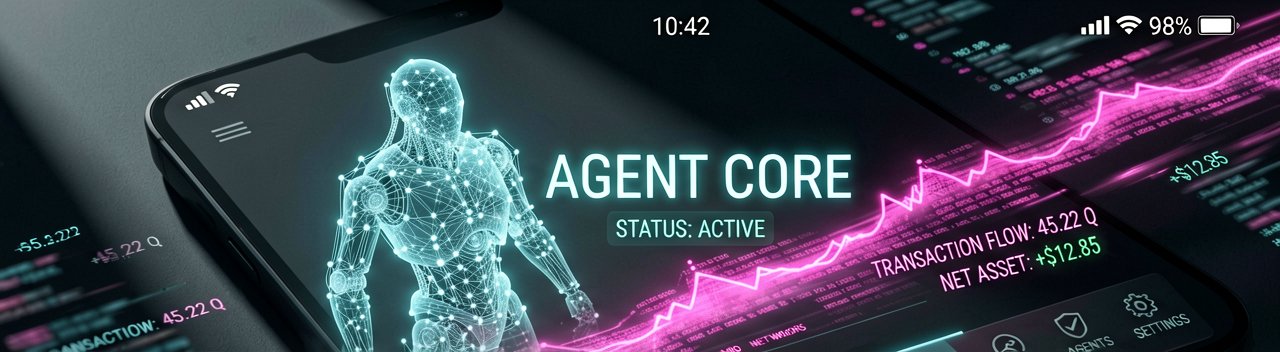
The most technically ambitious feature is the agent-to-agent (A2A) settlement mechanism. Traditional payment rails cannot handle high-frequency, sub-cent transactions. AMP can process nano-transactions as small as $0.000001 between AI agents with real-time accounting and clearing. Think about what that enables: autonomous agents negotiating micro-purchases, settling fractional fees, or trading data in real-time without human intervention.
Cross-device compatibility rounds out the core features. Payment agents work across smartphones, smartwatches, AR glasses, and in-car systems. Card-based systems lack this capability entirely. The physical reality here is important—imagine an AI agent completing a purchase on your smartwatch while you're driving, or through AR glasses while you're shopping in-store. The payment experience needs to feel seamless across all those touchpoints.
Ant International has open-sourced the protocol to establish a universal, auditable standard. The company is working with more than 40 Alipay+ wallet partners that collectively cover 1.8 billion user accounts and 150 million merchants globally. Tech in Asia reports the company is also piloting AI agent card transactions with Mastercard and Visa, while collaborating with Google on related protocols for agentic commerce.
This fits into a broader ecosystem effort. Ant's work sits alongside Google's Universal Commerce Protocol, which aims to help AI agents, retailers, and commerce systems work together through the shopping process. Shopify, Target, and Walmart back that effort. Ant brings experience in alternative payment methods—digital wallets and bank transfers—plus established ties to wallet partners in emerging markets.

The business case is straightforward. The global agentic commerce market could reach around USD 28 billion by 2030 with a 46% CAGR, according to Ant's cited research. The company's own AI model, Falcon, processed US$1.5 trillion in transactions in 2025 with more than 90% accuracy and cut foreign exchange costs by 60%. Inside businesses, these tools could streamline routine work. Antom's AI app for small and medium-sized businesses, EPOS360, includes an AI copilot that helps with setting up online stores and tracking cash flow.
But the security implications are real. Autonomous financial agents raise new attack vectors. Account takeovers, credential stuffing, and AI-generated fraud all become more sophisticated when agents can transact independently. The KYA framework and Agent Trust Rating are attempts to build guardrails, but whether they hold under real-world pressure remains to be seen.
Smaller firms could gain access to tools that were harder to afford before. That's the promise of open-sourcing the protocol. But whether developers actually adopt it, or whether wallet partners integrate it at scale, is a different question. The technology exists. The market infrastructure is there. Whether users actually pay for it—and whether regulators approve it—remains the real question.
Artūras Malašauskas is an AI Systems Integrator with 20+ years of production-grade web engineering experience. He has designed, shipped, and scaled enterprise Python/PHP systems for logistics, SaaS, and public-sector clients. For the past year, he has focused exclusively on AI integrations: deploying open-source LLMs, building generative media pipelines (image, audio, video), and engineering multi-agent workflows for real production environments. His standard: reproducibility, security, cost-efficient inference—no vaporware. He documents and evaluates emerging AI tooling, separating verified capabilities from marketing noise. Technical editor at: muza-ai.eu, ai-verslas.lt, ai-naujinos.lt Connect on LinkedIn
Comments