Findability Sciences Launches LactaAI for Dairy Processing Plants
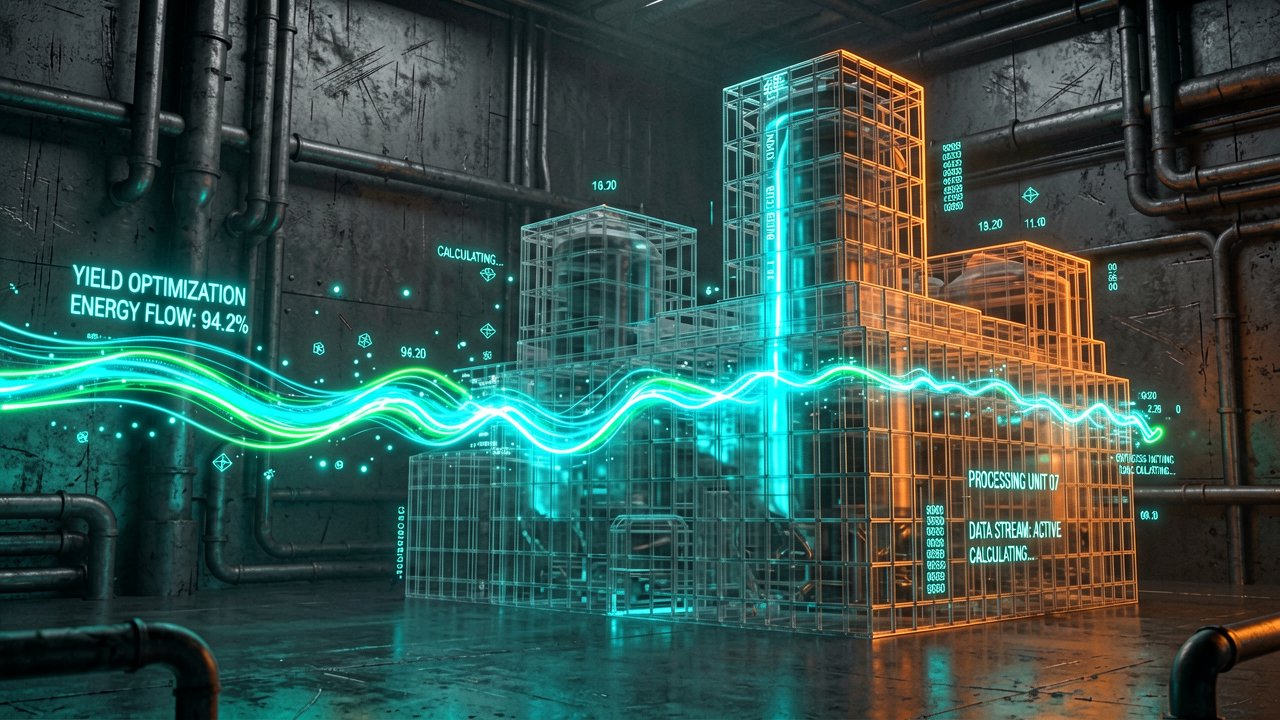
Findability Sciences has unveiled LactaAI, an industrial intelligence platform designed specifically for dairy and whey processing plants. The launch represents a focused attempt to move AI beyond theoretical pilots and into the gritty reality of factory floors where milk intake, evaporation, drying, and packaging operations generate millions of daily signals that often go unused.
According to The Times of India, the platform promises up to Rs 28 crore in annual value per plant through yield improvements, reduced energy intensity, and faster decision-making. That's a bold claim in an industry where margins are thin and operational variability is constant.
Depending on plant scale and product mix, LactaAI can help large dairy operations achieve 0.5–1.5 percentage point yield improvements. It also targets 5–10% energy intensity reductions in evaporation and drying processes. For context, in a high-volume dairy operation, even a one percentage-point yield improvement creates major financial impact. The platform shortens decision cycles across operations and finance teams, which matters when production schedules are tight and waste is expensive.
"Dairy plants do not need more dashboards. They need decision-ready intelligence," said Anand Mahurkar, Founder and CEO of Findability Sciences. "In a high-volume dairy operation, even a one percentage-point yield improvement creates major financial impact." The quote cuts through the typical AI hype. Most industrial facilities are drowning in dashboards that show what happened yesterday. LactaAI aims to answer what is happening, why it is happening, and what to adjust — in real time.

The platform integrates two core capabilities under one umbrella. Lacta Insight provides real-time process intelligence across milk reception, evaporation, drying, packaging, and utilities. It helps processors move from reactive firefighting to predictive, optimized performance. Lacta Insight Prime is built for fluid milk, cheese, yogurt, butter, and cultured dairy. Lacta Insight Nexus is tailored for advanced whey processing, including WPC, WPI, lactose, permeate, and MPC.
Lacta BPC serves as a conversational AI layer that reads across ERP, MES, LIMS, and BI platforms. It reconciles data, applies business logic, and delivers sourced answers with supporting analysis in natural language. Imagine a plant manager asking a question about yield variance and getting a sourced answer instead of clicking through three different dashboards. That's the physical reality of the interaction — fewer clicks, less friction, faster action.
CxOToday corroborates the financial projections, noting that Findability Sciences is a SoftBank-backed Enterprise AI company. The outlet confirms the platform targets between INR 2.35 crore and INR 28.2 crore in annual value per plant. This range reflects the variability in plant scale and product mix across India's dairy sector.
The platform connects with existing plant and enterprise systems — including PLC, SCADA, DCS, process historians, MES, ERP, LIMS, and BI — without requiring core system replacement. This is critical. Most dairy plants have invested heavily in their current infrastructure. Forcing a rip-and-replace would be cost-prohibitive and operationally disruptive. LactaAI's integration approach means plants can adopt the technology without halting production or rewriting their entire digital stack.
India's dairy sector, one of the largest in the world, generates millions of signals daily across intake, production, quality, and utilities. Most of these signals never reach a decision point. They sit in siloed systems, accessible only to engineers who know where to look. LactaAI is designed to close this gap by making the data actionable for operations and finance teams who may not have deep technical training in process control systems.
Mahurkar emphasized: "AI in dairy cannot remain a pilot-room conversation. It has to work inside the plant, where variability, energy costs, yield pressure, and downtime risk are real. LactaAI is Applied AI for the economics of dairy processing." The distinction between pilot-room AI and applied AI is important. Many industrial AI projects die in the pilot phase because they don't account for the messiness of real-world operations. Temperature fluctuations, equipment wear, supply chain variability — these are the factors that break theoretical models.
Findability Sciences is exhibiting at ADPI Chicago, where they plan to demonstrate LactaAI with their Nexus edition designed specifically for whey, WPC, WPI, lactose, and ingredient operations. The company's LinkedIn post indicates they want to show what "industrial AI on live OT + IT data" actually looks like. That's a fair challenge. Many AI vendors show polished demos. Showing live data integration is a different proposition entirely.
The technology targets a specific pain point: the gap between data generation and decision execution. In a typical dairy plant, operators monitor gauges, review historical reports, and make adjustments based on experience. LactaAI aims to layer predictive intelligence on top of that workflow. The physical experience changes from watching a gauge and wondering if something is wrong to receiving a sourced alert with context and recommended action.
Energy costs are a major factor in dairy processing. Evaporation and drying are energy-intensive processes. A 5–10% reduction in energy intensity translates to significant cost savings and lower carbon footprint. For plants operating on tight margins, this is not a nice-to-have. It's a competitive necessity. The platform's ability to optimize these processes in real time could be the difference between profit and loss during periods of high energy prices.
Whether users actually pay for it remains the real question. The value proposition is clear on paper. Yield improvements and energy savings are measurable. But industrial buyers are cautious. They've seen AI promises before. They've deployed systems that required constant tuning, failed to integrate with legacy equipment, or delivered marginal gains that didn't justify the investment. LactaAI's integration with existing systems helps, but the proof will be in sustained performance across multiple plants.
The platform's conversational AI layer adds another layer of complexity. Natural language interfaces are convenient, but they can also obscure the underlying logic. If Lacta BPC recommends an adjustment, operators need to understand why. Trust in AI systems comes from transparency, not just accuracy. The platform's claim of delivering "sourced answers with supporting analysis" addresses this, but real-world adoption will test whether operators actually trust and act on those recommendations.
Findability Sciences is positioning LactaAI as Applied AI for the economics of dairy processing. That's a pragmatic framing. It acknowledges that AI in industrial settings must deliver measurable financial returns, not just technical novelty. The platform's focus on yield, energy, and decision speed aligns with what plant managers care about. Whether it delivers on those promises at scale is what will determine its success.
Time will tell if this works. The dairy industry is conservative for good reason. Margins are thin, and mistakes are expensive. LactaAI offers a compelling value proposition, but industrial adoption is slow. The company's presence at ADPI Chicago suggests they're ready to engage with potential customers directly. That's a good sign. But the real test comes when plants deploy the system and measure actual performance over months, not weeks.
Artūras Malašauskas is an AI Systems Integrator with 20+ years of production-grade web engineering experience. He has designed, shipped, and scaled enterprise Python/PHP systems for logistics, SaaS, and public-sector clients. For the past year, he has focused exclusively on AI integrations: deploying open-source LLMs, building generative media pipelines (image, audio, video), and engineering multi-agent workflows for real production environments. His standard: reproducibility, security, cost-efficient inference—no vaporware. He documents and evaluates emerging AI tooling, separating verified capabilities from marketing noise. Technical editor at: muza-ai.eu, ai-verslas.lt, ai-naujinos.lt Connect on LinkedIn
Comments