Atlas V Ties Payload Record with 29 Amazon Leo Satellites
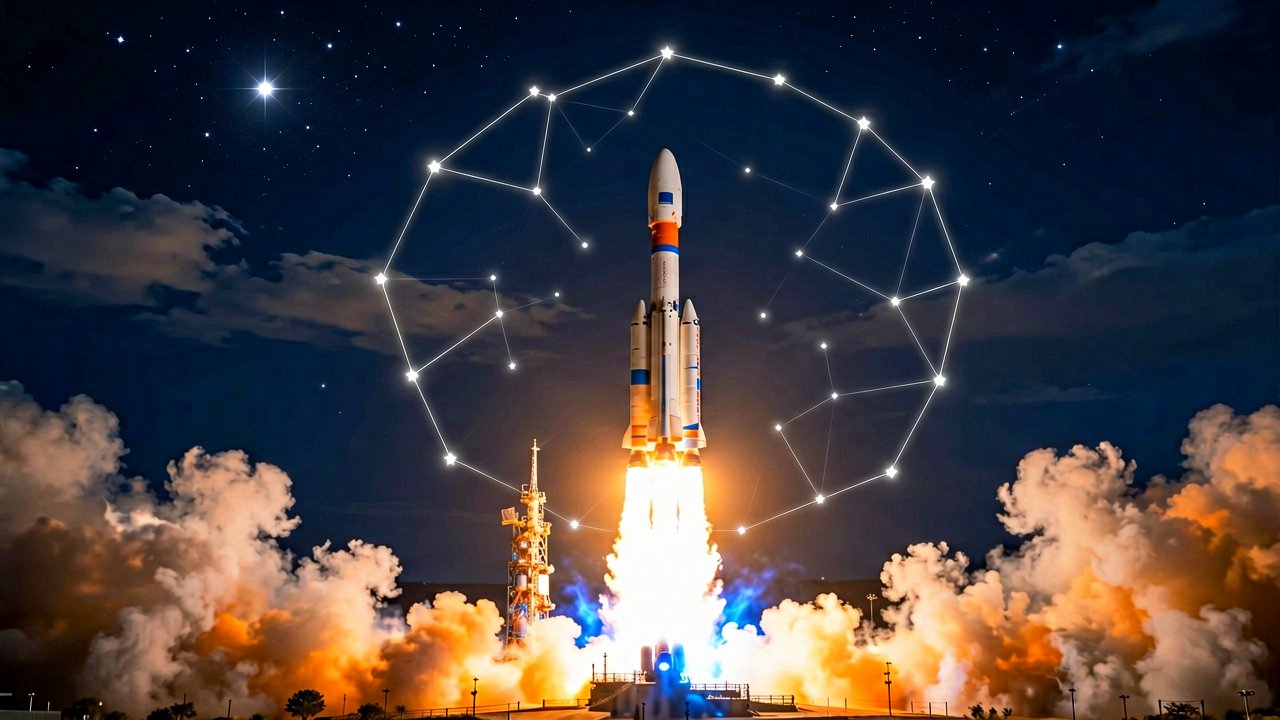
A United Launch Alliance Atlas V rocket lifted off from Florida's Cape Canaveral Space Force Station on Monday night, April 27, at 8:53 p.m. EDT, carrying 29 internet satellites for Amazon into low Earth orbit. The mission, designated Amazon Leo 6, tied the Atlas V's all-time payload weight record of 18 tons — a mark set just three weeks prior by Amazon Leo 5.
The launch represented the 108th flight of an Atlas V rocket overall and the 100th under ULA's operational control. Over the course of 10 separate deployments spanning 16 minutes, beginning approximately 21 minutes after liftoff, all 29 spacecraft reached their designated orbital slots. (That's a lot of satellites to deploy in a single evening, frankly.)
ULA's official mission documentation confirms the Atlas V 551 configuration used five solid rocket boosters alongside the core vehicle, topped with a medium-length payload fairing measuring 17.7 feet in diameter. The Centaur second stage, powered by an RL10C-1-1 engine producing 23,825 pounds of thrust, handled the orbital insertion work. The RD-180 engine on the booster delivered 860,200 pounds of thrust at sea level — enough to shake the ground for miles around the pad.
ULA's mission page details the technical specifications and launch timeline.This launch marked ULA's fastest turnaround at Space Launch Complex-41 to date. The team compressed the prelaunch flow into a single day, rolling the 205-foot-tall rocket to the pad Monday morning and achieving harddown at 7:19 a.m. EDT. The previous record stood at 26 days, 5 hours, 19 minutes. The new timeline shaved nearly three days off that window.
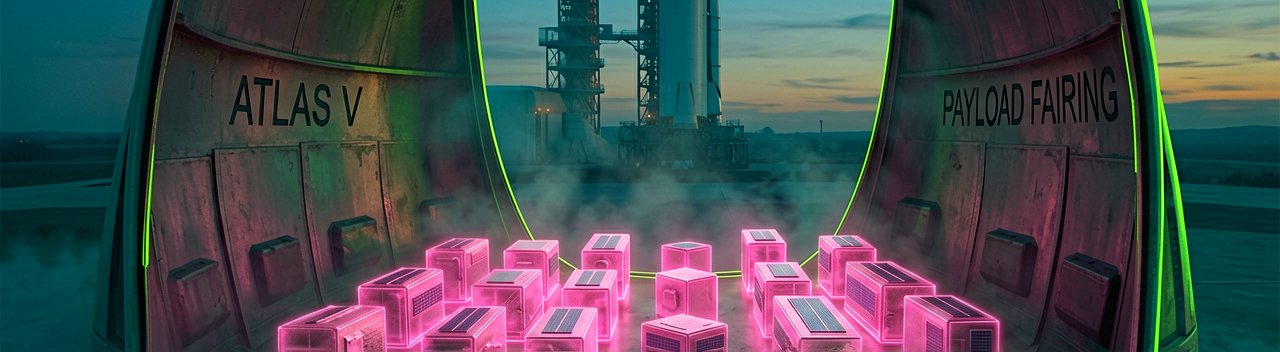
Amazon Leo 6 brings the constellation to 270 satellites on orbit. The network, originally known as Project Kuiper, will eventually comprise more than 3,200 satellites if all planned launches occur. Ten liftoffs have occurred to date across three different launch providers. The Atlas V has flown six of them, SpaceX's Falcon 9 has launched three, and Arianespace's Ariane 6 rocket has launched one.
Space.com reported the successful deployment confirmation at 10:30 p.m. ET on April 27.The physical reality of these launches involves significant ground operations. The Atlas V elements assemble atop a Mobile Launch Platform inside the Vertical Integration Facility, then travel by rail approximately 1,800 feet northward to the pad. Fueling operations load RP-1 kerosene and liquid oxygen into the booster, while the Centaur stage receives cryogenic liquid hydrogen and liquid oxygen. The countdown includes a two-hour hold beginning at T-minus 2 hours prior to fueling start.
Amazon Leo 5, which launched on April 4, first set the 18-ton payload record with 29 satellites. Amazon Leo 6 matched that weight exactly. The first four Atlas V Amazon Leo missions sent 27 satellites skyward. This pattern of 29-satellite batches appears to be the new standard for the Atlas V's contribution to the constellation.
Arianespace's Ariane 6 is scheduled to launch another Amazon Leo mission from French Guiana on April 29. That launch will increase the Ariane 6's tally to two Amazon Leo missions. The constellation assembly will require more than 80 launches total by various rockets to reach full operational capacity.
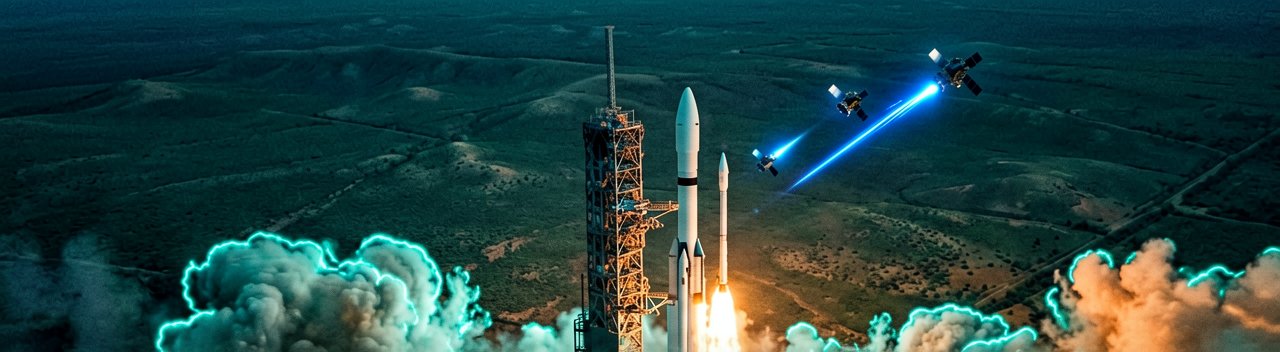
The Atlas V's role in this constellation deployment is part of the world's largest commercial launch agreement. Amazon has contracted eight Atlas V launches and 38 Vulcan rockets to help deploy the advanced satellite constellation. The Vulcan, ULA's next-generation vehicle, will eventually replace the Atlas V for many of these missions.
For observers on the ground, the launch window offered a brief but intense spectacle. The Atlas V's north-easterly trajectory meant the rocket disappeared over the Atlantic horizon within minutes. The five solid rocket boosters burned for approximately two minutes before separating, leaving the core Atlas and Centaur to complete the orbital insertion.
Whether Amazon Leo can compete with SpaceX's Starlink remains an open question. Starlink has thousands of satellites already operational and serving customers globally. Amazon Leo is still in the assembly phase, with just 270 satellites on orbit after ten launches. The 3,200-satellite target represents a massive infrastructure investment that will take years to complete.
The Atlas V's payload record may not last long. As Amazon Leo continues its deployment schedule, future launches could push the weight envelope further. The Vulcan rocket, with its higher payload capacity, will likely set new records when it begins Amazon Leo missions. The Atlas V is reaching the end of its operational lifecycle.
ULA's compressed turnaround timeline won't apply to all future launches. Operational considerations and mission-specific factors will determine which flights can employ the strategy. The company's launch blog noted this explicitly. Not every mission can be rushed.
The real test comes when customers actually try to use the service. Amazon Leo promises fast, reliable internet to unserved and underserved communities worldwide. That promise depends on having enough satellites on orbit to provide coverage, plus the ground infrastructure to connect users to the network. Neither is complete yet.
Whether users actually pay for Amazon Leo internet remains the real question. The technology works. The satellites are launching. But the business case depends on adoption rates, pricing, and competition from established providers. Time will tell if this constellation becomes profitable or just another expensive orbital monument.
Artūras Malašauskas is an AI Systems Integrator with 20+ years of production-grade web engineering experience. He has designed, shipped, and scaled enterprise Python/PHP systems for logistics, SaaS, and public-sector clients. For the past year, he has focused exclusively on AI integrations: deploying open-source LLMs, building generative media pipelines (image, audio, video), and engineering multi-agent workflows for real production environments. His standard: reproducibility, security, cost-efficient inference—no vaporware. He documents and evaluates emerging AI tooling, separating verified capabilities from marketing noise. Technical editor at: muza-ai.eu, ai-verslas.lt, ai-naujinos.lt Connect on LinkedIn
Comments