Dreame Unveils Rocket-Boosted Nebula NEXT 01 JET Edition
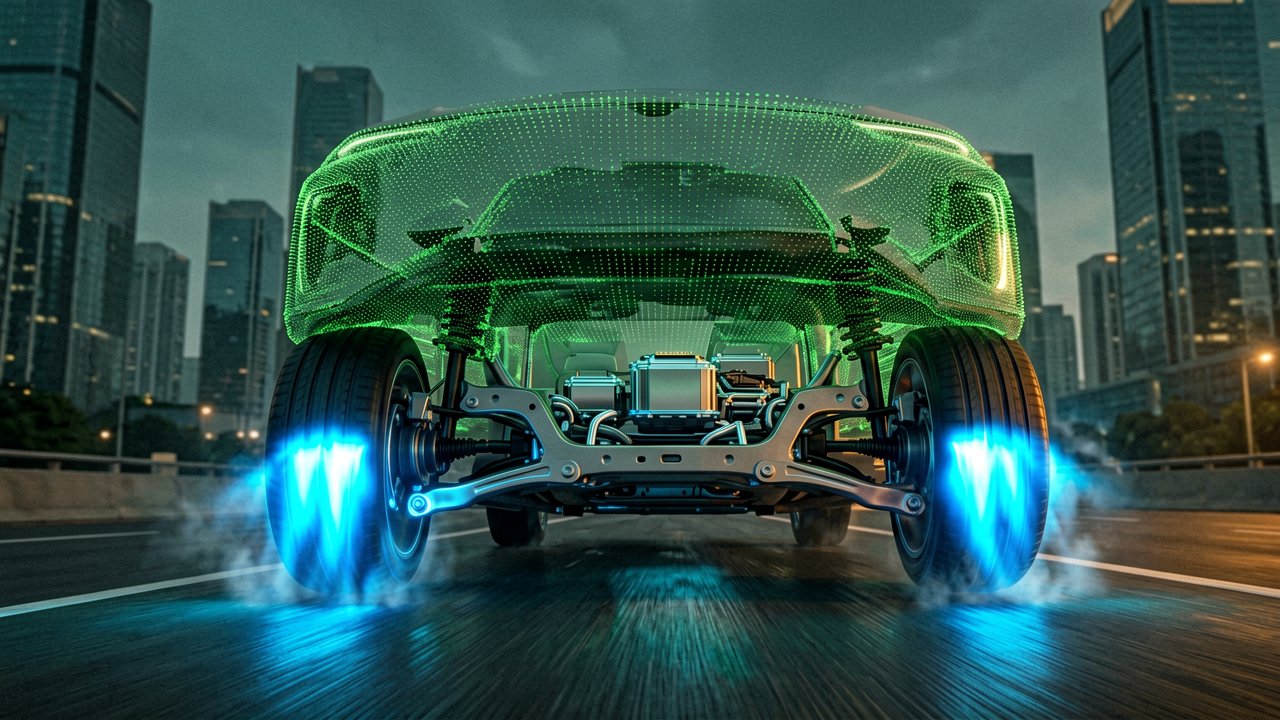
At the DREAME NEXT event in San Francisco, Dreame Technology officially unveiled the Nebula NEXT 01 JET Edition, a concept vehicle that claims to accelerate from 0 to 100 km/h in 0.9 seconds using solid-fuel rocket boosters. The announcement, made April 27, 2026, positions the company—better known for robot vacuums and smart home appliances—as a new contender in the electric vehicle space.
The core of the acceleration claim rests on a custom-built dual solid-fuel rocket booster system. According to the official press release, the system responds in 150 milliseconds and generates peak thrust of 100 kN. That's roughly equivalent to the force of a small aircraft taking off, applied directly to a passenger vehicle chassis.
Here's where physics gets interesting. Conventional electric supercars are traction-limited—tires simply cannot grip the road enough to translate all that motor power into forward motion. By adding rocket propulsion, Dreame bypasses the rubber-on-asphalt friction problem entirely. The trade-off: solid rocket motors cannot be throttled or turned off once ignited. You light them, and they burn until the fuel is gone (which is why this feels more like a stunt than a daily driver).
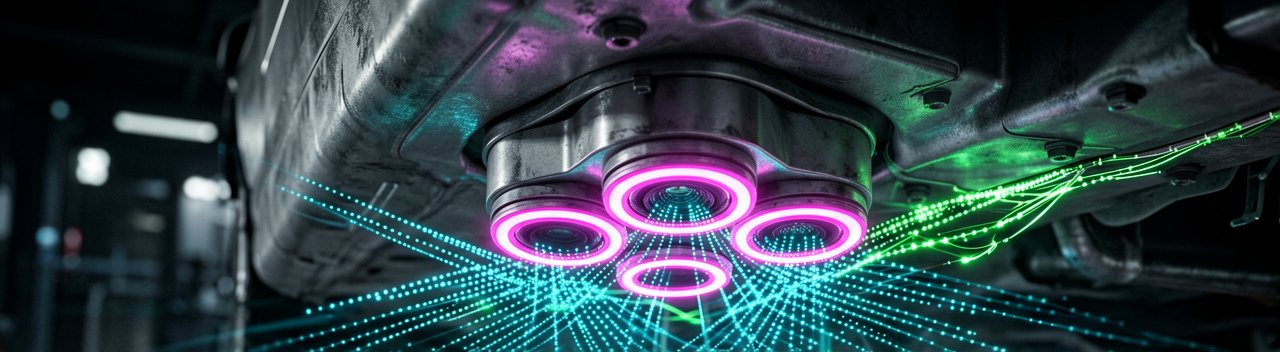
Alongside the JET Edition, Dreame introduced the DHX1 LiDAR unit, described as moving automotive perception from point-cloud-level to ultra-high-definition image-level sensing. The sensor reportedly resolves fine details at distance: potholes, small stones, traffic signs, and subtle pedestrian movements. This represents a significant leap from conventional LiDAR that captures only rough outlines of road obstacles.
The autonomous driving platform uses a third-generation VLA and World Model architecture. The lineup includes an L2++ solution supporting full-scenario urban navigation from parking spot to parking spot, and an L3+ solution built on a top-tier computing platform designed for fully unmanned autonomous driving. The vehicle also employs CTP 4.0 battery integration technology, which removes traditional crossbeams and longitudinal beams from the battery pack to free up vertical space in the chassis.
Independent analysis from Electrek notes the acceleration claim would make it the fastest production vehicle ever—if it actually reaches production. The current record-holder for EV acceleration is a student-built ultra-light racecar that achieved 0.956 seconds, but it weighs approximately 300 pounds and has no roof. The Nebula NEXT 01 JET Edition appears to be a bolt-on system to Dreame's already-announced Nebula 1 concept, which debuted at CES earlier this year with 1,876 horsepower.
Dreame's automotive ambitions trace back more than a decade. During the early days of the SkyAxis Program at Tsinghua University, founder Yu Hao and his team explored autonomous driving, planting the seeds for what would become the Nebula Next program. The company states the JET Edition represents the productization of more than ten years of technology development. The same engineering that pushes a high-speed digital motor to 200,000 RPM in their vacuum cleaners is being applied to automotive powertrains and perception motion systems.
Production timelines remain vague. Electrek reports Dreame aims to begin production in 2027, with a factory partnership with BNP Paribas outside Berlin. The company already has a Rolls Royce Cullinan-like SUV in the works, supposedly. Whether either vehicle reaches consumers is another matter entirely. Tesla's Roadster, which also promised rocket-assisted acceleration with SpaceX cold air thrusters, remains unreleased after seven years.
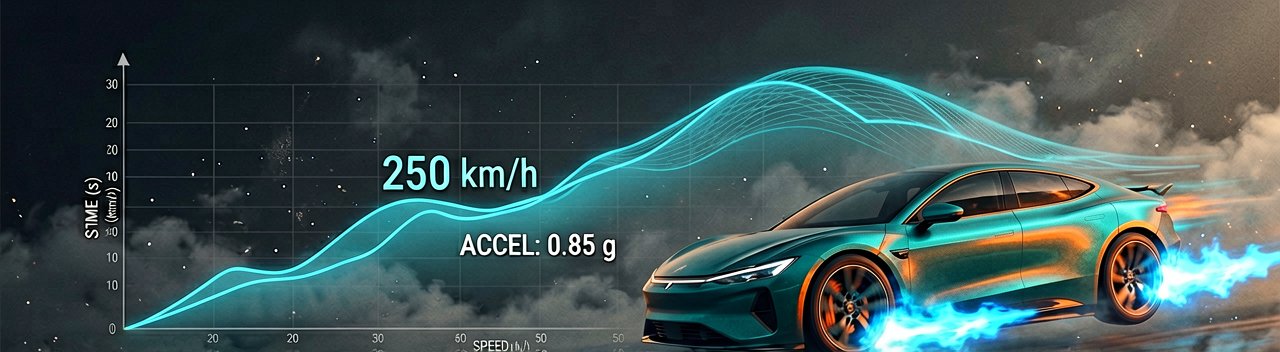
The sensory reality of this vehicle is worth considering. Imagine sitting in a cockpit, hearing the ignition sequence, then feeling 100 kN of thrust slam you into the seat. The G-forces would be extreme—likely beyond what most humans can tolerate without specialized training and equipment. The rocket fuel itself would need to be sourced, stored, and handled with significant safety protocols. This isn't a car you fill at a gas station.
DREAME NEXT runs through April 30 in San Francisco. The company operates in more than 120 countries and regions with over 6,500 offline stores and serves more than 42 million households globally. As of December 31, 2025, Dreame has filed more than 10,000 patents worldwide and holds over 3,000 granted patents.
Whether users actually pay for a rocket-powered vehicle that requires solid fuel and cannot be throttled remains the real question. The technology demonstration is impressive, but practical application is another story entirely.
Artūras Malašauskas is an AI Systems Integrator with 20+ years of production-grade web engineering experience. He has designed, shipped, and scaled enterprise Python/PHP systems for logistics, SaaS, and public-sector clients. For the past year, he has focused exclusively on AI integrations: deploying open-source LLMs, building generative media pipelines (image, audio, video), and engineering multi-agent workflows for real production environments. His standard: reproducibility, security, cost-efficient inference—no vaporware. He documents and evaluates emerging AI tooling, separating verified capabilities from marketing noise. Technical editor at: muza-ai.eu, ai-verslas.lt, ai-naujinos.lt Connect on LinkedIn
Comments